
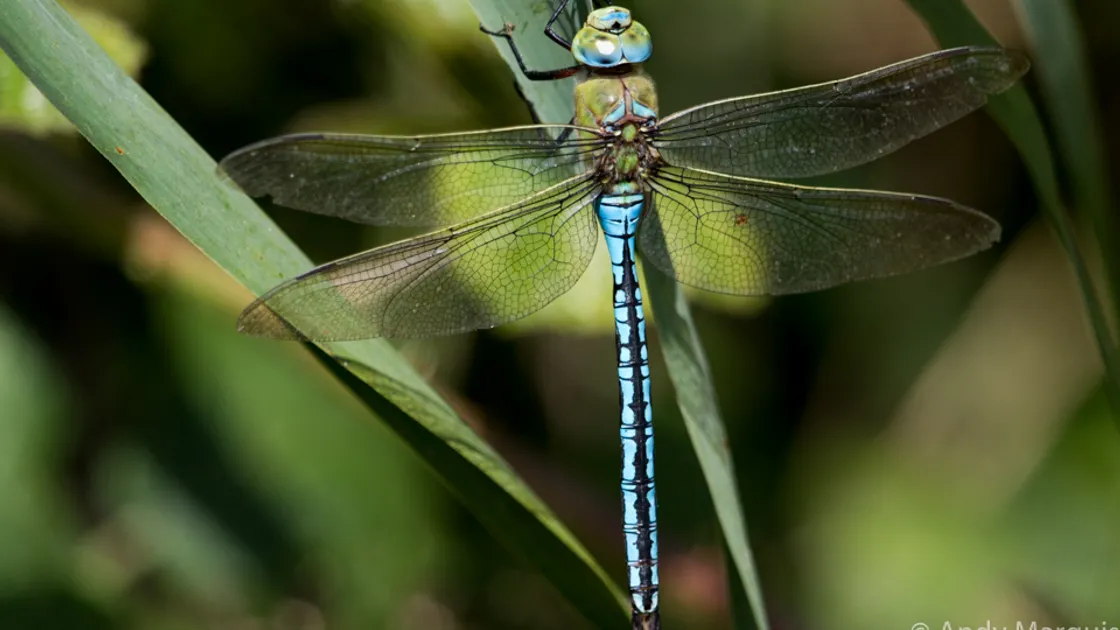
That was the stark evidence of a species audit carried out by La Societe Guernesiaise this summer.
‘We used to have 15 species that were regularly seen, but now we are down to six,’ said entomology section secretary Trevor Bourgaize.
He said the insects' decline was due to habitat loss on the island.
‘We have lost so much suitable habitat and what we have left has been degraded.’
Mr Bourgaize pointed to the golf course development at La Grand Mare as a prime example.
‘It’s a wetland site that has been “improved”. In the last 40 or 50 years it has been drained time and time again.’
The catalyst for this year’s study was the planning approval for the site at La Grande Mare, which involves further draining for the redesigned golf course.
‘Mitigation in the planning meant they had to leave some wet areas.
'And the audit was to really find out what we had left.’
La Societe made improvements to its own nature reserves this year to encourage more dragonflies, but the unusually dry summer meant a lot of these areas dried out.
It was the driest summer for over 30 years and the sixth-driest ever recorded.
The study took Mr Bourgaize all across the island, including many areas managed by Guernsey Water.
‘The water board has been very helpful, and has granted us access to some of the old quarries to see if they could be useful future habitats,’ he said.
‘We’ve also visited a lot of people’s gardens to see what they had.
‘The emperor, common darter, migrant hawker and blue-tailed damsel fly – these are common – but the more unusual species tend to need specific niche habitats, and that is what we have lost.’
Mr Bourgaize said that anyone with a pond, especially one without fish, can encourage dragonflies by planting around the margins and the middle of ponds which helps the dragonflies at different stages of their complex life cycle.
He encouraged anyone hoping to attract dragonflies to their ponds to look for advice online.
‘A little bit of upkeep and maintenance can make a huge difference,’ he said.
Dragonflies form an important part of the food chain and are effective in controlling pests such as mosquitoes by eating their larvae.
‘Adults will take a wide range of insects,’ said Mr Bourgaize.
‘In turn, the adult dragonflies provide food for many species of birds ranging from birds of prey such as the hobby to smaller birds such as warblers and flycatchers.’
Mr Bourgaize hoped that new planning developments could include more areas for wildlife, and highlighted the new housing development at Fontaine Vinery as an example.
‘There is a wildlife provision in the planning for a small water area,’ he said.
‘If planted and done properly, it could be a boon for dragonflies and wouldn’t be expensive.’



You need to be logged in to comment.