

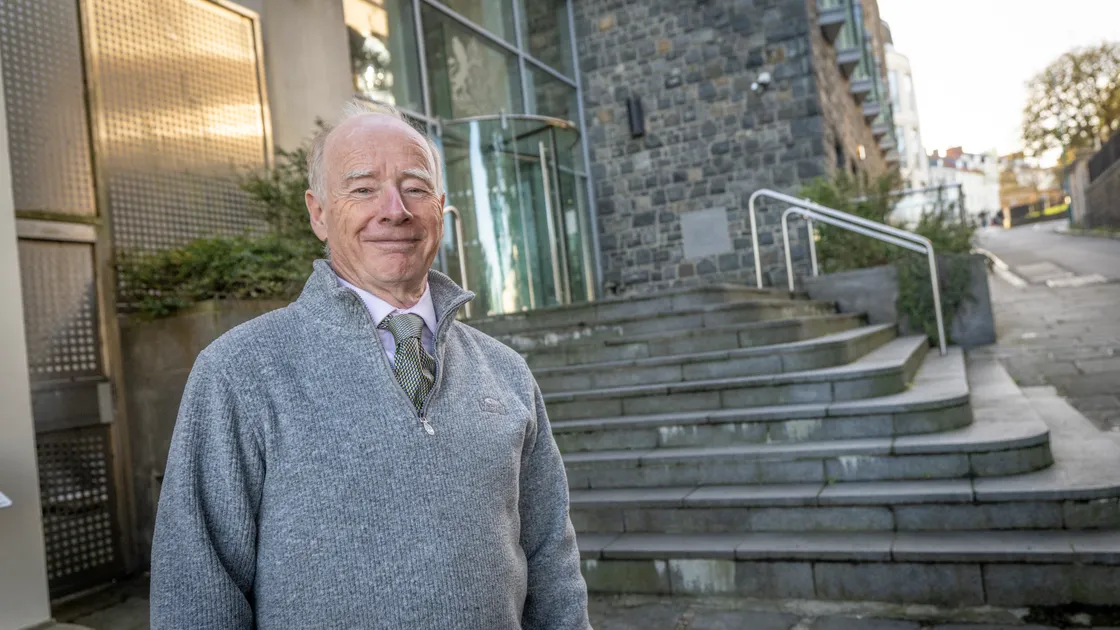
He was concerned about whether it would be possible to recruit paediatricians to fill two imminent vacancies after the States rejected a recommendation to suspend Gavin St Pier for 25 days.
He had told the Assembly earlier that campaigning against paediatric and safeguarding services, led by Deputy St Pier in recent years, had caused the departure of even more paediatricians than previously claimed.
‘The consequences of what we have decided as the States will keep me awake at night. I’m worried about it,’ said Deputy Oswald.
‘We have lost four paediatricians directly related to this. I hope we don’t lose any more, but we might.
‘In particular we might put off people who have already said that they would come and then decide not to because they might ask why they should put their career at risk by subjecting themselves to political oversight and consequence.
‘I sincerely hope the paediatric service does not fall apart, and then we’d be reliant on locums and agency paediatricians, and we’re all aware that is not the answer to our problems.’
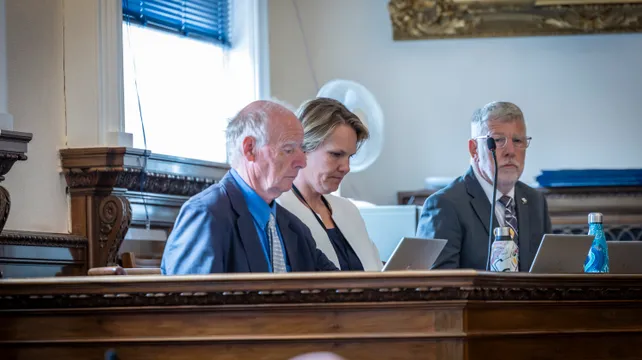
Deputy Oswald cast one of only 11 votes in favour of suspending Deputy St Pier, and he saw two members of his own committee, including vice-president Deputy Aidan Matthews, vote against the suspension.
During the debate, Deputy St Pier acknowledged that Deputy Oswald had previously led work on a code of practice for dealing with parents’ requests for off-island medical advice about their child’s condition.
Recent events had halted that work, but Deputy Oswald pledged that HSC under his leadership would be a force for reconciliation.
‘We have to try to build bridges between the families and the medical profession, with the States and specifically our committee in the middle,’ he said.
He said he had ideas to pursue which he would discuss with his committee.
‘Using all resources which might be available in future may give us a route forward, but it won’t be an overnight fix.’
Deputy Oswald believed that the development of a less adversarial complaints procedure may benefit both patients and doctors.
He said he recognised that families with complaints had come up against barriers which would be familiar to patients who had pursued similar cases with the National Health Service, on which many local procedures were based.
‘There is an element of defensiveness in medical complaints because reputations, including professional reputations, and financial settlements may depend on the outcome of a complaint,’ he said.
He said he did not see the need for an independent review of the whole health service in Guernsey, but would be open to external advice on new practices and procedures developed locally.




You need to be logged in to comment.