
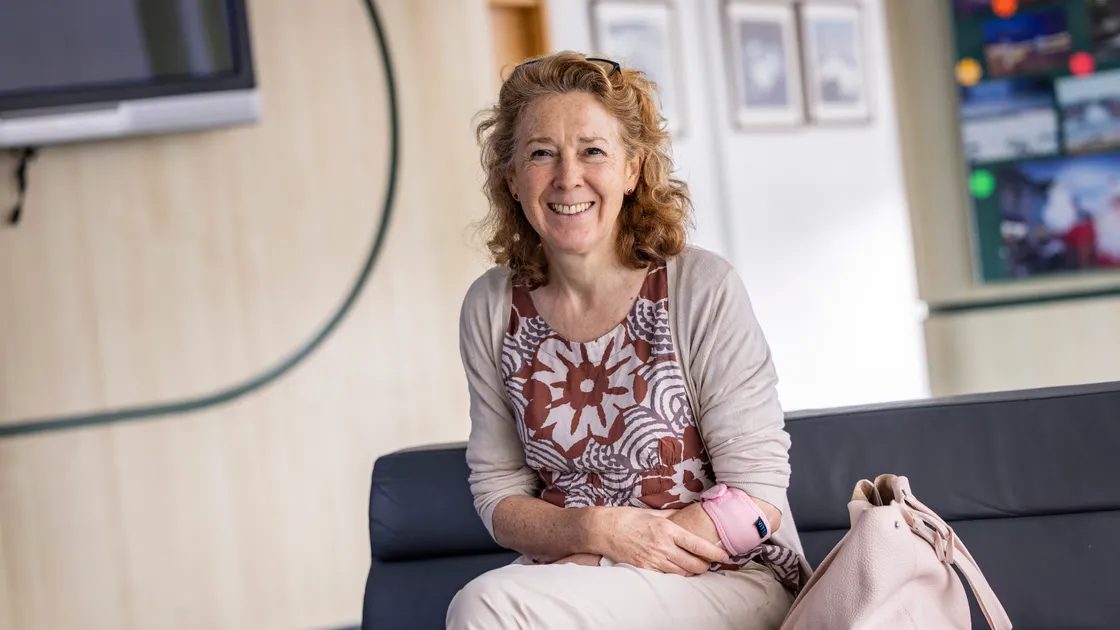
The course would be held with eight sessions over two weeks – the first for students aged 11-14, and the second for ages 15-18.
‘We’re going to have a basic course. With the younger ones, we’re going to be looking at “What is the self?”, “What is it to be human?”, “Are we just bodies? Are we minds? What are we?”,’ she said.
‘Then with the older ones, we’ll be looking at politics. “Why do governments exist? Should we obey government? What is an ideal government?”, and all that sort of thing.’
Ms Voute, who has worked as a philosophy teacher for several decades, is well versed in delivering similar courses to students of all ages. However, unlike her teaching work, she has emphasised that The Thinking Lab is not primarily geared towards instruction, but towards discussion, intellectual exploration and, vitally, civil disagreement.
‘The aim is not to teach. I will pose them a problem, and then encourage them to talk to each other and think it through,’ she said.
‘I’ll guide the discussions, but in actual fact the goal is to leave them to be free to investigate together.’
Ms Voute’s goal of inspiring and facilitating open conversation comes from her personal witness to the decline of civil and collaborative discussion.
‘I’m deeply concerned, and I’ve seen it growing more chronic – the problem that young people actually don’t know too well how to work together to come to a solution,’ she said.
‘They’ve been taught with social media and the algorithms’ culture of outrage to always see anybody that disagrees with them as potentially an enemy, and to deal with them with disagreement or defensiveness or anger.’
Ms Voute is also hopeful that helping students critically think through problems will help them cultivate essential skills to navigate a world in which AI is widespread.
‘A curriculum based on just stuffing information into them and making them do exams is, at some point, going to be antiquated,’ she said.
‘So I want to experiment, to see if it’s possible to create environments where students can sit together and deal with questions for which there is no right answer.
‘That’s the whole point about philosophy. There isn’t a right answer, but you can work to come up with a good, justifiable answer, and if you disagree, that’s fine, but we learn that disagreement is about intellectual growth.’
The sessions are set to take place in the lowest floor of Health Connections in the Pollet, with the series for younger students taking place on 3-7 August from 10.30 to 11.45am, while the sessions for older students are scheduled for 10-14 August from 11.30am to 1pm.
More information and details on how to book are available on the website www.triciavoute.com.


You need to be logged in to comment.