

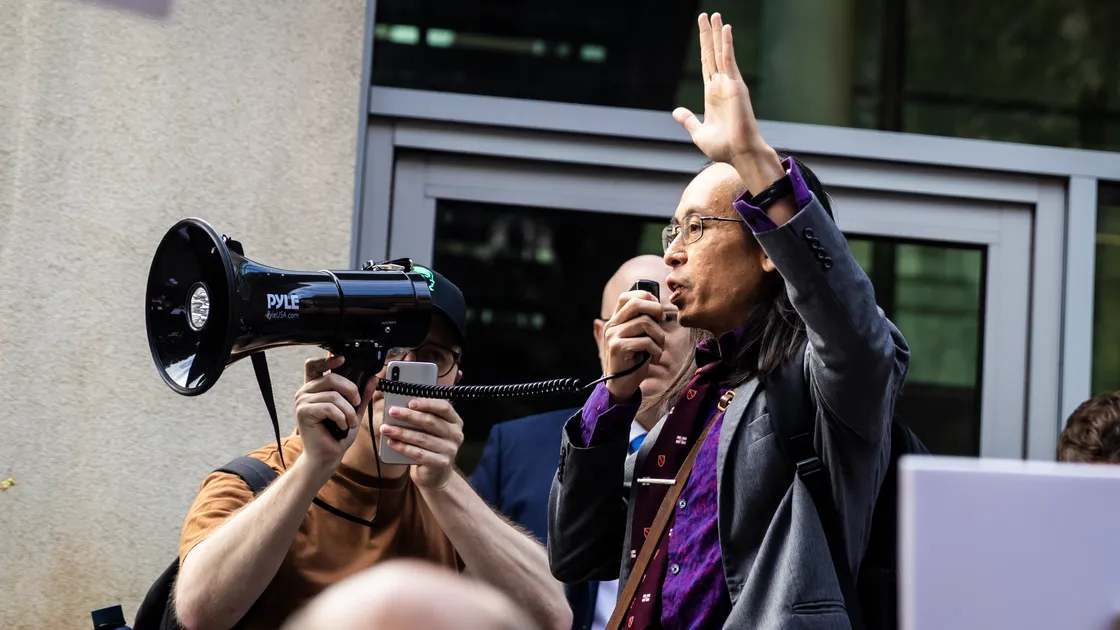
Having agreed to sit late on Thursday evening, a majority of deputies swiftly took advantage of a rarely-used procedural rule to discard four amendments from David Goy which put forward novel ideas to raise additional revenue instead of a goods and services tax.
A first attempt to block debate appeared to have been lost, but a second division called on the procedural motion saw at least one deputy switch his vote and the final result was 18-17 against allowing debate.
‘My amendments offered a genuine, viable path away from GST and other broad-based taxes that increase the cost of living for ordinary families, something the public has been demanding,’ said Deputy Goy, following the unedifying final hour of the sitting.
‘It is incredibly telling that instead of welcoming robust debate on these ideas, there was an immediate rush to use procedural rules to block them.
‘You have to ask yourself: if the establishment’s tax plans are so robust, why were they so eager to ensure my alternatives never saw the light of day?’
Amendments have traditionally not been seen as going beyond the subject of debate simply because they sought to replace all of the proposals put forward by a committee, as Deputy Goy’s did to Policy & Resources’ tax package, but Deputy Bailiff Jessica Roland ruled that they did, which allowed members to vote to curtail proceedings.
Deputy Goy said his amendments were an attempt to find constructive alternatives to avoid GST which he believed would place a heavy additional burden on families struggling with the cost of living. P&R has rejected such claims because its proposed package also includes reductions in income tax and social security contributions which would mostly help lower- and middle-income households.
‘To see these proposals not even receive a debate is deeply disappointing and I know many of my colleagues share that same disappointment,’ said Deputy Goy.
Debate on his various amendments was consistently supported by a group of approximately 16 members during the several votes on procedural motions.
He also believed there would be some public concern about how the Assembly had treated his amendments.
‘I think many of my supporters have made their feelings on this matter very clear through their comments on social media,’ he said.
Deputy Goy’s first amendment proposed developing an under-utilised property levy on homes left vacant for years. He suggested that the number of vacant dwellings could be much higher than the 183 shown recently in States figures and said that such ‘passive wealth storage’ could not be tolerated given Guernsey’s space constraints and financial problems.
His second amendment proposed investigating a premium road levy which would have included a one-off charge when registering a high-value vehicle and further charges annually thereafter. He suggested it as an alternative to a smaller annual charge on all vehicles put forward by P&R.
His third amendment recommended investigating a new tiered approach to document duty, which would have allowed much higher rates on the most expensive properties. His fourth amendment proposed investigating requiring a minimum financial contribution each year from people of working age who live in the most expensive properties but arrange their affairs to avoid paying much income tax or social security.




You need to be logged in to comment.