
I was talking to someone the other day about Nietzsche. I’m no expert on the German philosopher, but I have at least read some of his books and their commentaries. I say this because Nietzsche is back in fashion. You could call him the patron thinker of many tech bro billionaires.
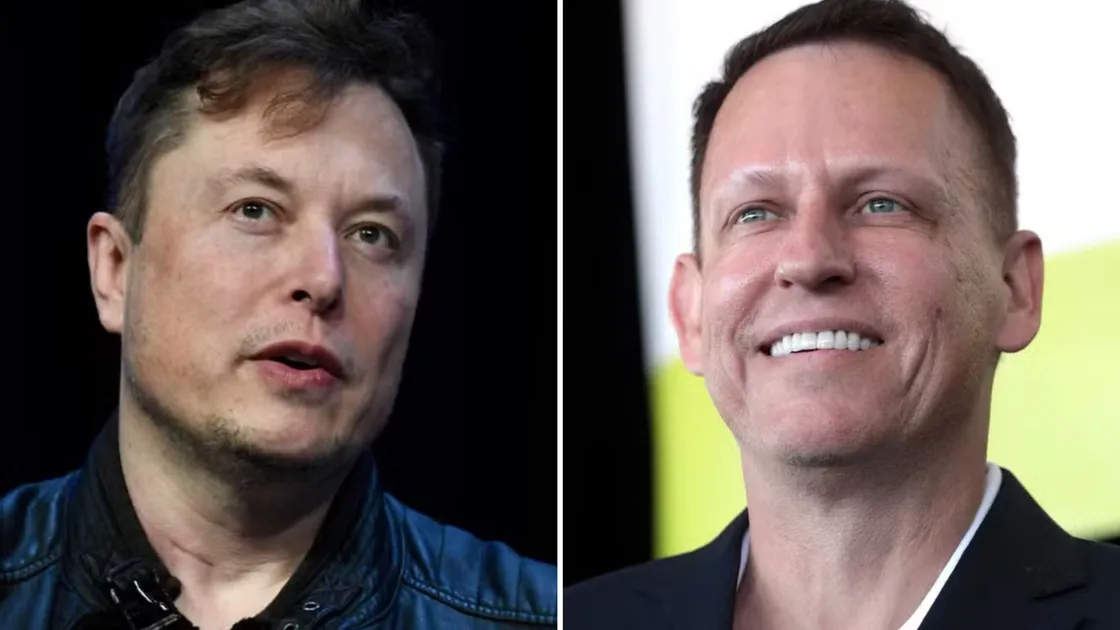
Take Peter Thiel, co-founder of PayPal and Palantir Technologies, the mentor of JD Vance and a political activist. Or how about Elon Musk, who famously quoted him in a discussion about his acquisition of Twitter (now X).
These men love to talk about the will to power and the Ubermensch (great man). They use Nietzsche as a philosophical defence for their rights as ‘sovereign individuals’ to exist beyond societal constraints.
The problem is, they’re reading him backwards. Especially Thiel, who, it seems, is an avid reader of his works.
Nietzsche is challenging. You need to read him slowly and carefully. He writes in aphorisms, parables, satire and poetry. He deliberately provokes. He enjoys contradiction. He rarely tells you directly what he means and so reading him is dangerous because it’s easy to mistake a provocation for prescription.
Much of this comes from his own life (living in relative isolation and suffering from many ailments) which led him to write polemically and without much nuance. Worse, there is little argument in his most popular books. CS Lewis said he was more a poet than a philosopher and this is helpful because he is often saying more in a few words than people realise.
It also depends on where you stand already. If you believe exceptional people should rule, then Nietzsche offers plenty of quotable lines. He criticises democracy and mocks equality. He attacks herd mentality and celebrates greatness. Read him selectively and you could conclude that exceptionally creative people owe nothing to ordinary folk. In fact, they must break free so they can disrupt traditional moral structures and herald new futures.
Nietzsche’s sister edited his unpublished notebooks to agree with German nationalism and antisemitism. This influenced the Nazis who understood the Ubermensch as the Aryan race, and the will to power as totalitarianism, militarism and global domination.
But Nietzsche would have rejected the Nazis and those tech bros who quote him today. The battle is not over the ‘other’ but over the ‘self’. He asks whether you, as an individual, can overcome resentment and fear. Can you create rather than consume? Do you need approval from others? Self-mastery is everything; power over others is trivial.
He has no time for autocrats who remain slaves to vanity, insecurity, paranoia or revenge. The strongest person is not necessarily the one who commands armies or corporations. It is the one who has mastered envy, bitterness and self-deception. Why? Because it is a rare achievement.
Today, living in a market society, we use money to measure the value of everything. This is so natural to us, we don’t realise we are doing it. Consequently, we are in awe of the super-rich. We look at their success and assume they are clever and dynamic, powerful and important.
Yet not necessarily, according to Nietzsche. Admirable people are those who transform themselves, who take responsibility for who they are. Commercial success may be evidence of remarkable ability, but it isn’t evidence of moral or philosophical greatness.
In fact, Nietzsche repeatedly warns against measuring people by external standards alone. He’s interested in what kind of person you become while pursuing success.
And this is important in the here and now because the Thiels and Musks of this world, who have enormous economic and technological influence, believe their success exempts them from ordinary moral constraints.
If you believe you are an Ubermensch, one of the world’s exceptional individuals, criticism looks like envy, and you can ignore it. You will see regulation as oppressing your brilliance, and democratic disagreement as commonplace and pointless; other people are not fellow citizens but obstacles to overcome
This world view might have a superficial resemblance to the will to power and the Ubermensch but these individuals are not overcoming the self, they are being self-important. And self-importance is easier to achieve then wisdom. That is Nietzsche’s point, and he would turn his sharpest criticism on the Thiels and Musks, precisely because they believe they are the Ubermensch.
The truly exceptional person continues the hard work of overcoming themselves throughout their lives. They remain suspicious of their motives, and they keep a beady eye out for complacency. The Ubermensch never arrives, he is always becoming.
This is why reading Nietzsche requires intellectual humility. He strips away our certainties and excuses, and asks each of us – rich or poor, famous or not – to justify the life we are making. The more power you have, the easier it is to assume your influence equals your greatness. But Nietzsche sought mastery over the self, not over the other, but it is easy to confuse the two.


You need to be logged in to comment.