
I was sitting in a cafe not long ago when a couple took the table beside me. They ordered coffee, exchanged a smile and, almost without thinking, both reached for their phones.
For the next few minutes there was very little conversation between them. It wasn’t an unusual sight, in fact, it’s one we’ve probably all witnessed. It simply made me wonder how we have arrived at a point where we can contact almost anyone in the world within seconds, yet sometimes struggle to connect with the person sitting opposite us.
Technology has changed our lives beyond recognition, and in so many ways for the better. We can speak to family on the other side of the world, share photographs instantly and find information in moments that once took hours to discover. Not many of us would willingly turn the clock back. Yet communication and conversation are not quite the same thing. One allows us to exchange information; the other allows us to understand another human being.
Perhaps that is why a really good conversation still feels so refreshing.
One of the things I value about living in Guernsey is that conversation still seems to come naturally. Walk the cliff paths and you’ll often exchange a greeting with someone you’ve never met. Stand in the queue at the Coop and there’s every chance the person behind you will comment on the weather, the football or whether Aurigny is running on time. Spend a Saturday morning at a farmers’ market or watch a local cricket match and before long you’ll find yourself chatting to someone whose life is completely different from your own.
Those moments may seem insignificant, but I suspect they are part of what makes island life special.
At the same time, I can’t help noticing that some of the spaces where conversations once happened have quietly changed. Waiting for the ferry, sitting in a doctor’s surgery or travelling on the bus used to create natural opportunities to pass the time with the people around us. Today those same moments are often filled by scrolling through a screen. We haven’t become less friendly; we’ve simply become more occupied.
There is an irony in that. We have become exceptionally good at staying in touch, yet perhaps a little less practised at really talking.
Good conversation has never depended on being the funniest person in the room or having the most interesting stories to tell. The people I enjoy talking to are usually those who are genuinely interested in others. They ask questions because they want to know the answer. They listen without constantly looking over your shoulder for someone more important to arrive, and they have that increasingly rare ability to make you feel that, for a few minutes at least, nothing else matters.
Listening is a curious skill because most of us assume we’re good at it. In reality, we’re often rehearsing our reply before the other person has even finished speaking. We hear enough to respond, but not always enough to understand. Looking back, the conversations I remember most vividly are rarely those in which someone had all the answers. They are the ones where somebody listened with patience and genuine interest.
Modern life doesn’t make that easy. Everything seems to encourage speed. Emails become shorter, messages become quicker and news is often reduced to headlines. Conversation, on the other hand, refuses to be hurried. It wanders into unexpected places, pauses for thought and occasionally leaves us reflecting long after we’ve gone our separate ways. That’s not wasted time; it’s often where the real value lies.
Since taking up running a couple of years ago, I’ve discovered that some of the best conversations happen before the start of a run or after the finish line. Parkrun, local races and the weekly running club have introduced me to people I would never otherwise have met. We might begin by talking about running shoes or the weather, but before long the conversation has moved to families, work, holidays or life on the island. It’s a reminder that people are usually far more interesting than the reason we first started talking to them.
Perhaps that’s true across Guernsey.
The volunteer serving tea at a community event, the neighbour tending a front garden, the fisherman on the harbour wall, the young parent trying to persuade a toddler to sit still for five minutes – every one of them has a story. Most of those stories will never appear in a newspaper or history book, yet together they form the character of our island.
As we look ahead, we naturally spend time discussing the big issues that affect Guernsey: housing, healthcare, education and the future of our economy. Those conversations matter enormously. However, I sometimes wonder whether the strength of any community is also measured by something much simpler: whether people still take time to speak to one another.
Maybe that begins with putting the phone back in our pocket for a little while. Perhaps it’s asking one more question before saying goodbye, or taking the trouble to remember someone’s name the next time we meet. These are small things, almost unnoticed, yet they have a remarkable way of making people feel valued.
The next time you find yourself waiting at the airport, sitting outside a cafe in Market Square or enjoying an ice cream at Cobo, take a moment to look around before looking down. The most interesting thing you encounter that day may not be on the screen in your hand at all. It may simply be the person beside you, waiting for someone to start a conversation.
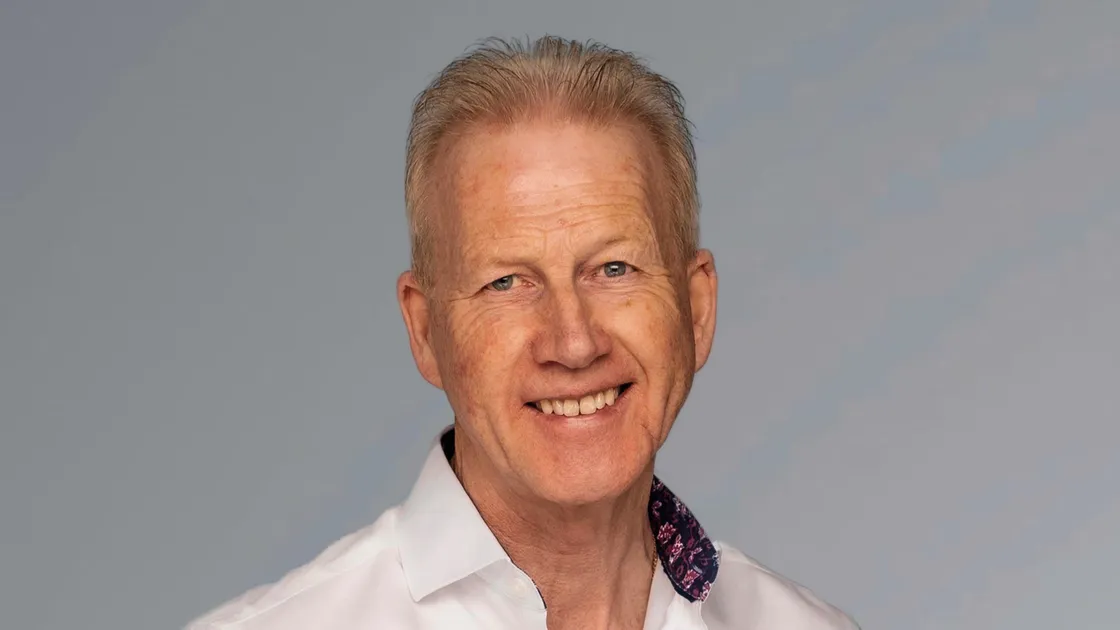
Nigel Pascoe has lived and worked in Guernsey for over 40 years. A writer and speaker, he enjoys exploring the people, places and everyday moments that make island life unique. Through Island Reflections, he shares thoughtful observations on community, modern life and the stories that connect us all. nigel@nigelpascoe.com.


You need to be logged in to comment.