
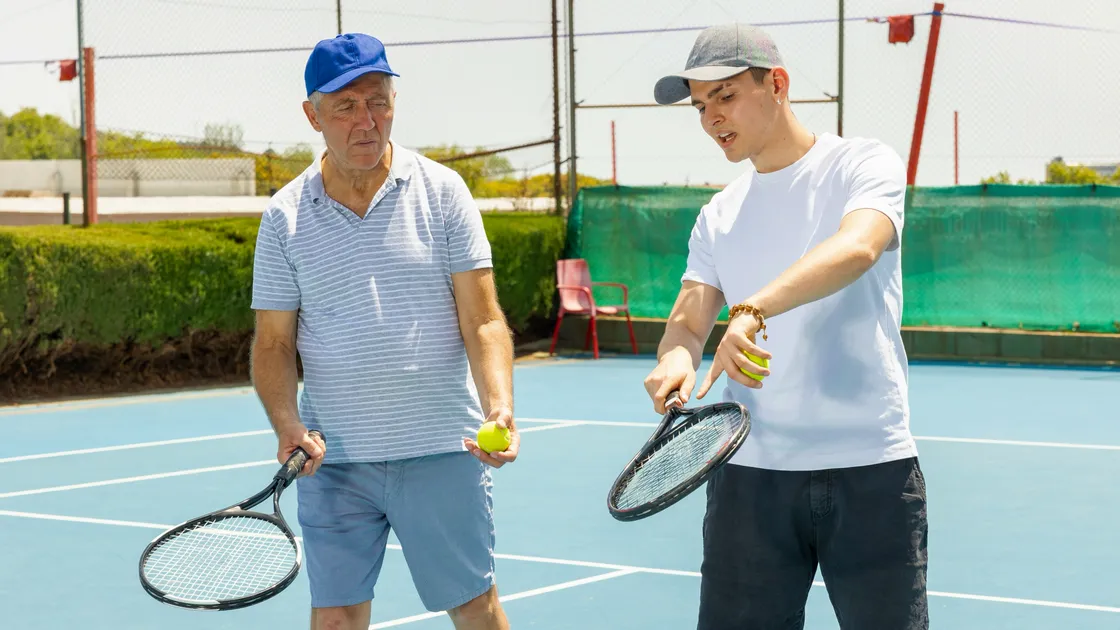
There comes a point in life when we become quite good at avoiding things we’re not very good at.
As children, we don’t have much choice. Almost everything is new. We learn to ride a bicycle by wobbling down the road, we learn to swim by swallowing rather more water than we intended, and we learn to read by stumbling over words that eventually become familiar. Nobody expects a six year old to be accomplished at everything, and children themselves seem remarkably unconcerned about it.
Adults are rather different. By the time we’ve accumulated a few decades of experience, we generally know what we’re good at, what we’re comfortable doing and, perhaps more importantly, what we’d rather avoid. There’s something reassuring about staying in familiar territory. We know the rules, we understand what’s expected and there’s considerably less chance of making ourselves look foolish.
A couple of years ago, I decided to ignore all of that and take up running. I was 65 at the time, which perhaps isn’t the most obvious age to discover a desire to start running regularly. I hadn’t suddenly developed ambitions of representing Guernsey on the world athletics stage, and anyone who has seen me approaching the finish line would quickly understand why. I simply started running.
What I hadn’t anticipated was how much there was to learn. I thought running involved putting on a pair of trainers and placing one foot in front of the other slightly faster than when walking. Then I discovered pacing, cadence, form, recovery runs, tempo sessions, intervals and an endless discussion about running shoes. Runners can talk about shoes for a surprisingly long time.
There was also the slightly uncomfortable experience of being a beginner again. Other people knew things I didn’t. They understood how to pace themselves properly, knew when to push harder and, equally importantly, when not to. I had to ask questions and accept advice, and occasionally discover for myself why the advice I’d chosen to ignore had been given in the first place. I loved it.
There is something wonderfully refreshing about beginning again, particularly when we’ve reached an age at which much of life has become familiar.
Most of us spend our working lives gradually becoming more competent. We gain experience, perhaps acquire qualifications, learn from mistakes and eventually find ourselves in the slightly alarming position of being the person other people come to for answers. There is satisfaction in that, of course, but there is also something liberating about entering a room where you’re not the expert.
Being a beginner gives us permission not to know. I wonder whether we lose some of that as we get older. We can become reluctant to try something new because we compare our first tentative steps with someone who has been doing it for years. We see the accomplished musician rather than the child who once struggled with scales, the confident swimmer rather than the person who once clung to the side of the pool, or the runner disappearing into the distance without knowing how many thousands of miles lie behind that apparently effortless stride. Perhaps we forget that everybody was a beginner once.
Guernsey must be one of the best places in which to test the theory. For a relatively small island, there seems to be an extraordinary number of things we can try. We can kayak, row, swim in the sea, join a choir, take up bowls, learn photography, try amateur dramatics, volunteer, garden, paint, play golf or discover any number of sports and activities that have probably been taking place under our noses for years. We may not be very good at them and that might be the point.
There’s an enormous difference between doing something because we enjoy it and doing it because we need to excel at it. Children understand this instinctively. Give them a football and they’ll kick it around without asking whether the activity is contributing sufficiently to their personal development. Somewhere along the way, adults have become rather fond of measuring things.
Running certainly encourages that. There are times, distances, personal bests and age percentages, all readily available on a watch before you’ve had time to recover your breath. I enjoy that side of it and still like trying to improve, but some of my favourite runs have nothing to do with a stopwatch. They are the ones when I’ve looked across at the sea, noticed the changing seasons or found myself running alongside somebody I didn’t know particularly well at the start but knew considerably better by the finish. Starting something new also introduces us to different people.
Our lives can quite easily settle into familiar circles. We work with the same colleagues, spend time with the same friends and visit the same places. A new interest disrupts that pattern. Suddenly we find ourselves talking to somebody twenty years younger or twenty years older, someone with a completely different occupation or background, simply because we’ve discovered one thing we enjoy doing together.
I’ve found that one of the unexpected pleasures of running is meeting new people. I have met people I would almost certainly never have encountered otherwise, and age seems to matter very little when everyone is standing on the same start line wondering why they thought this was a good idea.
There is another benefit to being a beginner: it keeps us humble. It’s difficult to take ourselves too seriously when we’re struggling with something that another person makes look effortless. There is always somebody who knows more than we do, and usually somebody generous enough to help if we’re prepared to ask.
Maybe that’s why trying something new becomes more important rather than less important as the years pass. Growing older inevitably involves change. There will be things we can no longer do quite as quickly, easily or frequently as we once did, but perhaps we spend too much time thinking about what age takes away and not enough about what experience gives us: the confidence to worry less about what other people think.
At 20, looking foolish can feel like a disaster. Several decades later, you begin to realise that most people weren’t watching anyway.
So perhaps there is something you’ve always fancied trying. It doesn’t need to involve Lycra, stopwatches or getting up early on a Saturday morning. It might be learning a language, picking up a paintbrush, joining a choir, trying sea swimming or finally learning to play the instrument that’s been sitting untouched in the corner.
You may discover a hidden talent. You may also discover that you’re absolutely hopeless. Either outcome is fine. Perhaps one of the privileges of getting older is realising that we don’t have to be good at everything we do. Sometimes it is enough to be curious, turn up and enjoy learning something new, and if we happen to look slightly foolish along the way, that’s probably no bad thing either. After all, life would become rather dull if we ever reached the point where there was nothing left for us to begin.
Nigel Pascoe has lived and worked in Guernsey for over 40 years. A writer and speaker, he enjoys exploring the people, places and everyday moments that make island life unique. Through Island Reflections, he shares thoughtful observations on community, modern life and the stories that connect us all. nigel@nigelpascoe.com


You need to be logged in to comment.