

As I flick through the thin pages of Geoff Mahy’s first-edition copy of Les Chants Du Drain Rimeux by Denys Corbet, I’m confronted by the fact that I’m looking at line after line of poetry which is written in my native tongue, rich with rural rhythms and reflections, which nevertheless remains inaccessible to me.
What textures of Guernsey life lie there, hidden from my view? I ask myself. And why didn’t I carry on with those Guernesiais lessons?
Happily there are those who still can luxuriate in the original verse, without the discomforting prophylactic of a translator’s necessary compromise, and Geoff is among them.
At his home in St Saviour’s, he shows me Corbet’s aforementioned 1884 collection, the title of which translates as Songs of the Last Rhymster, or Songs of the Last Rhymer, or Songs of the Last Poet, depending on your take on how self-deprecating the Vale-born writer was intending to be, when he styled himself as the last to go to the trouble of fashioning poetry from his patois.
‘He thought he was going to be the last man to write verses in Guernesiais,’ says Geoff, ‘but in the same way that he was inspired by Georges Metivier, Corbet himself became an inspiration to other, younger writers and spawned a following which included Thomas Henry Mahy, Tam Lenfestey and Thomas Alfred Grut.’
Alongside Les Chants, amid Geoff’s pile of Corbet-related notes, is an 1871 work called Les Feuilles De La Foret, or The Leaves Of The Forest. But Geoff explains that these are collections of poems written over many years and first seen in more regular publications, such as newspapers.
As the secretary of the philology section of La Societe Guernesiaise, Geoff has studied both the man and his poetry, and will share some of his knowledge at a free event to be held at Guernsey Museum tomorrow – an event timed to celebrate the 200th anniversary of Corbet’s birth on 22 May 1826.
‘We know that Corbet was baptised at St Paul’s Methodist Church and that his father was a sea pilot who lived into his 90s,’ Geoff tells me. The young Denys describes playing at the Dehus Dolmen as a child but the paper trail is somewhat sketchy.
‘There isn’t very much information from official records. He’s missing from the 1851 census but he reappears in the Forest in 1861, when he’s 35. What he was doing during those 20 years is a bit of a mystery, but his writing shows us that he was an intelligent and erudite man, so he seems to have received a good education in that time.’
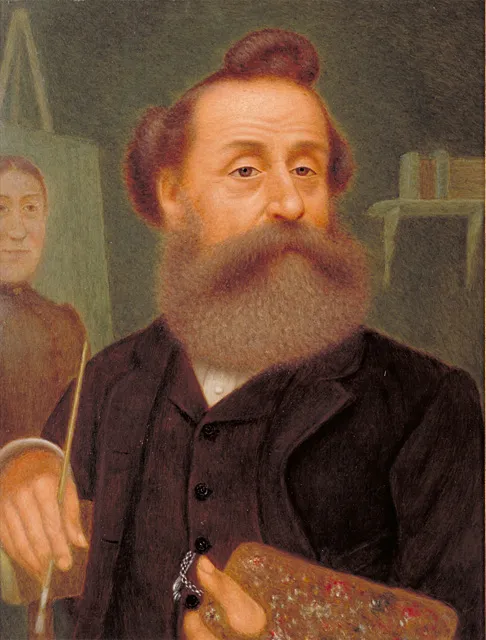
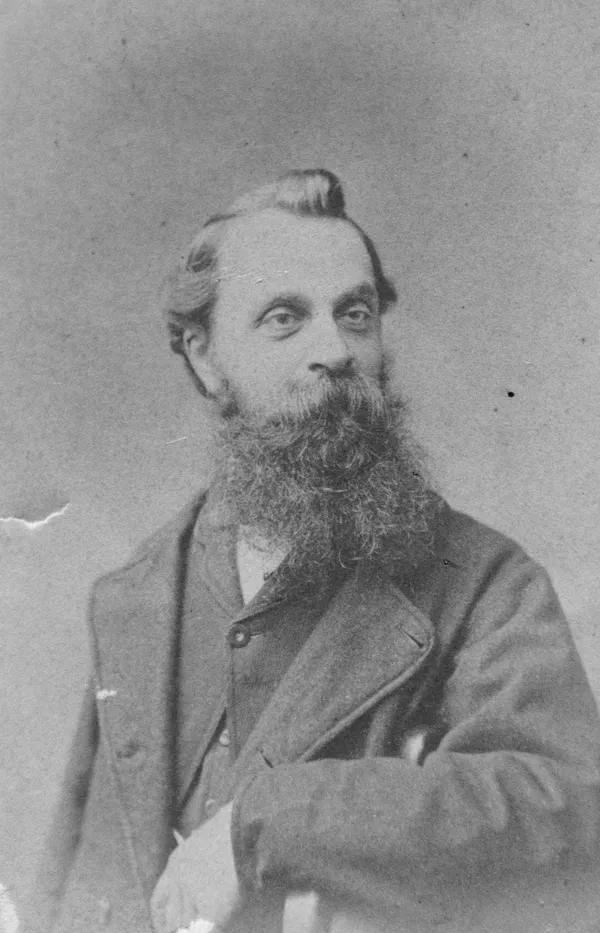
Corbet is known to have been competent at a number of different skills, finding time to repair clocks and value property, while also producing a number of paintings – all while holding the position of head teacher at Forest School. Geoff explains that he would have taught all subjects and would probably have been the only teacher at the establishment in those days.
However, Geoff is quite clear that although his paintings have become as well known as his writing, he really should be recognised as a poet who painted, rather than the other way around.
‘His paintings were really a sideline,’ he says.
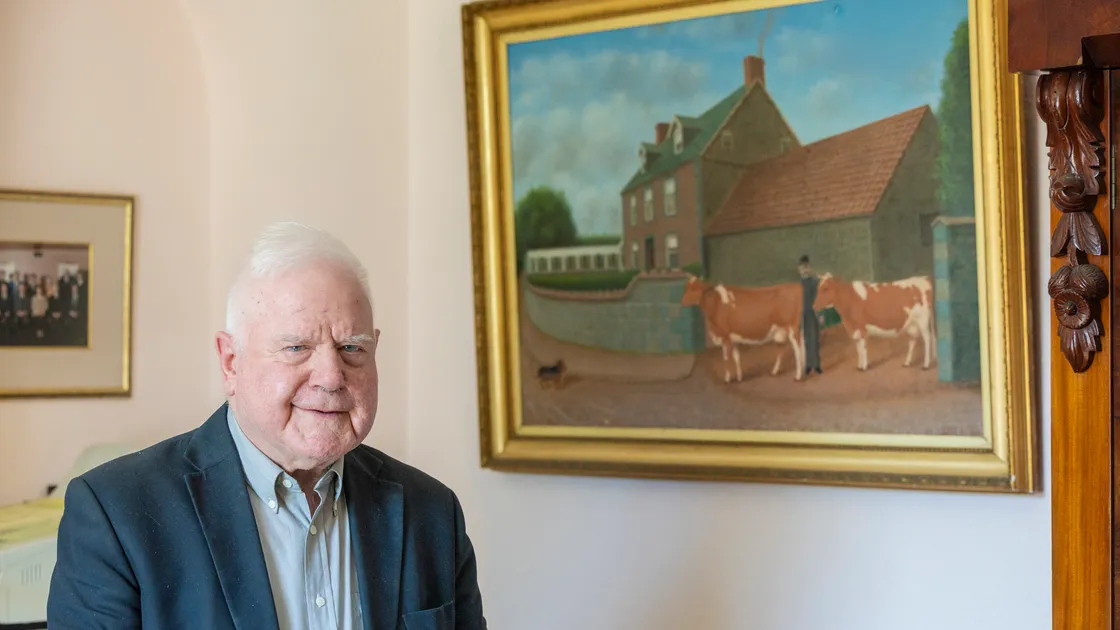
‘He painted cows and rural scenes, along with paintings of properties. These will have been contracted by the owners of those properties or livestock as a way of keeping a record. My wife’s great-great-uncle commissioned him to paint this house and a couple of prize cows, for example.’
Geoff later shows me the 1894 painting of the farmhouse in which I’ve visited him, which prominently features two cows named Valentine and Cherry, a small dog – which features in several of Corbet’s works and was probably his own – and a resolutely unnamed farmhand tending the cattle.
Corbet was among those self-taught painters who came to be classed as naive artists, and Geoff contrasts this with his skills as a poet.
‘In my talk, I’ll be showing a map of Corbet’s route around the island as he composed his poem L’Touar D’Guernesy,’ says Geoff.
‘He chronicles the changes he has seen over the previous 40 years, as he visits specific points, describing what they are and what they were, although bear in mind that when he’s writing this in 1880, he has never seen a motor car – it’s still all horse-drawn carts.’
This very detailed poem, containing specific descriptions of people and places known to Corbet and their folkloric tales of fairy folk, witches and mermaids, relates a clockwise journey around the island, from St Martin’s all the way round to St Peter Port and then up through St Andrew’s and back to his home in Forest. Geoff considers this to be among his favourite works of Corbet’s.
‘Even though Corbet regarded himself as a disciple of Metivier, what he achieved in his poetry came to be regarded as superior by some,’ he says.
‘Marie de Garis, for example, compares Metivier’s French ancestry, his learning of Guernesiais from the age of six and his absence from the island for 30 years, to Corbet’s native tongue being Guernesiais and his local heritage, and she said he was the more authentically Guernsey poet. Hazel Tomlinson, who you will have heard on the radio for many years reading the news in Guernesiais, has said Corbet is the easier to recite.’
L’Touar D’Guernesy, along with other works by Corbet, is available to be read at the Priaulx Library and those who don’t speak Guernesiais can look at the translation by Ken Hill – himself a painter and patois speaker, who was passionate about the preservation of the language.
‘It is of course impossible to retain entirely the poetic sensibility of Corbet’s work in translation, but reading it in English can give you an impression,’ says Geoff.
The event at Guernsey Museum will afford an opportunity to hear Corbet’s work in its original tongue, with live performances from tour guide and researcher Elizabeth Gardener-Wheeler and Jannick Brehaut, who recently won a cup at Eisteddfod Guernsey with a rendition of one of Corbet’s poems.
Corbet’s legacy has been to leave us with reams of original poetry in this island’s own tongue – with just one of those two books on Geoff’s table containing 8,500 lines of verse – but it has also been to encourage other writers to take up the same cause.
‘He’s had a big influence on the survivability of the language,’ says Geoff.
‘I’ve kept the Guernsey Language Commission informed of my research and our plans for this event and they’ve been very supportive.’
Celebrai Les Daeux Chents Ans De Denys Corbet is part of the Museum After Hours programme run by Guernsey Museum at Candie, and is being held in partnership with the Guernsey Language Commission between 6-8pm on Friday 22 May. There will be an illustrated talk at 6.15pm, repeated at 7.15pm and the cafe and galleries will be open. Entry is free and there is no obligation to book in advance.
Guided walks will celebrate the bicentenary of Corbet’s birth tomorrow and on Saturday.
The two-hour walks, inspired by the 19th-century epic poem L’Touar D’Guernesy, start on each day at Forest Church at 10.30am, concluding at the same location at approximately 12.30pm. They are each led by an accredited tour guide and are free of charge, supported by Guernsey Museums. Booking is essential via info@language.gg or by calling 07839 106 284.
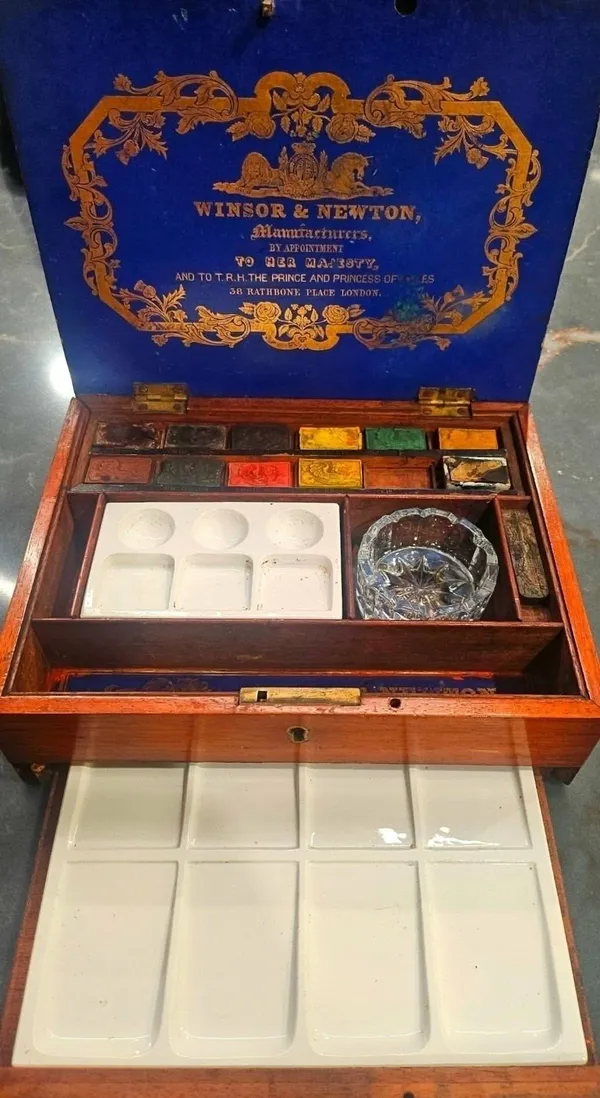
Canadian sculptor Christian Corbet is a distant cousin of Denys Corbet, as well as a keen admirer, and is the proud owner of a paintbox which has been passed down through the family, along with a collection of miniature paintings.
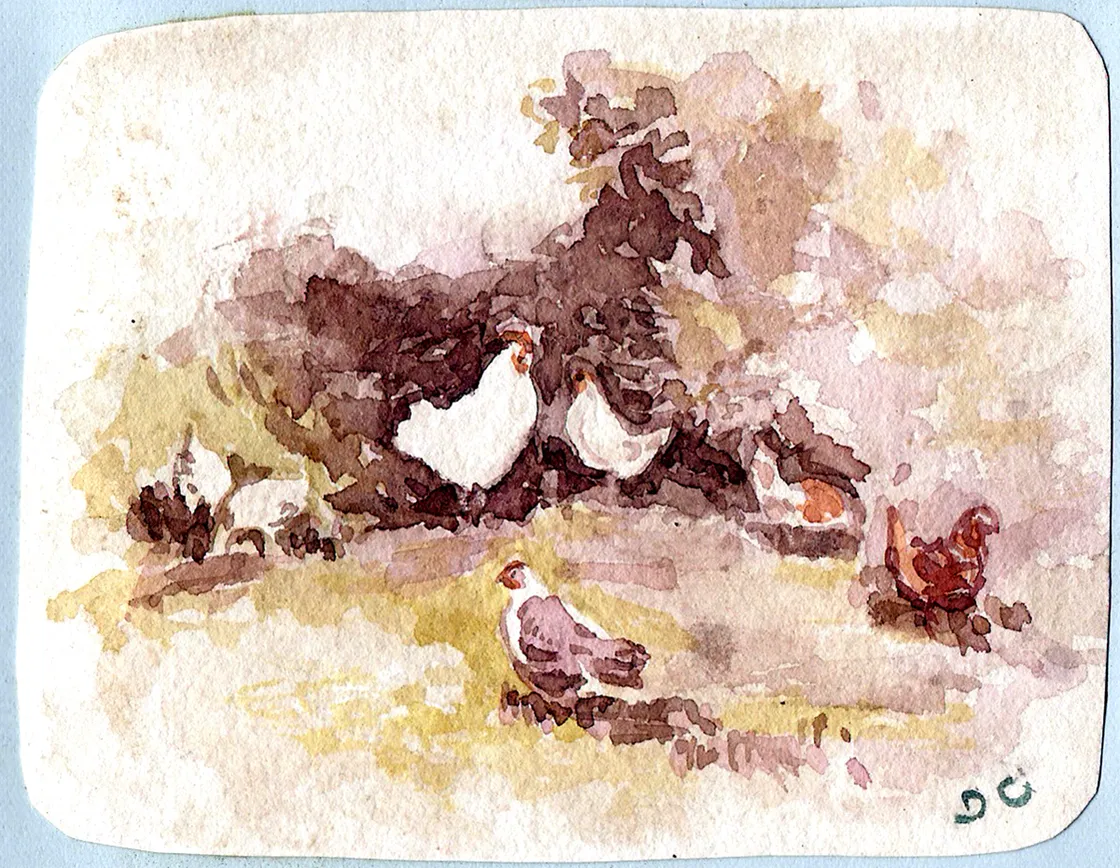
He tells of how his own ancestor Jean Thomas Corbet used to join Denys for ‘impromptu painting excursions in the Vale’.
‘One such excursion and lesson resulted in Denys explaining his financial situation and selling a spare paintbox to Jean,’ says Christian, ‘hence how one of the boxes came into my possession. He also bought three paintings over the years including his childhood sketchbook, the latter of which includes the most delightful and sympathetically rendered miniature images of early Guernsey life.’
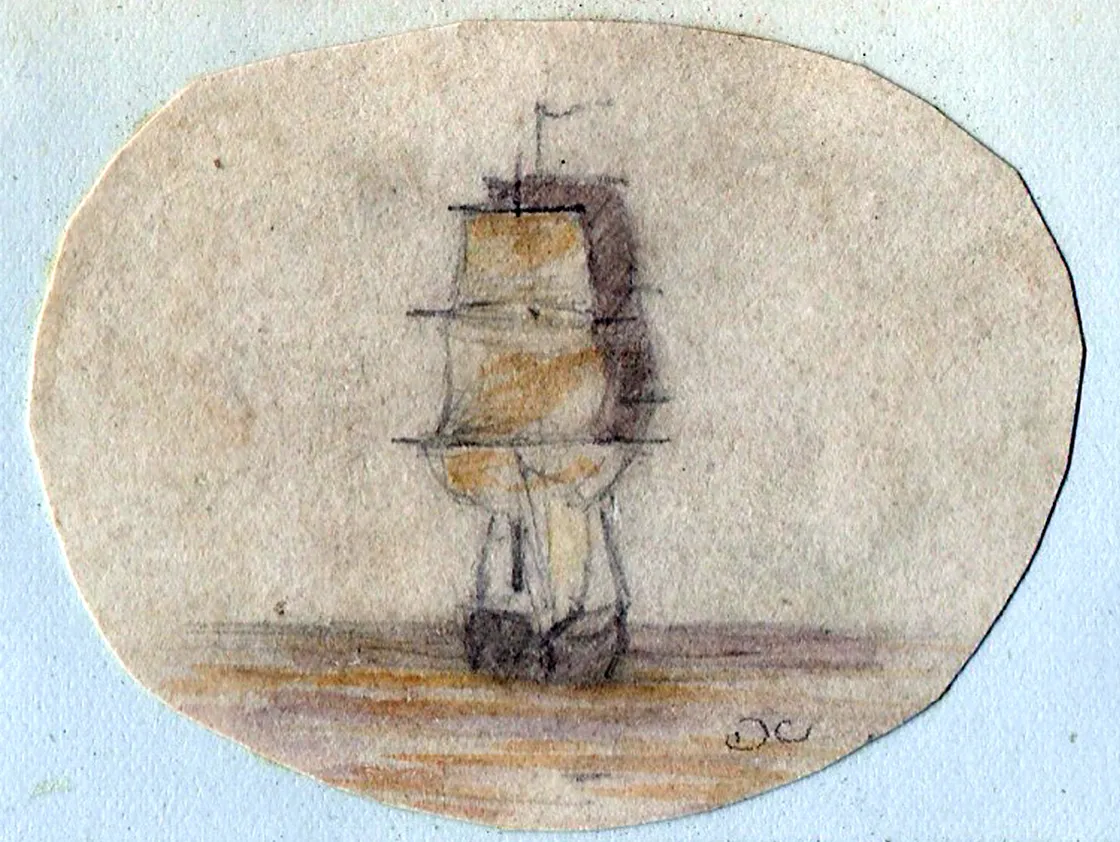
Christian says he is minded to donate the paintbox to Guernsey Museum, so with any luck it may be on display for the 250th anniversary celebrations in due course.





You need to be logged in to comment.