

Who knows what life might have thrown at young Reg Blanchford – the 15-year-old Guernsey lad labelled ‘feckless and workshy’ by his Les Vauxbelets School masters – if he had ridden his motorbike uninterrupted up Le Vauquiedor, along Mount Row and into Kings Road on the last Tuesday night of October 1930?
That possible future may have been very different to the life that he was actually destined to live – a future mapped out by the consequences of a single moment that nobody would have wished upon him, yet which ultimately led to his being revered as one of the greatest Guerns of all time, listed in the Guinness Book of Records as the chap with the most bravery awards to his name.
In that fateful moment, as he turned the corner into King’s Road at 8.45pm, a Studebaker emerged from the Ville au Roi and the collision that followed was violent enough to buckle his front wheel, bend his front forks and handlebars, and break the exhaust pipe. Needless to say, Reg didn’t come out of it too well either.
He lay unconscious where he was thrown, with a broken pelvis, broken leg, broken arm, broken nose, smashed eye and other injuries. Along came two residents of the street, Frank Le Poidevin from no. 22 and George Baker from no. 3, who managed to get a car owner – Ulric Ash, who owned a garage on Brock Road – to take the lad to a doctor.
Arriving at the home of Dr E de Jersey, they found he was out for the evening. On, then, to Dr E V Gibson, who quickly assessed that Reg needed to go to Victoria Hospital. The doctor followed and gave him every attention, such was the seriousness of his condition. There was some doubt as to whether Reg could survive.
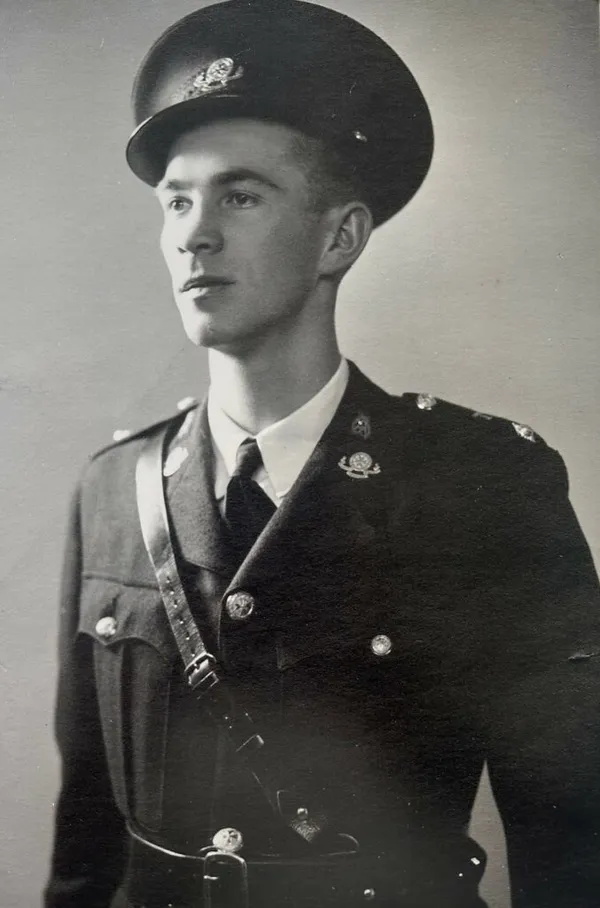
That he did was in no small part due to the impromptu rescuing party described above, along with three years of trips to UK hospitals for operations, during which Reg had a lot of time to think.
He especially thought about the fact – divulged by some of the medical staff looking after him – that his injuries could have been better tended, and therefore could have healed more quickly, had there been an ambulance to get him to a hospital in more haste.
‘His mind went over and over again about the lack of a fast-reacting ambulance service for the island,’ says his son Gary.
‘It became his obsession.’
The only ambulance which operated in Guernsey at the time of Reg’s crash was States-owned. It was kept at the Town Hospital and the driver, who had to be called out, was only part-time and not trained in first aid.
‘In 1934, the St John Ambulance formed a brigade,’ says Gary.
‘This was just what he had been looking for and he immediately decided to join. Over the next two years he trained along with other members but all the time he was looking for a way to start an ambulance service. He brought the subject up many times with his officers but to no avail.’
Finally, in 1936, they relented and allowed Reg to investigate establishing such a service – as long as he raised the funds himself and could find somewhere to keep the vehicle.
Happily, his father Harry Herbert Blanchford ran a concrete works on the Rohais and agreed to build a garage near the entrance for an ambulance.
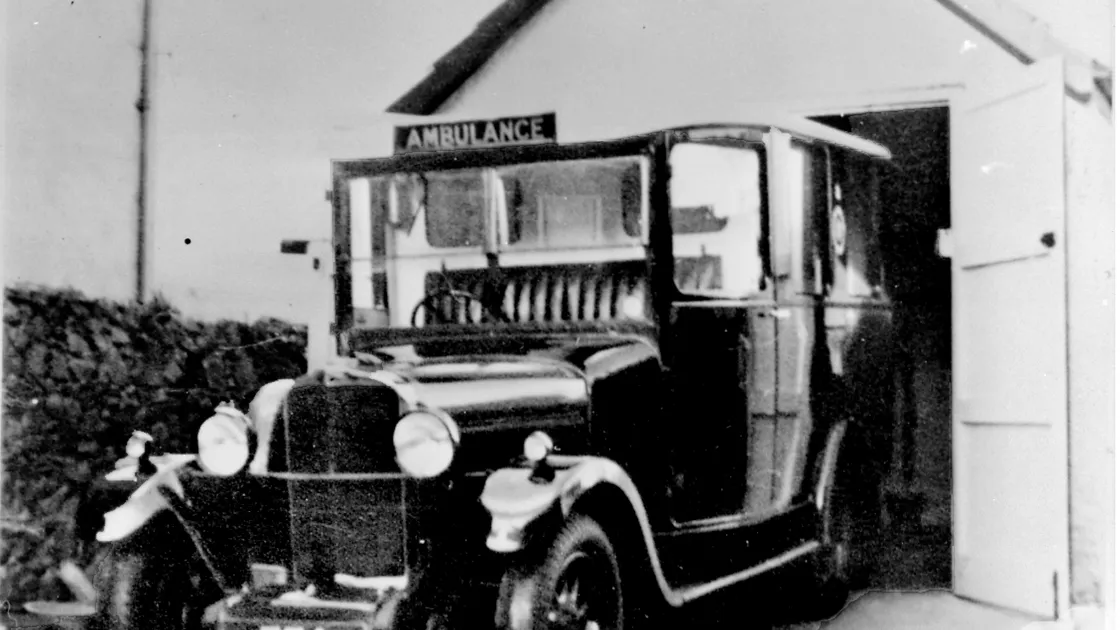
‘He was lucky enough to find a second-hand Talbot ambulance and a generous donation from Jurat Roussel of £100 [about £6,000 at today’s value] secured the purchase, and so a rival service to the States ambulance started,’ says Gary.
The first call to ‘central 70’, is believed to have been answered at 5pm on Tuesday 2 June 1936 – a moment that can be regarded as the birth of the transport section of Guernsey’s St John Ambulance Brigade, a professionalised entity that we now refer to as the St John Ambulance and Rescue Service.
Rather confusingly – on this 90th anniversary – it has to be conceded that the St John Ambulance Association was actually established in Guernsey in 1882 and supplied first aid training, nursing care and eventually a volunteer ambulance division, but the SJARS and St John Ambulance are now two separate entities the within the Order of St John, and it’s the former which celebrates its origins today.
That first response was perhaps a case of ‘start as you mean to go on’. The ‘new’ second-hand ambulance was not actually supposed to enter service until the following morning, 3 June. But when that call came in from a man only two days into his subscription to the service, suffering with pneumonia, it was smartly answered and he was promptly taken to Alexandra Nursing Home by Reg and Cpl R A Luff.
‘It was not long before islanders realised that if they wanted prompt attention they called Dad’s transport section,’ says Gary, ‘as he would eat and sleep by the phone 24 hours a day. Whereas the driver of the States ambulance had to be called out to go and unlock the garage to get the ambulance out and go to a call.’
Despite the level of service to the community, Reg was officially unpaid at this time, although his father agreed to provide him with a small allowance.
A second ambulance was added in 1937 after the public responded to an appeal and raised the money for it, and by 1939 the States agreed that the SJAB should be the island’s official ambulance service and the States ambulance was passed to St John, along with a small annual subsidy of £200 and two paid members who had been SJAB volunteers – Corporal John Dorey and Private Charlie Froome.
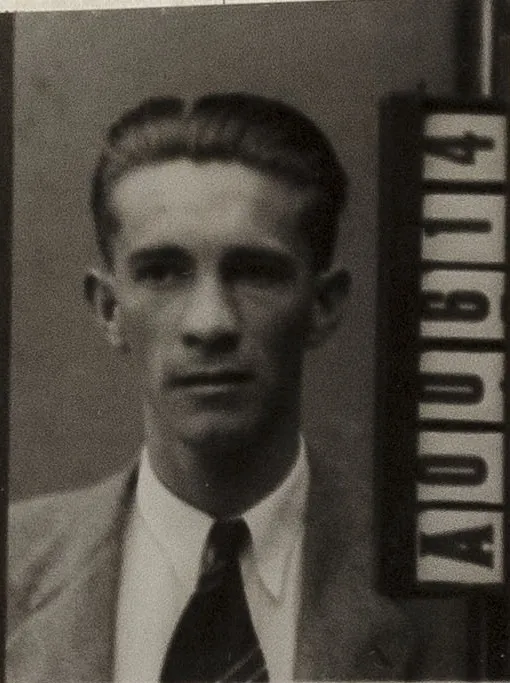
During the Occupation, Reg managed to persuade the German hierarchy to allow autonomy for the service, on the grounds that the new overlords had arrived without ambulances of their own, Reg’s outfit knew the island like the back of their hands and they would treat local or foreign patients just the same. That’s not to say that he had a cosy relationship with the occupiers. Throughout, he made it his business to take covert photographs of German military activities on his secreted Zeiss camera, risking deportation, or worse.
In the late summer of 1944, when petrol became extremely scarce and expensive, Reg and Charlie took the desperate measure of stealing two 40-gallon drums from a German depot on nearby Collings Road, but Gary says they were so on edge in the ensuing days, that they vowed never to do it again.
So, ever the innovator, Reg arranged for Mollett’s Coachworks to convert a 1936 ambulance so that it could be drawn by horses. However, when it turned out to be too heavy for the horses, Mollett’s dug out some old plans for a lightweight coach and built one from scratch. It is now to be seen on display at the German Occupation Museum.
Another vehicle was converted to run on charcoal during the Occupation, which racked up 86,000 miles.
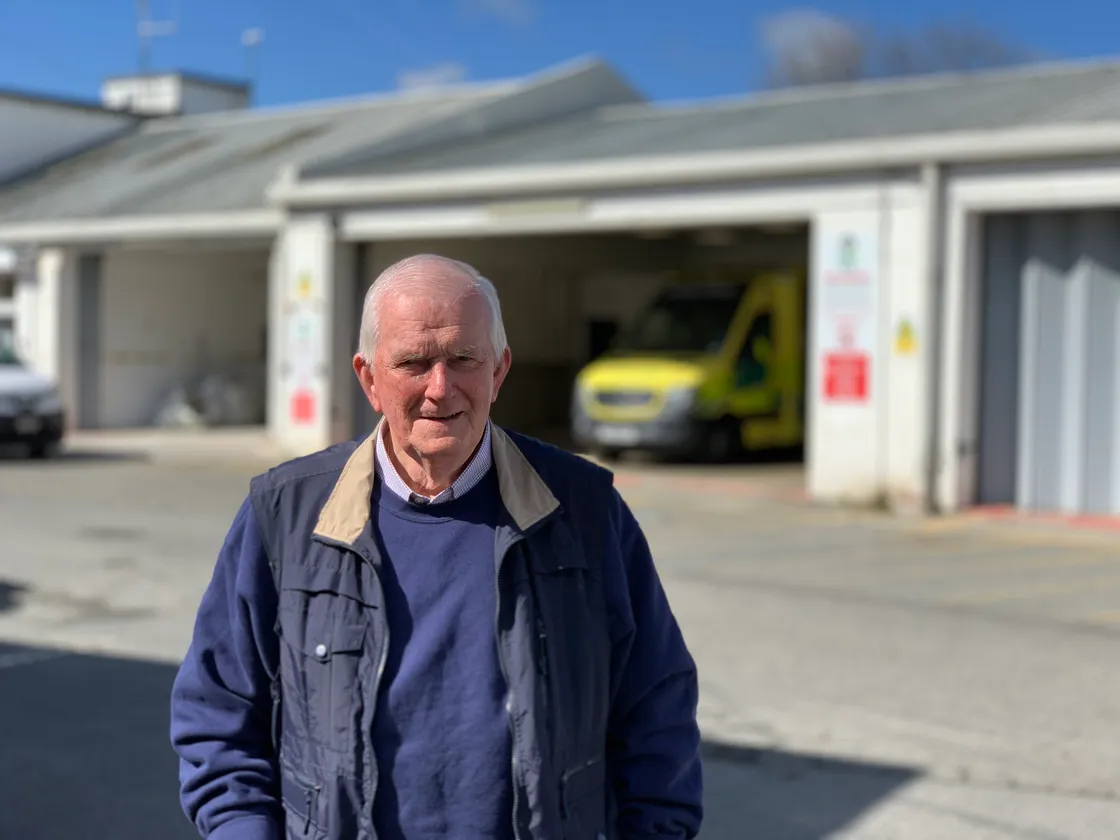
‘Dad had a great team of volunteers behind him and it was said that not a call went unanswered during those years,’ Gary says.
Despite his legendary dedication to his vocation, Reg managed to maintain a home life, marrying Rona Payne in 1940, with Gary coming along in 1942, followed by Roger in 1944. Rona was ‘totally involved in the whole thing’, says Gary, ‘manning the phone when Dad was out on a call.’
With the Occupation over, Reg took on the Rohais site as a stand-alone operation, while the concrete works moved to Collings Road.
There followed a remarkable period of innovation, including the carrying out of cliff-rescue operations, for which a wooden training tower was built at the Rohais.
In 1947, the SJAB became the first ambulance service in the British Isles to operate two-way radios. Five years later, the first marine ambulance was introduced, with the States contributing funds to it from 1956. A first aid room was added, where minor procedures could be carried out. Gary gives the example of removing fish hooks from hands and fingers.
With diving seeing a growth in popularity, a recompression chamber was introduced, along with appropriate training for SJAB staff. There was also to be an inshore rescue boat, a mobile searchlight and even mobile radar units.
All through this time, Reg displayed courage and gallantry sufficient to earn him an MBE in 1950, a Queen’s Commendation in 1957, a George Medal the following year and an OBE in 1961.
By 1970, he had been made a Knight of Grace of the Order of St John of Jerusalem.
His departure from the service was equally single-minded, if a little less likely to be celebrated. He resigned in 1977, saying he ‘could no longer withstand unwarranted local interference’.
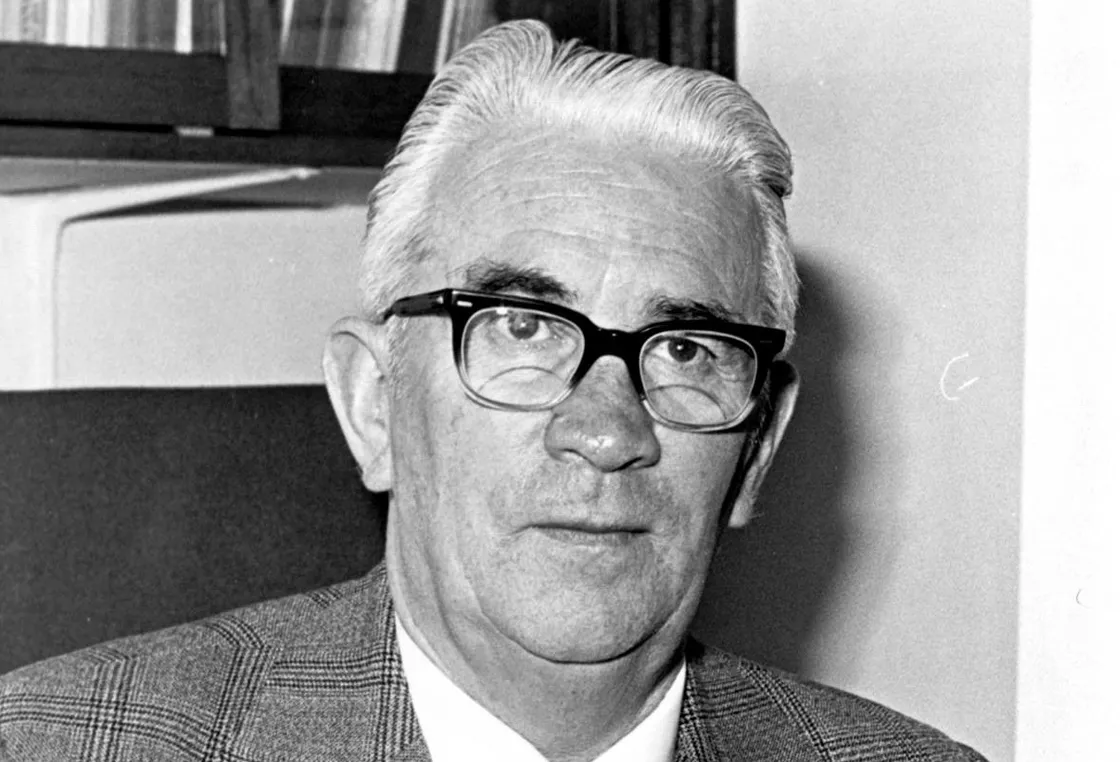
When we here at the Guernsey Press celebrated our 100th anniversary in 1997, we invited a public vote to identify the ‘greatest Guern’ of that century. Reg came joint top alongside Sir Ambrose Sherwill.
Reginald Herbert Blanchford died on 4 September 2002, aged 87.
‘My father was totally dedicated and driven to building the best possible ambulance transport and rescue service for the Bailiwick of Guernsey,’ Gary says.
‘He was driven by the need to ensure that only the best was good enough and he also expected that from his men. He was a perfectionist and would not accept anything less than perfect, as my brother and I found out while growing up.
'The St John Transport section was run as a very disciplined organisation. He hated bureaucracy that interfered with getting things done and fell foul of committees on many occasions when they created bureaucratic obstruction’
Gary concedes that his father would not have been the easiest to deal with, but he looks back on his achievements with no small measure of awe.
‘I’ve always been immensely proud of him,’ he says, ‘he had unusual determination, he never stopped innovating, he was selfless and he was also a great father, even though his work consumed most of his time.’
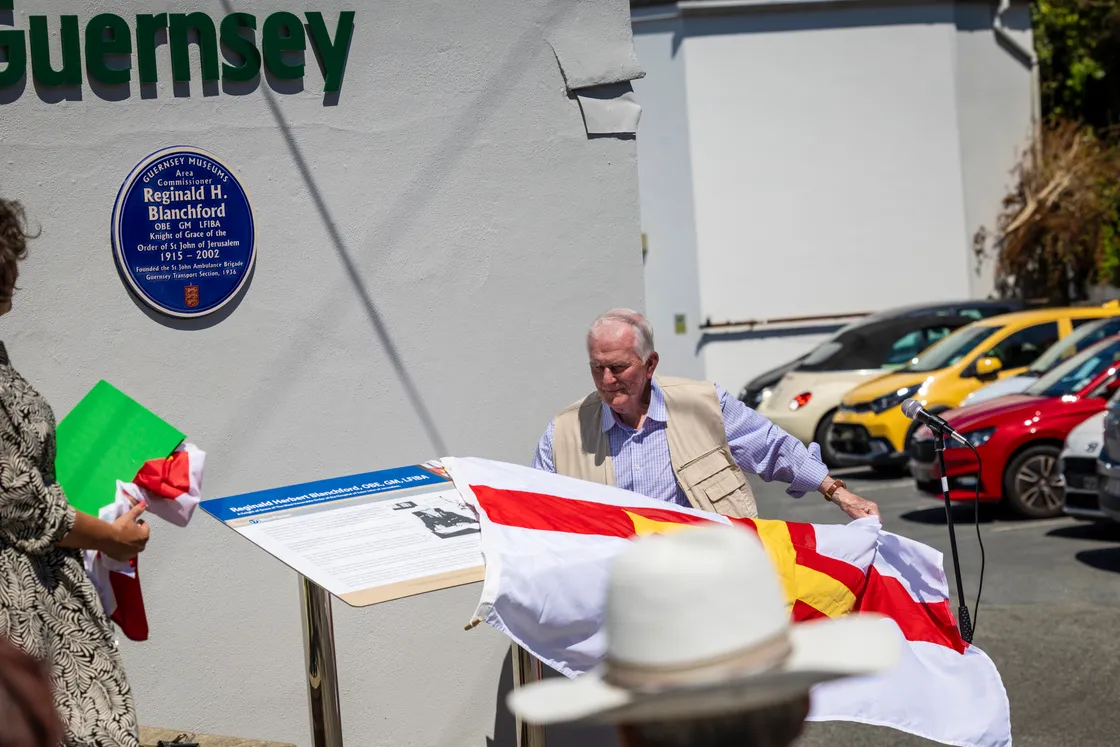
‘The patients always came first’
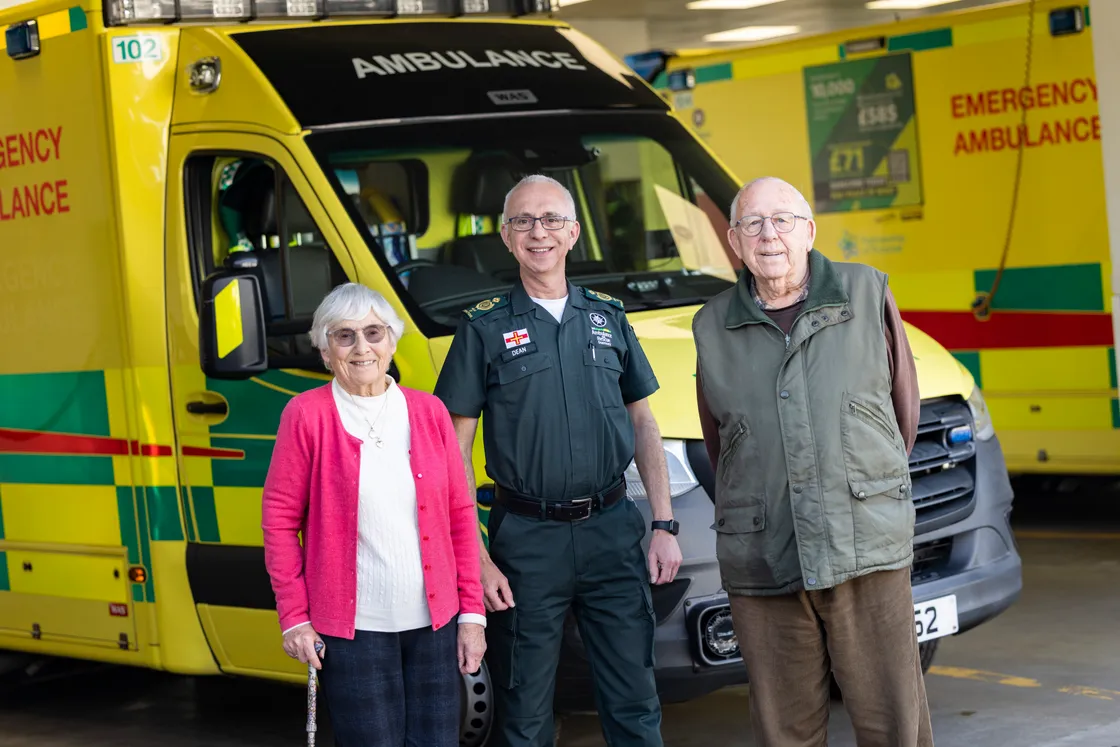
As the St John Ambulance and Rescue Service celebrates 90 years since that first call out from its base in the Rohais, Simon De La Rue meets three staff with decades of service to look back on.
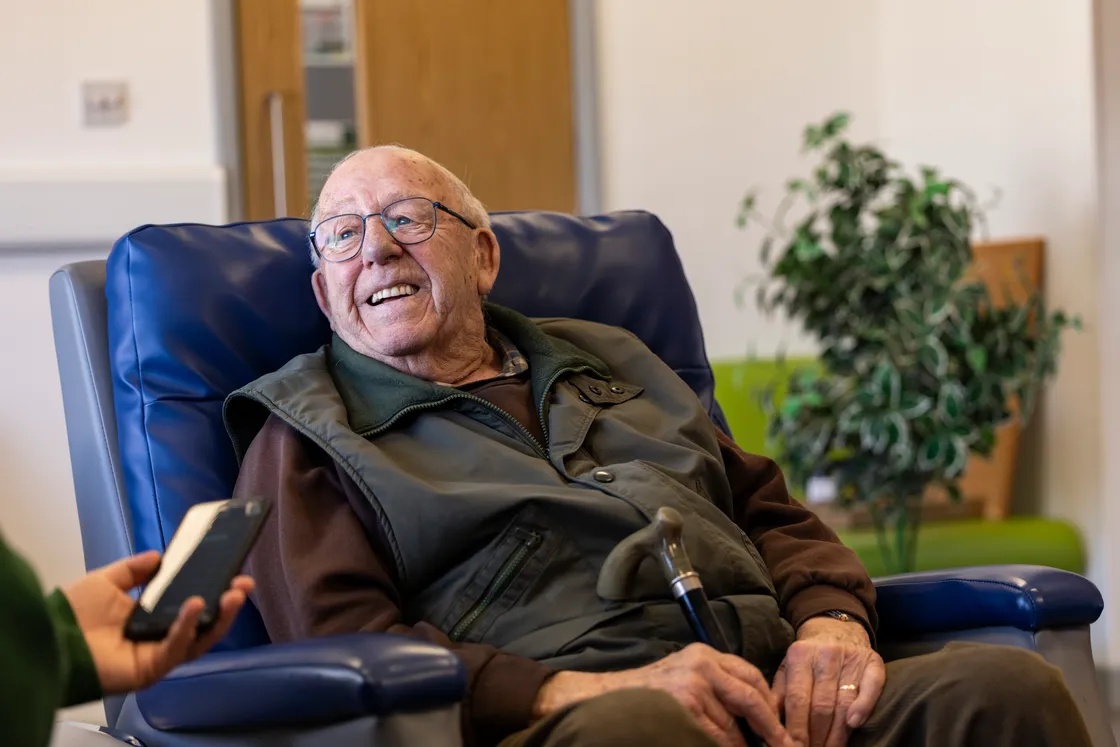
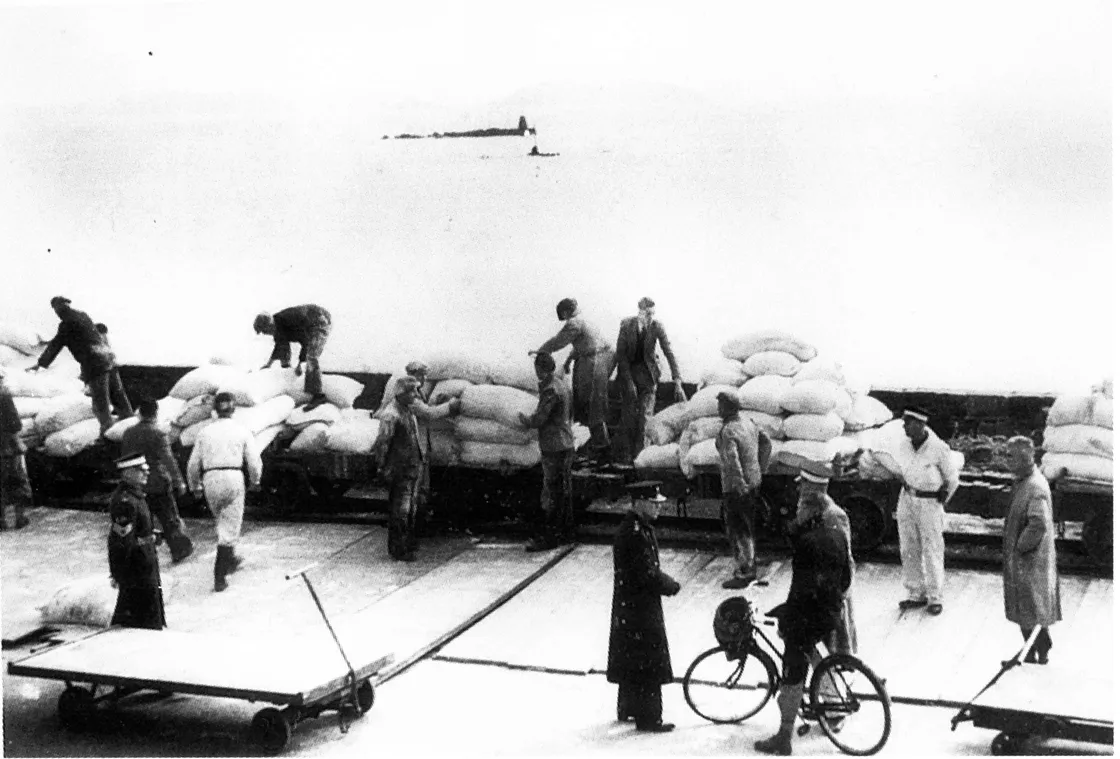
Gerald Blondel was just shy of his eighth birthday when the first relief parcels arrived off the SS Vega to sustain a desperate Guernsey population in 1945.
He recalls helping his mother – herself a St John volunteer – at a distribution centre near Port Soif, when he was a cadet.
Like many before and since, he soon grew to relish the opportunity to serve the island’s medical needs and joined the transport section in 1953, as a 16-year-old.
‘I learned all about first aid and diagnosis,’ Gerald tells me, ‘and generally how to treat people. The first incident I remember attending was when I was about 16 and somebody had passed out in the North Cinema when I was on voluntary duty there. You learn to put yourself in their position and treat them like people.’
Gerald served for 28 years before his departure from the service in 1973 and has many fond memories, which are more diverse than we might imagine today.
‘We dealt with a lot more things,’ he says.
‘If somebody died, they’d phone the ambulance station for someone to lay them out, and we had people we could call on for that, like Mrs Marquand. We used to take the States Works telephone calls from 6pm until 7am. So if there was anything wrong with a States house, they’d phone us up and we’d get in touch with the co-ordinator – because there was no such thing as these magic phones.’
Gerald remembers long hours and shudders at the memory of coming off a night shift at 8am and then – on those occasions when he would have to switch to early shifts – returning five hours later to start again.
In his day, Gerald believes that even with only 12 staff – as opposed to today’s 55 – the service was less busy. However, he was called upon to deal with far more injuries caused by road traffic accidents, as car designers had yet to adopt the safety improvements we have seen in the decades since.
So I wondered how that might have affected him.
‘You’d just talk about it and get over it, I’m afraid,’ he says, stoically.
‘Occasionally you’d get a nasty one, yes, and then it would take a bit longer to get over. But you gradually built up seeing so many horrible things that it became like a normal thing. The best thing was crash helmets. With them, you didn’t have so many smashed heads. And seat belts made a big difference too.’
Gerald admits that if he could turn the clock back, he’d come straight back to the service – and head of operations Dean de la Mare chimes in to say that they’d happily take him back.
‘Everyone you were working with was a friend of yours,’ Gerald explains, ‘and the boss was your father. Reg was honest and he wanted to improve all the time. He built this place from one end to the other.’
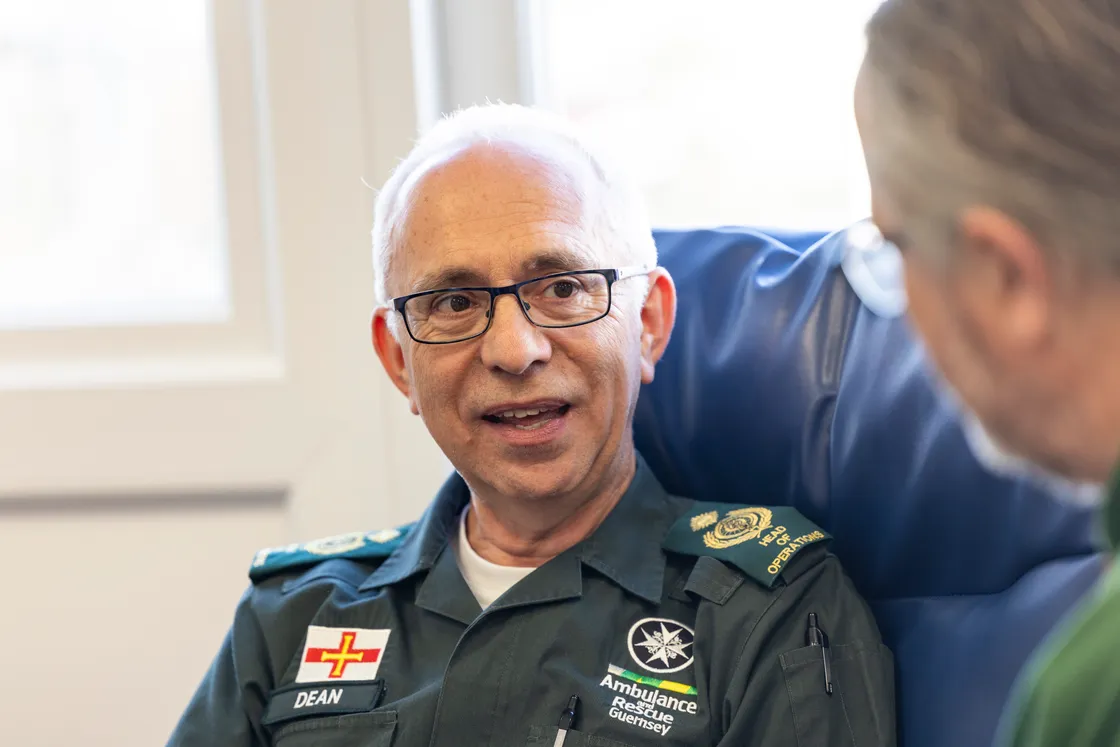
Like Gerald, Dean began his St John journey as an 8-year-old cadet, which in his case was about 50 years ago.
‘There are still some of our young staff who come through on that route, so it’s great to see them grow and to encourage them on their career progression,’ he says.
‘I think it’s really important and I’d like to see more of it, to be honest.’
When asked how the service has evolved in his half-century of involvement, Dean thinks first of the expanded operation in Alderney, which has become a satellite station, and of the huge increase in paramedicine and clinical skills among an ever larger workforce.
This reflects changes in legislation, expectations from beyond our jurisdictional borders and clinical advances.
‘As we move forward with our strategic direction we’re looking much more at being able to treat and leave people at home, rather than taking them all into the emergency department,’ says Dean, confirming that about 20-25% of cases can now be dealt with in that way.
Meanwhile, some services have been relinquished by the SJARS into the hands of other agencies which are better suited, with the fire service taking on cliff rescues and the RNLI dealing with inshore rescue.
‘Those were gaps that SJARS filled but now our teams have to concentrate far more on the clinical side because that’s advanced so much more. You go back 50 years and you didn’t have the paramedics and the clinical skills that we have today.’
Another loss has been the treatment room at the Rohais, but Dean explains that it’s not uncommon for a majority of on-duty staff – possibly all of them – to be out on a call at any one time, leaving the headquarters empty of clinically trained staff.
‘So it’s better to take them to the emergency department of the PEH if they need emergency care,’ he says.
Nevertheless, for all these changes, the core value of taking care to where it’s needed hasn’t changed at all since Reg Blanchford founded the service 90 years ago.
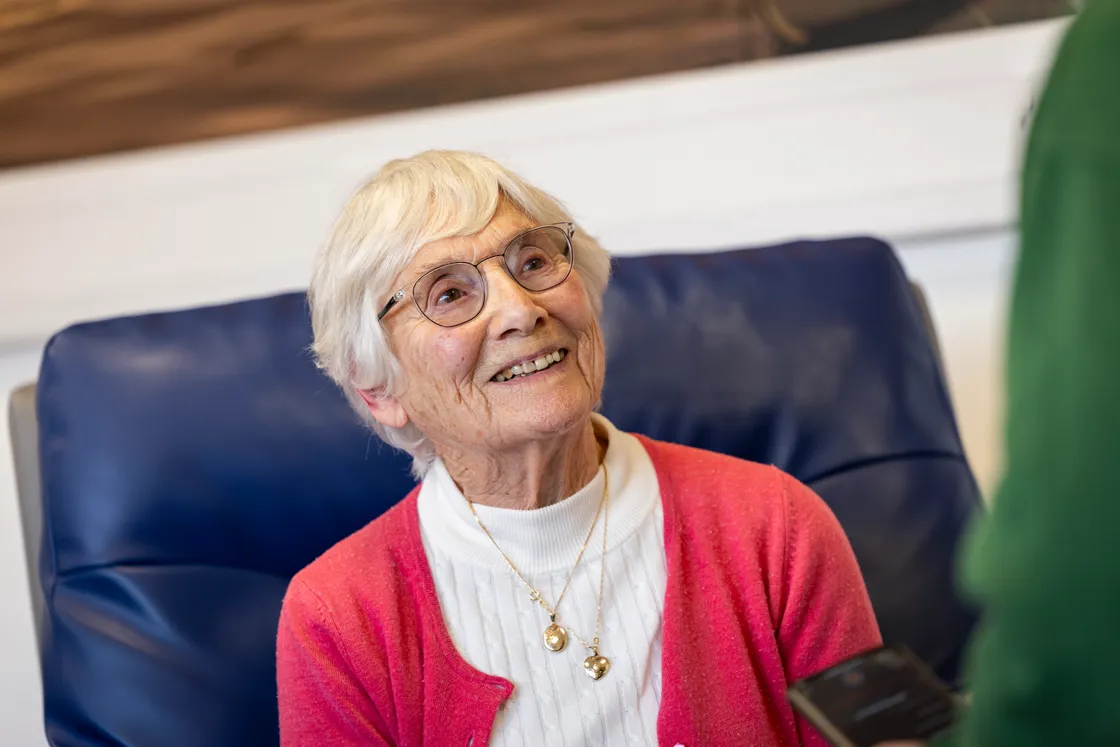
Anne Blanchford joined the Guernsey nursing division in 1953.
‘I used to go on voluntary duties and then there was a job going in the control room and I got it,’ she recalls.
‘It was very interesting. I loved it.’
Anne stayed with the service until 1977.
She remembers Reg in her early days there as ‘a very strict boss’.
‘If we didn’t pick up the phone on the first ring, he wanted to know why,’ Anne says.
‘The patients always came first.’
She remembers, among her early call outs, a breech birth, and a woman who was deemed to require the fitting of a straight-jacket before being removed to the Castel Hospital.
‘In those days, we were able to call on the nearest doctor, and they were willing to help if we needed it,’ she says.
Anne went on to marry Reg. She believes that if he were to walk back into the headquarters today, he would be satisfied with his legacy.
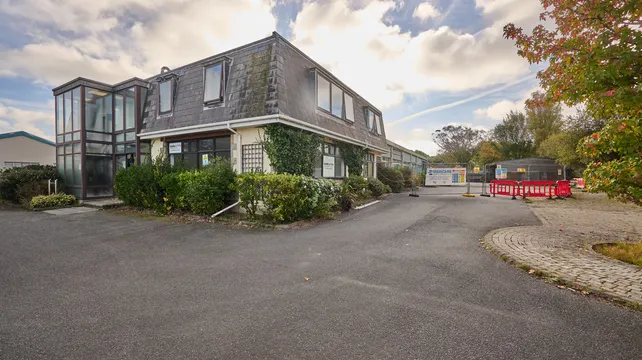
‘I think he’d be very proud of the property, which was his dad’s concrete works,’ she says.
‘I think he’d be amazed to see the place now and proud to see his name on the front of it. I think it’s lovely.’



You need to be logged in to comment.