

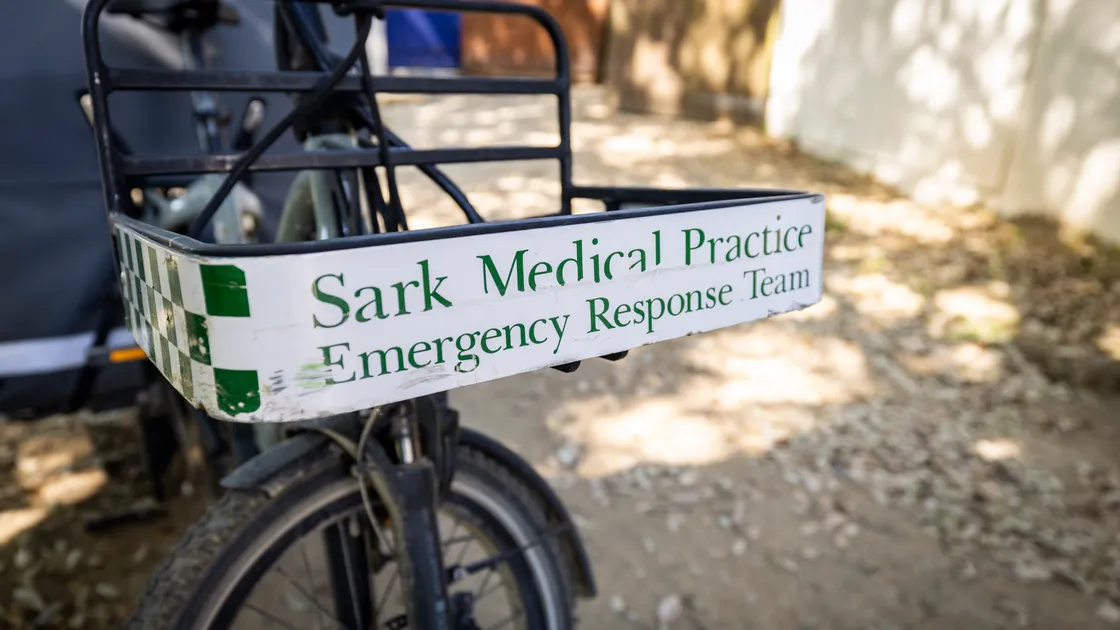
Sark’s fire brigade, ambulance service, and first aid rapid response teams have an impressive record. Despite being staffed entirely by volunteers, whenever they are called out their response times are some of the fastest you will find anywhere. That’s despite having to travel to the scene of an emergency either by tractor-pulled appliance or even by specialist medical emergency bicycle – yes, honestly!
How do they do it? That’s what I wanted to know too. So during a trip to Sark to quiz members of Chief Pleas over a range of political issues, I took time out to meet up with both the fire service and the medical first responders.
‘See you at 1.30 at your garage,’ I told them. It didn’t work out that way. When I arrived the garage was bare. They had been called out to an old bonfire which had reignited itself during the recent heatwave and then spread to a nearby hedge.
Of course, in many ways that was a bonus. An opportunity to see them, if not in action, then at least returning from action. Far better than a purely staged occasion. But I assure everybody that any rumours I had been playing with matches to enhance my feature are completely untrue.
When they got back after successfully extinguishing the blaze I talked first to Sark’s fire chief, Kevin Adams. It’s a role he has held since 2008 but he’s been a member of the service since 1989.
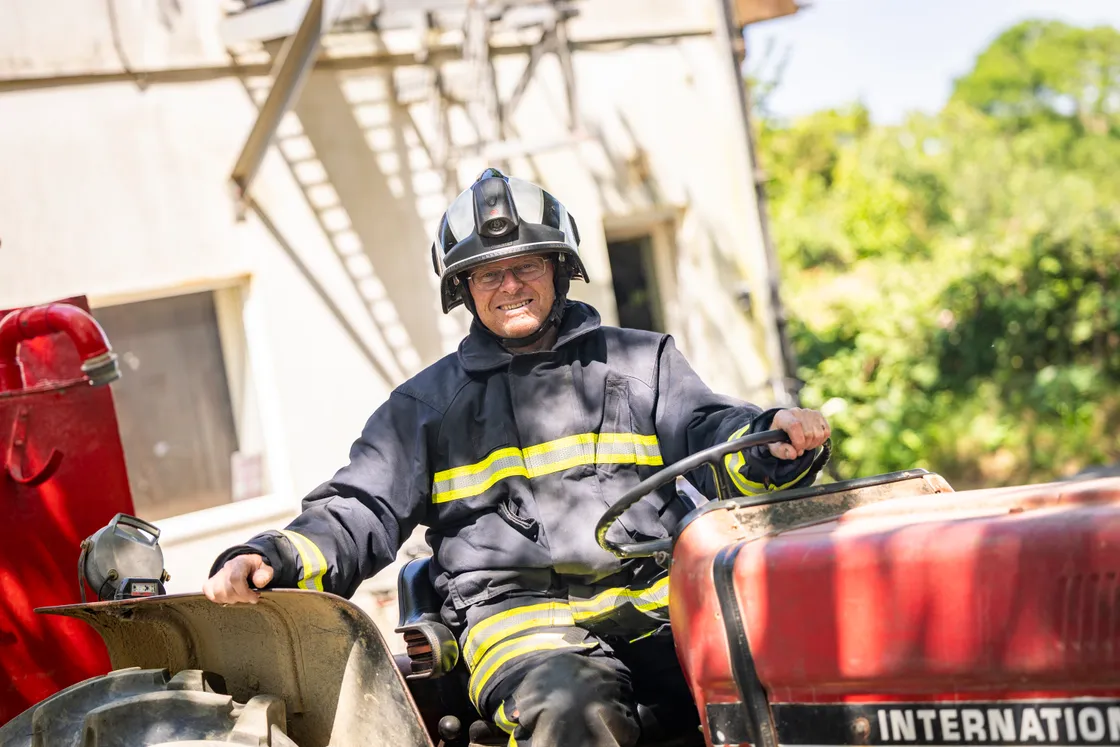
I asked him how many volunteer firefighters there were on Sark, and how they were called out when needed? ‘There’s 17 of us in total. We weren’t all here today, there are five away, including my brother. We get called out by a special system overseen by JESCC [the Joint Emergency Services Control Centre] in Guernsey, so it’s Guernsey that’s called us out today, someone called 999.’
Whatever the system of call-out, Sark’s emergency services are rightly proud of their record of rapid responses. Kevin refers to a recent incident where a visitor suffered a heart attack while walking up the harbour hill.
‘One of the first responders was there within one and a half minutes, then it cascaded. I was there within three minutes, plus five or six others, and by the time we had finished, if you included the three paramedics from the emergency response team in Guernsey, I think it worked out at 31 people attending the scene to help.’
There is no doubt that Sark’s unique emergency services reflect the very close-knit community, and the tradition of being there for each other. Kevin tells me he recently advertised for two new volunteers and had no trouble filling the posts.
As for financial support from government? Well there is some, but it is pretty limited. Chief Pleas provides an annual grant of £11,000, but all of the other costs are met by fundraising. One year the fire service needed some new helmets and so they decided to create their own version of the Women’s Institute’s notorious nudist calendar. Not only did they raise enough for the helmets but also some spare to donate to a leukaemia appeal being run by the WI.
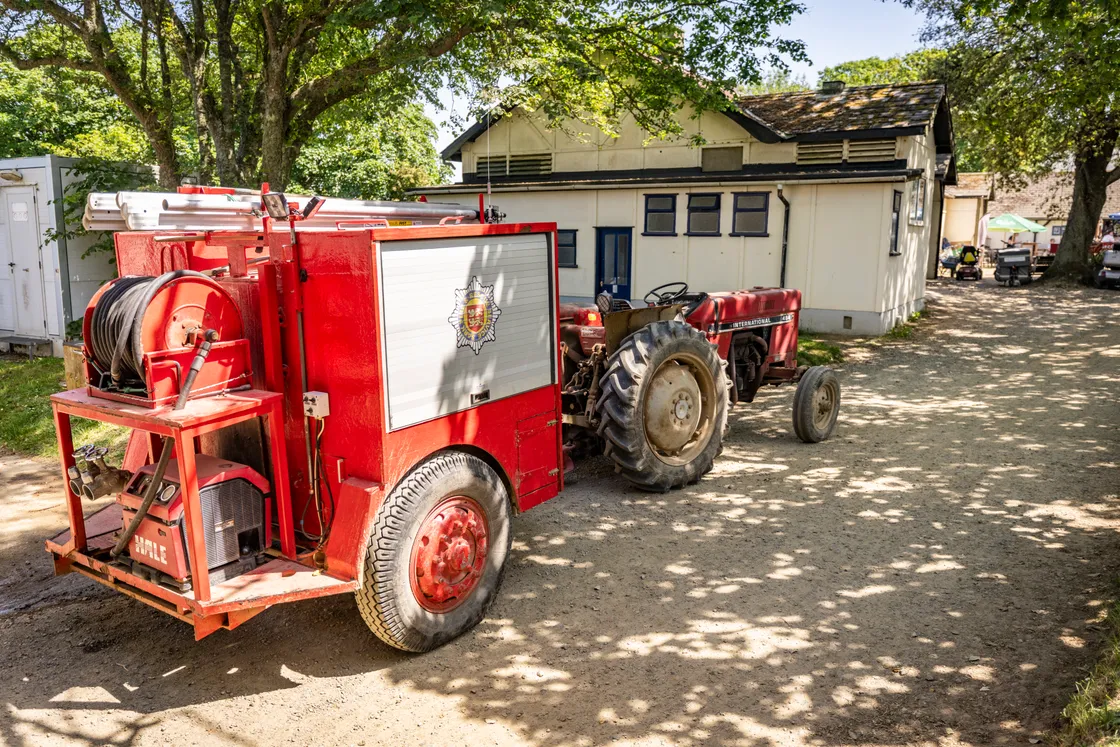
Before finishing I wanted to know why they used the tractor-pulled appliances. I know that Sark is rightly against allowing motor vehicles to ruin its unique serenity, but couldn’t an exception be made for emergency vehicles? It turns out the reasons why are entirely pragmatic. Better turning circles and all-terrain capability to help reach Sark’s more inaccessible spots. Plus, because the appliances are only used now and then, there is a fear that a normal ambulance or fire engine may not start when required. But they can be pulled by any of the tractors the team turn up on. Not only that, but the emergency services even have the power to requisition a passing Massey Ferguson from a third party if required.
But if tractors would be a novelty item for most emergency services around the world what would most make of a fully equipped medical incident response e-bike? And when I say ‘fully equipped’ I mean ‘fully equipped’. It carries a monitor, oxygen cylinders, and a defibrillator, together with a massive rucksack of various medical aids which might come in useful in Sark. Each week one of the first responders is allocated the ‘emergency bike’ and for that week they are duty bound to attend every call-out, while the others among the eight-strong team also attend when they can.
Like the fire brigade the first responders are called out via JESCC in Guernsey when someone makes an emergency call. The operators there triage the emergency, categorise it, then call out the first responder volunteers. They were only established in 2020 to provide support for the Sark doctor, but they are already called out about 80 times a year, rising to two to three times a week in the tourist season.
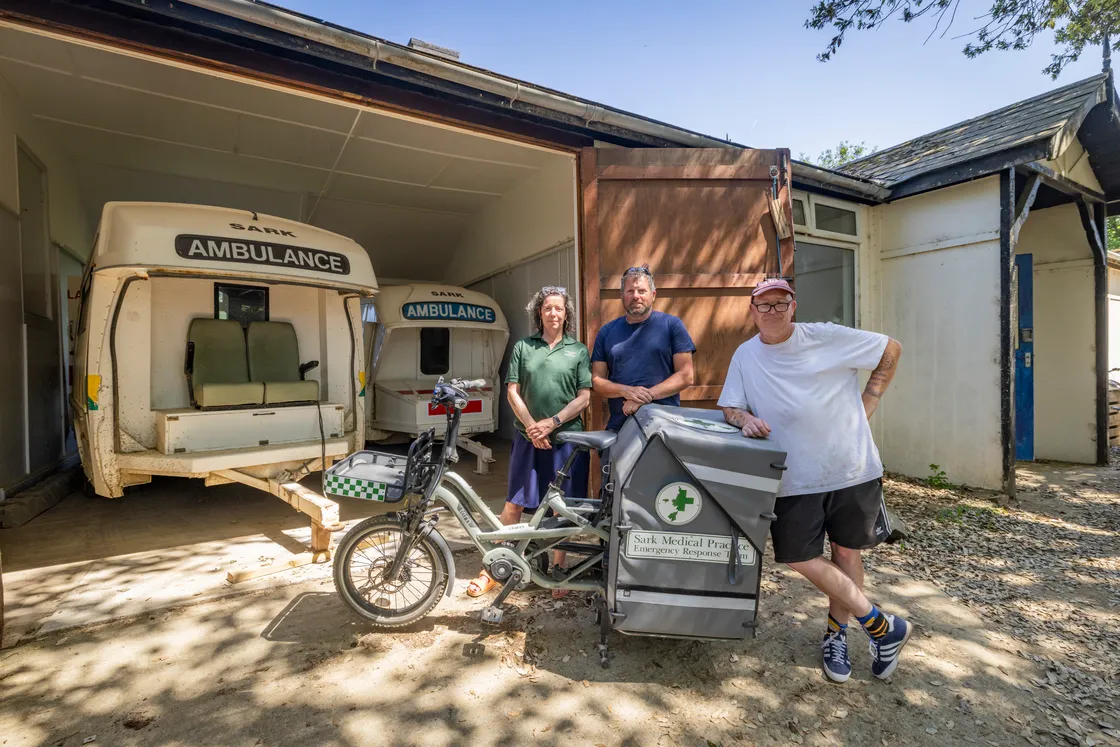
First responder, Sarah Hudson, says the incidents they attend come in all forms ‘from people falling off their bicycles to cardiac arrests, builders who’ve had work accidents, it really, really varies. I’ve been to two cardiac arrests now and thankfully they were both sent off the island alive.’
The team put their impressive success rate down to two factors. Frequent training provided by Hollie, the practice nurse at the Sark Medical Centre, and their speed of getting on the scene. They reckon on an average of three minutes. Some might say ‘Well Sark is quite small’, but lead CFR, Glenn Williams points out they still have some challenging locations to attend, ‘We’ve had one down at the Venus Pool, and even down there we arrived very quickly. Oh, and there’s one thing more to mention about that. That patient was transferred onto the Sea Fisheries boat, so they didn’t have to traipse all the way back up the cliffs. Instead, they were transferred straight off the rocks and later on to the Flying Christine.’
Glenn says that sort of whole community effort is really special in Sark, ‘It just humbles me. Just everyone turns up and we’re just helping that person in those minutes of need, and if ever I need it I hope these guys are here for me’.
Between Sark’s various volunteer emergency services there are roughly 30 islanders who freely offer up their services to help others. The equivalent number in Guernsey, assuming the same percentage of the total population, would be well over 3,000. Sark may be small and relatively isolated but when it comes to dealing with emergencies of all sorts it was very clear to be that the island punches well above its weight. I hope I never need them, but was reassured that if I ever do I would be in good hands. Indeed as first responder Sarah said, ‘No one wants a cardiac arrest but if you are going to have one Sark is a good place for it to happen because we will get a defibrillator to you much quicker than most other places.’



You need to be logged in to comment.