

Neolithic means ‘new Stone Age’ and is the time when people became settled rather than being nomadic hunter-gatherers. This cultural change came about because of the development of farming.
In our islands, the Neolithic period begins around 5200BC and ends with the beginning of the Bronze Age around 2000BC. The cultivation of cereals has its origins in the Near East and this understanding, along with the seeds, animals – such as sheep and goats – and migrating populations of people, spread across Europe. This new way of life reached the coast of what we now know as Normandy and Brittany over 7,000 years ago, and the Channel Islands at much the same time.
Interestingly, this was some 1,000 years earlier than the Neolithic way of life reached the British Isles. With farming came settled communities and an increase in population which, with the development of skills such as pottery making, spinning and weaving, led to an increasingly material culture.
In Guernsey and Herm we have very visible remains of the Neolithic period in the form of our dolmens and menhirs. Monuments such as La Varde and Le Creux es Fees were clearly tombs but were also used as a focus for wider religious practices, linking the people with their ancestors and their gods, much as churches and temples do today. These dolmens and menhirs around our islands are highly evocative links with ancient people and have been examined and written about for at least the last couple of centuries, but we still know relatively little about where their builders lived.
By the beginning of the Neolithic, Guernsey and Herm were islands, having become separated from the continental coast and the other Channel Islands after the last Ice Age, around 12,000 years ago.
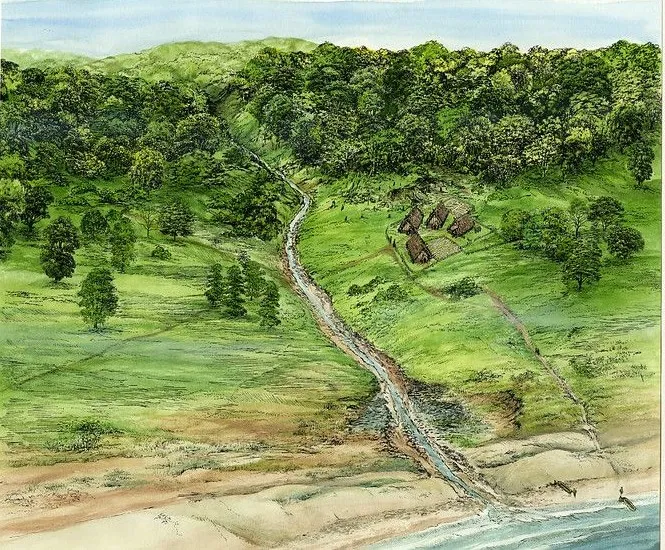
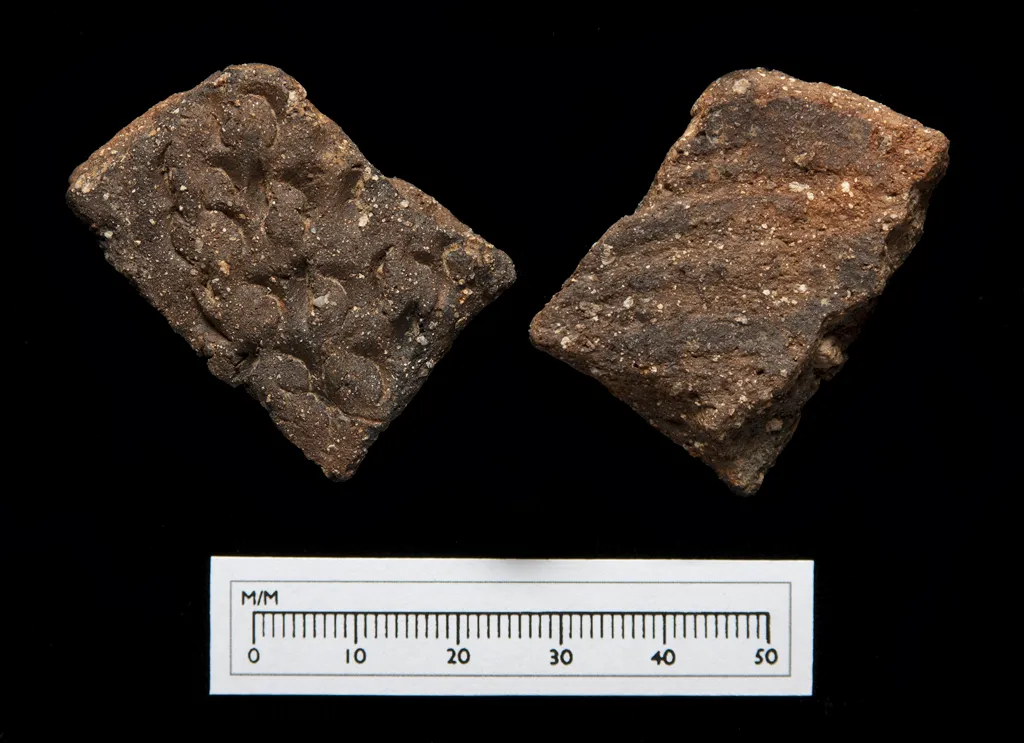
At this time, the islands would have been slightly larger than today and thickly wooded. The would-be farmers of the Early Neolithic period used stone axes to clear areas for cultivation and to pasture their animals and lived in small settlements of timber buildings. They made pottery, shaped tools from stone and wood, wove woollen clothing and even possessed a few precious items imported from the continent. Ornamental polished schist rings, probably worn as bracelets or attached to clothing, were imported from the north-west of what is now France, while beautiful polished jadeite axes from the Alpine region and pottery decorated with designs like those found on the continental mainland, clearly linked the populations. Unlike the stone monuments enduring in the landscape, the lighter touch of these domestic lives leaves few traces and what does survive tends to be buried. However, evidence of Neolithic settlements has been found in both Guernsey and Herm.
Several hundred polished stone axes are known from the islands, tens of thousands of pottery sherds and even more struck flints. All this material attests to the lives of the people living here in the Neolithic and there is also evidence for their buildings.
In 1979-1981 the Early Neolithic tomb of Les Fouaillages was excavated and, beside the monument, was evidence of ‘timber-framed buildings, hearths and pits’. This settlement evidence is probably around 2,000 years later than the time of the construction of the tomb itself – which is the earliest known in the Channel Islands – and belongs to the very end of the Neolithic period or perhaps to the Early Bronze Age (c.2000-1800BC).
The settlement remains at Les Fouaillages were the first to be recognised but since the 1980s, more have been found – on the L’Eree headland, in St Peter Port, at the airport and on Herm. The discovery at Les Fouaillages came about because of a research excavation following the discovery of the tomb itself in 1978. The sites at L’Eree (dated to c.5000-4000BC) and Herm (c.4500BC) were also found by research excavations and are considerably earlier than that found near Les Fouaillages. Not all of the discoveries have been made during research excavations, however.
In the late 1990s, a particularly early settlement (dating to around 5200BC) was found in St Peter Port during development on the former Royal Hotel site. This was also the case at the airport, when remains dating from c.5000-1200BC were found during the extension of the western end of the runway in the early part of this century. On several of these sites the remains of hearths have been found near to post-holes or beam slots for timber buildings and can be dated by the types of pottery and flint found in association. It is also possible to date the sites scientifically but this does require the right conditions and adequate funding.
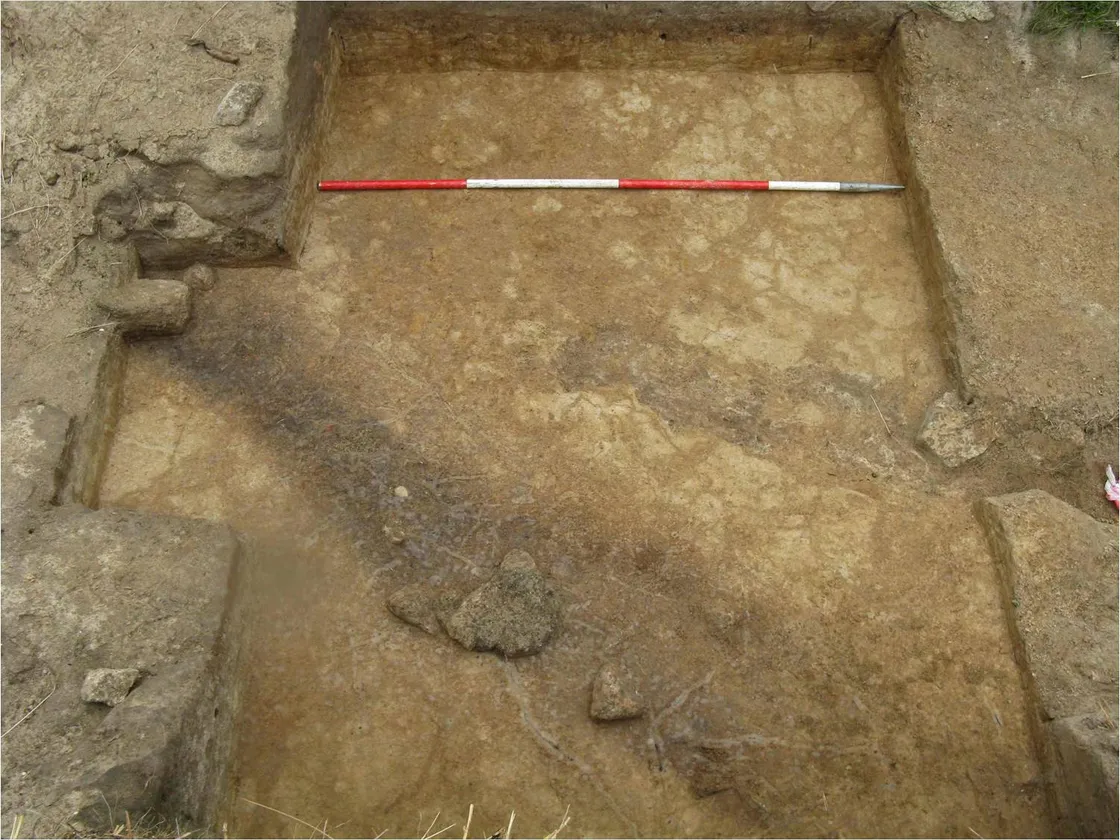
All together, the five settlement sites span the Early Neolithic to the Bronze Age, from around 5000BC until around 1500BC. In some cases there may have been continuous use over a long period, but there are also sites – such as that at L’Eree – which appear to have distinct phases separated by a period of inactivity. Extracting the maximum information from sites like these, with remains that are subtle and easily missed, requires a high level of experience in addition to specialist input.
Fortunately Guernsey and the other Channel Islands often attract the attention of archaeologists from UK universities and museums and this brings not only expertise, but also access to specialists in subjects like pottery, stone tools, environmental archaeology and techniques such as geophysical survey and scientific dating. The latest such collaboration is with a French-led research project looking to mitigate the loss of coastal archaeology due to rising sea levels and marine erosion. This project encompasses the Breton islands, Les Iles Chausey and the Channel Islands, as well as coastal sites on the French mainland.
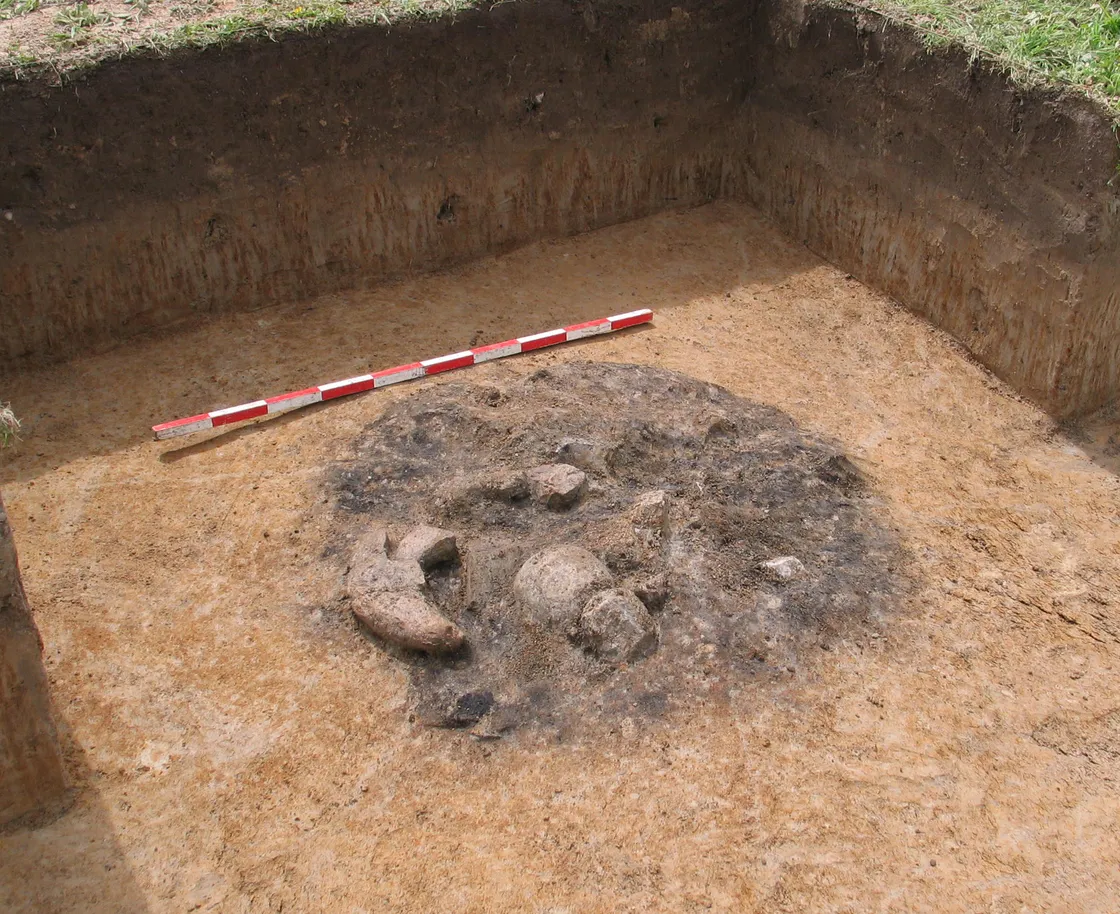
In Guernsey and Herm, the focus is on Neolithic settlement and the local project is known as NEOSET. It is led by Helene Pioffet-Barracand, the Conservatrice du Patrimoine for the Morbihan Region, Gael Barracand – a commercial archaeologist with Eveha International – and Professor Chris Scarre, emeritus professor of archaeology at the University of Durham.
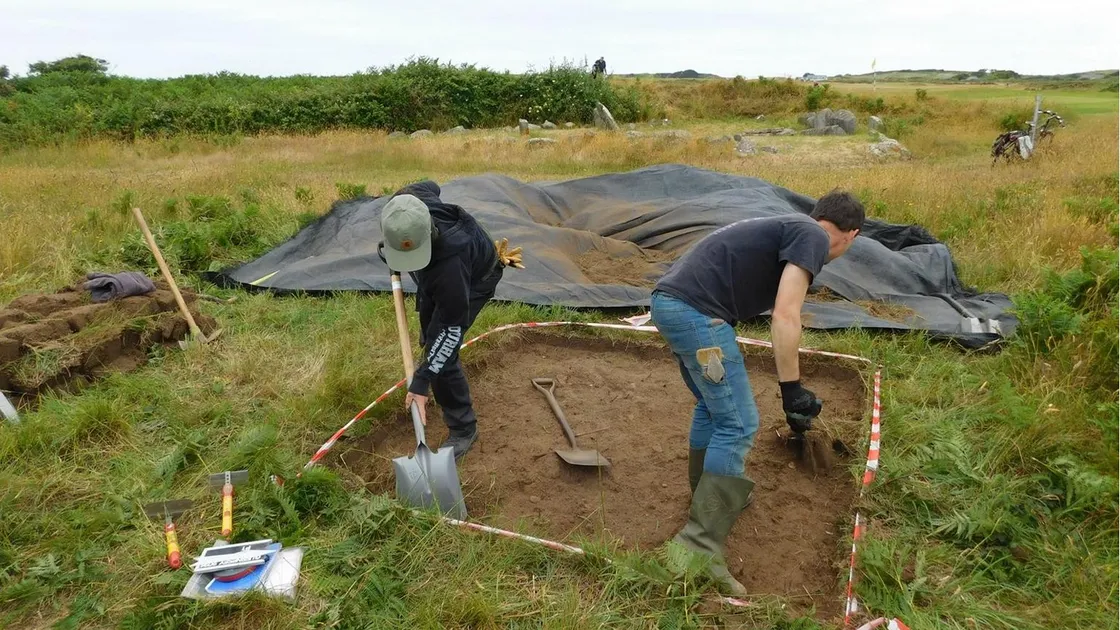
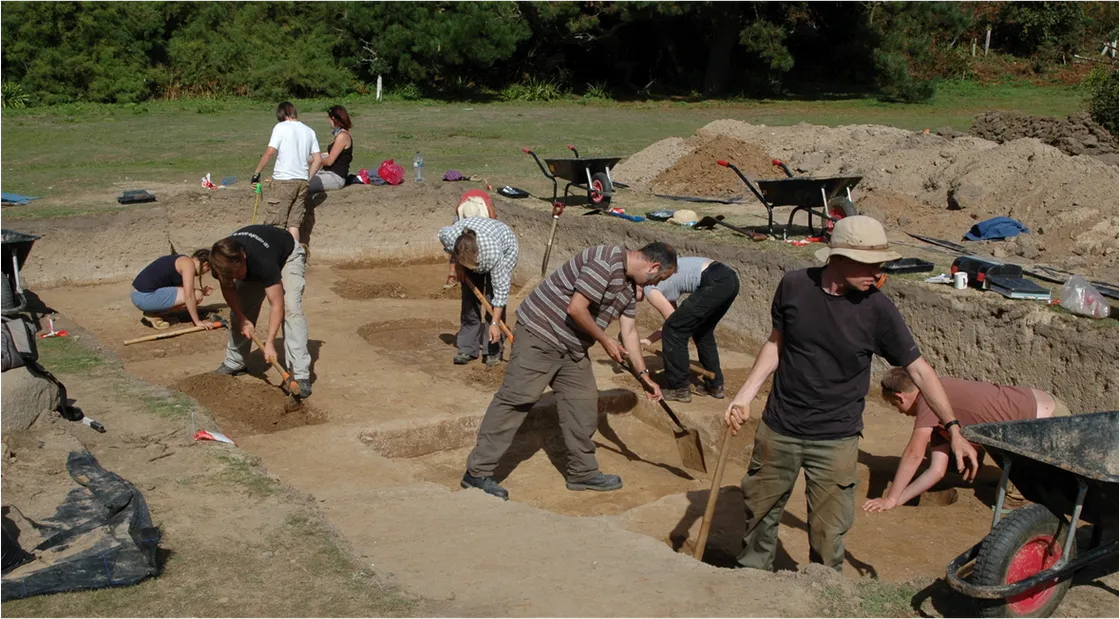
They are working alongside the States archaeologists and volunteers from La Societe Guernesiaise. The third season of excavations are taking place in June and July on sites including Les Fouaillages and Herm Common. The project aims to find out more about where people lived in the Neolithic, what their settlements and the contemporary landscape were like, how these relate to the dolmens and how our islands fit into the bigger geographical picture.


You need to be logged in to comment.