
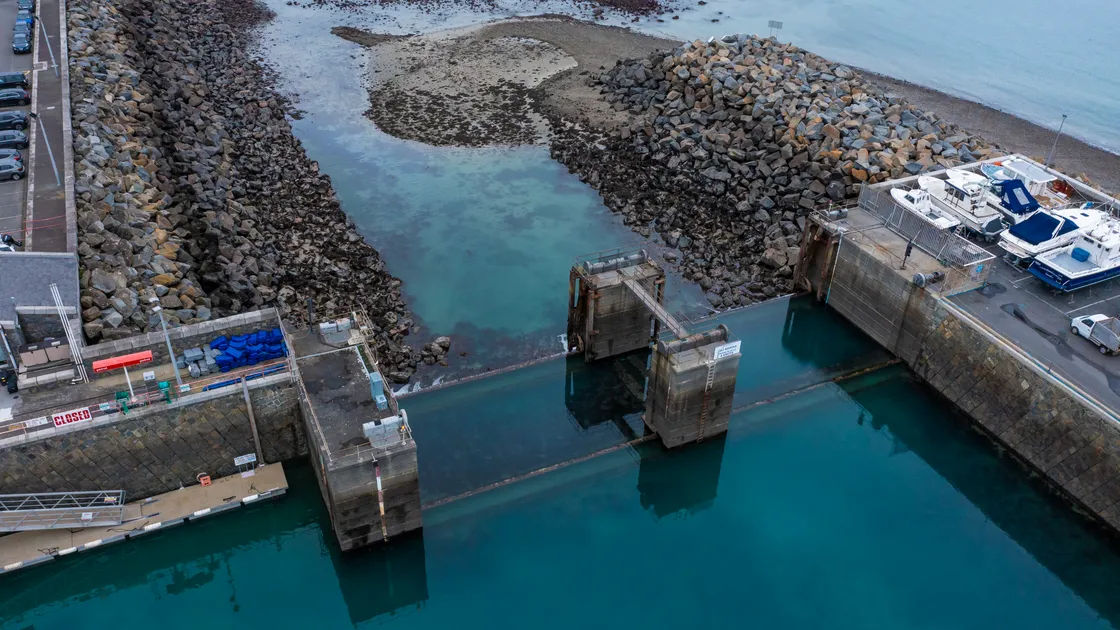
The QEII Marina was constructed in the mid-1980s, so the gates and their supporting infrastructure are now 40 years old. Although they have been maintained during that time, their condition is known to be deteriorating, with concerns over their continuing operation.
Replacing the gates is estimated to cost between £5.2m. and £10.7m., depending on how much of the current supporting infrastructure can be retained, while repairing the existing gates could cost between £5.4m. and £8.4m.
‘We currently do not have sufficient berths to meet demand for moorings, and if the QEII gates were to fail that situation would become much worse,’ said STSB president Deputy Mark Helyar.
‘It would seriously impact the provision of facilities for local boat owners, and the effect of that will be felt more widely within the island’s marine services sector.
‘It is therefore important the gates continue to function as they were designed to, so the current operation of the marina is not compromised.
‘There are a number of ways to achieve that, but we do not have a preferred solution. We would rather potential contractors come forward with ideas for how they would repair or replace the gates. We will then choose the one which can deliver the best value.’
The gates are designed to move up and down with the tide, to enable access to and from the Little Russel and keep enough water in the marina for boats to remain afloat even at low tide.
Condition surveys in 2022 and 2026 concluded there is a high risk the gates will fail completely due to their age and condition, meaning that either the depth of the marina at low tide would drop by about a metre, or the times that boats can get in and out would become much shorter.
The QEII currently provides berths for more than 700 local boats, which include the deepest moorings in all of Guernsey Ports’ marinas. If the water level was to drop by a metre, it is estimated more than a third of these vessels would be left aground.
If the gates were kept in the raised position, so that depths did not drop below current levels, many boats would have sufficient clearance to enter and leave only when the tide is very high.
The STSB is proposing to pay half the cost through a loan from the States, which will be repaid from harbour charges, and the other half would come from the General Revenue Reserve. The Policy & Resources Committee supports this approach.





You need to be logged in to comment.