
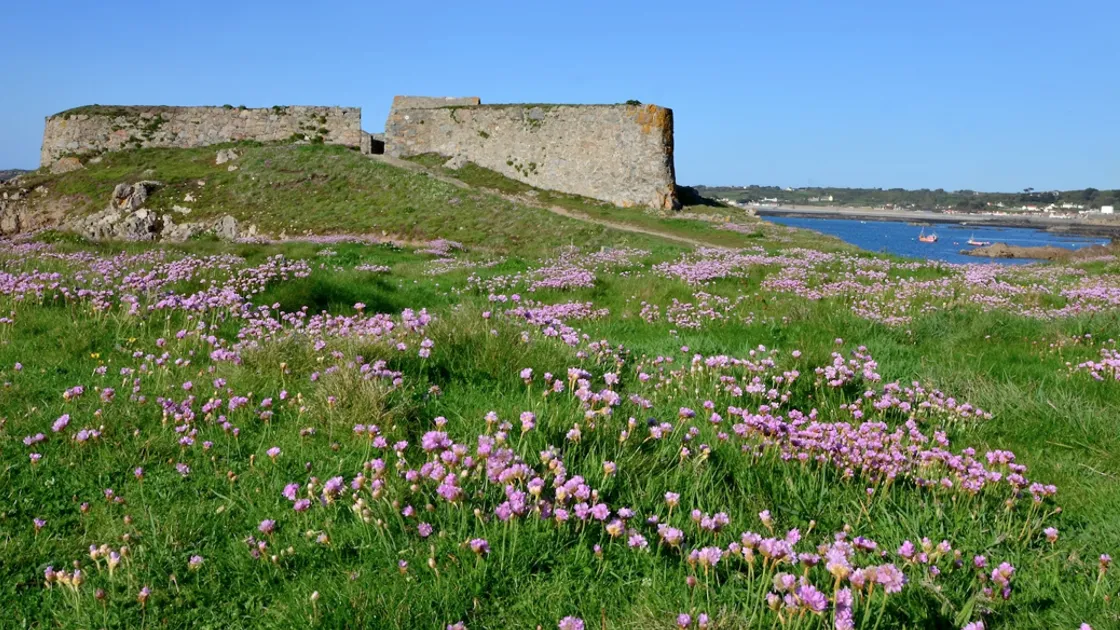
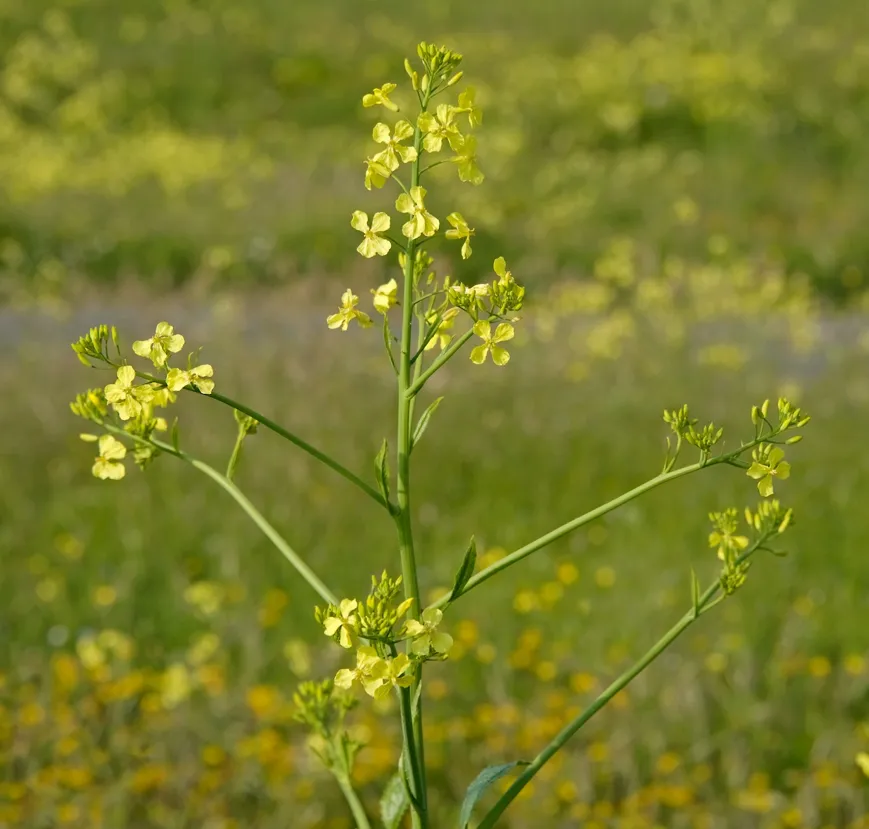
At first sight, the headlands may appear a mass of just yellow-flowering plants. Alexanders, a celery-like plant thought to have been introduced by the Romans, together with sea radish, a true native, along with gorse. Plants that all provide a source of food for multitudes of pollinating insects which can be seen and heard, especially on sunny days.
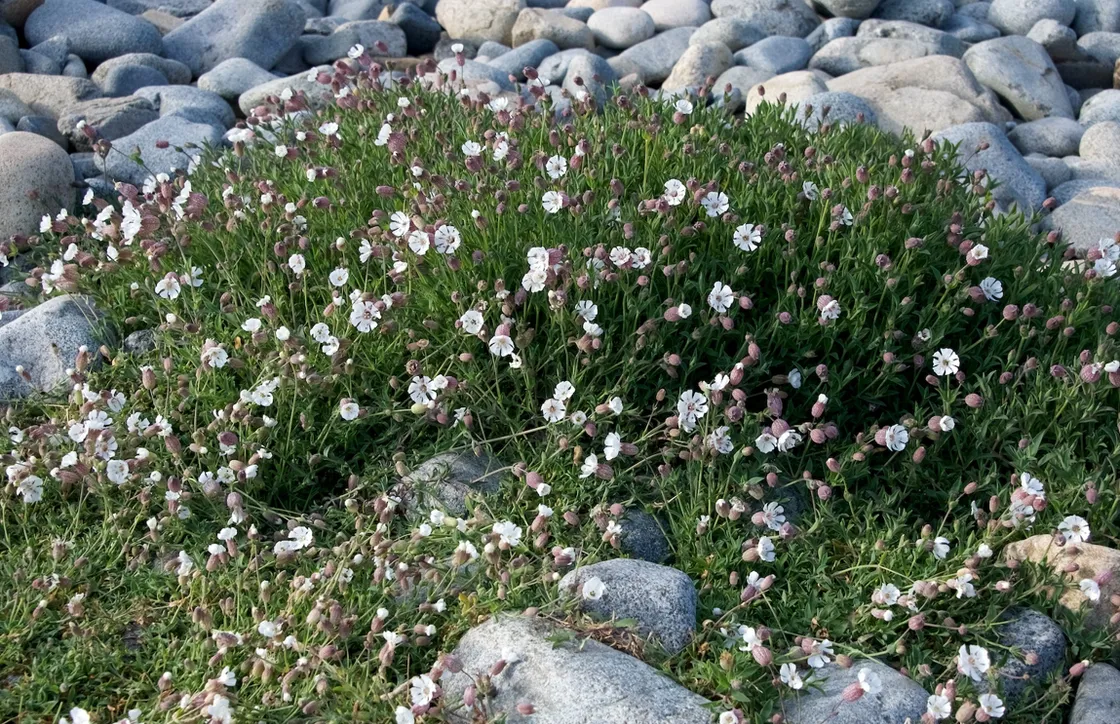
Thrift is just coming into flower with long stems topped with spheres of pink flowers along with the white flowers of sea campion. These plants adapted to tolerate sea salt and drought are also valuable to insects.
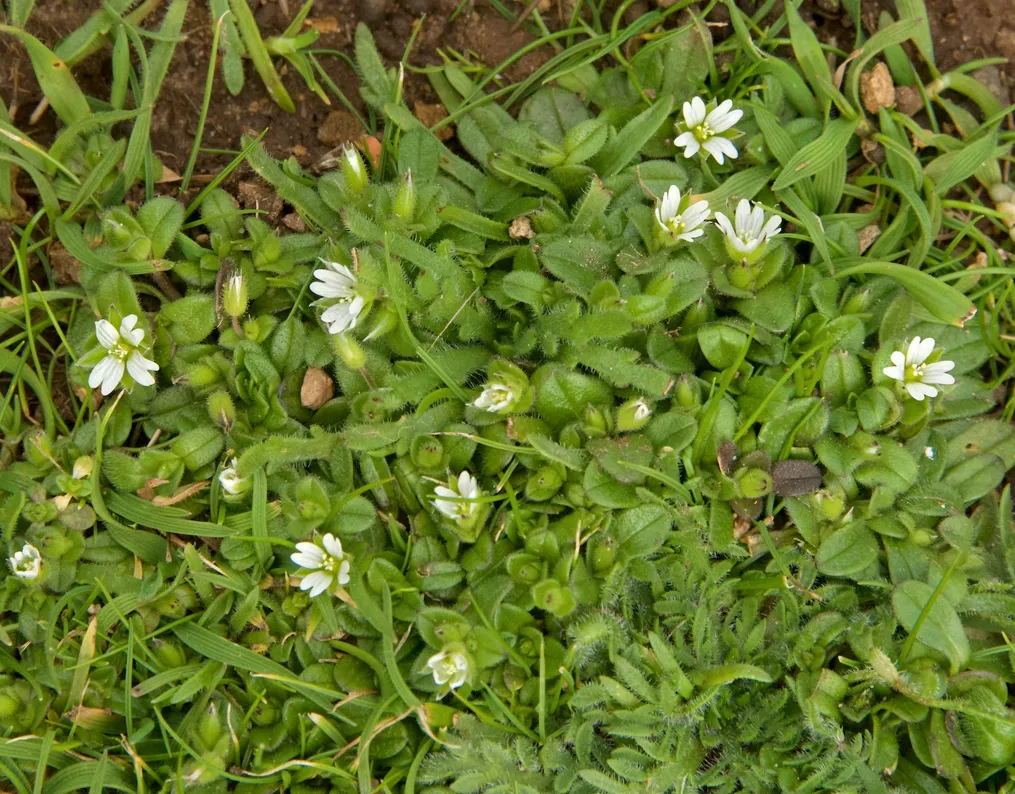
On closer inspection the large swathes of close-cropped grassland are a complex tapestry of plants but many are tiny and you will need to crouch low to see them.
During April there are many mouse-ears in flower. Their little white flowers are dotted all over the turf. So called because the hairy leaves are said to resemble a mouse’s ear, there are several different species, but it may take a sharp eye to notice the differences.
Early forget-me-nots with tiny deep-blue flowers form patches here and there, as do the pale blue-flowered cornsalad.
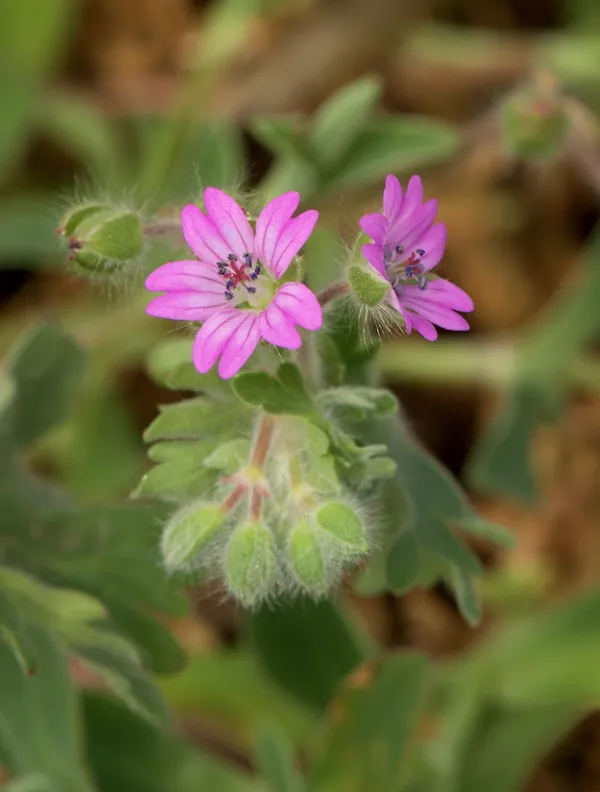
Dove’s foot cranesbill is starting to flower varying from pale pink to deep magenta, its rounded leaves softly hairy. The seed pods are said to resemble a crane’s bill giving the plant its common name.
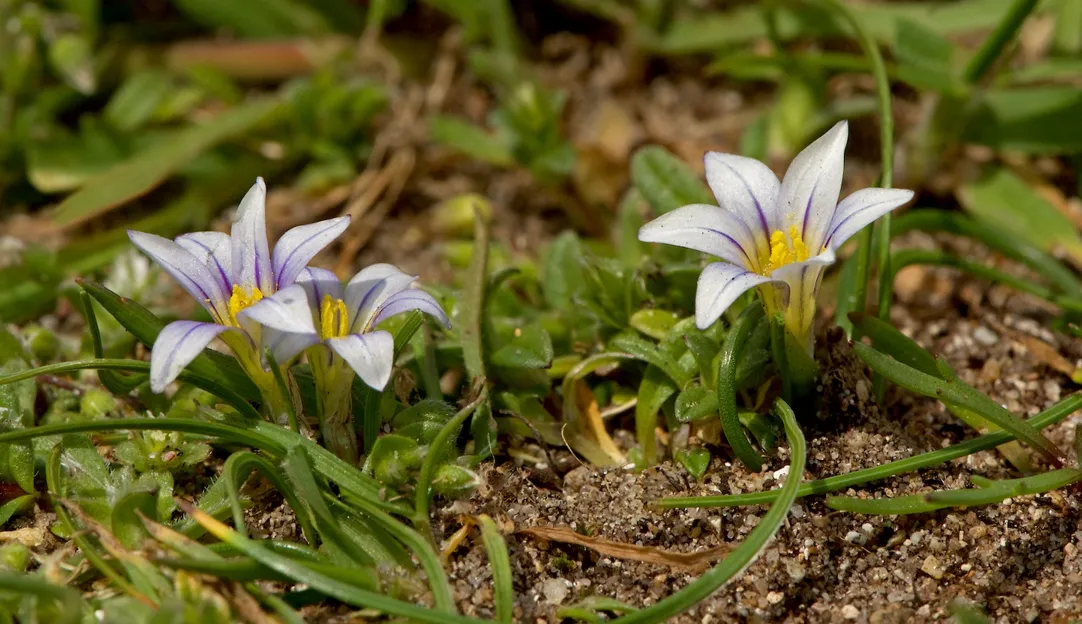
The star of the show however is the tiny sand crocus. The star-shaped flower, up to 12mm in size, has pale purple petals with deeper purple veins and a yellow/green centre. Especially prevalent towards the north of the island, it is frequent throughout the Channel Islands but classed as a rarity throughout the rest of Britain.
It is worth stopping and glancing down at your feet as you walk around our coastal grasslands. You may be surprised by what you see.
The botany section of La Societe has recommenced its monthly walks, which are open to all and details can be found on the La Societe website: www.societe.org.gg.
Anyone with an interest in the island’s plant life and who would like to learn more can join La Societe Guernesiaise and its botany section. Get in touch by emailing botany@societe.org.gg.
La Societe is dedicated to Guernsey’s natural world and heritage. The group has several different sections, including botany, entomology, ornithology and marine biology.
For further details, visit www.societe.org.gg. You can also find out more about the plants of Guernsey and Herm, and the pressures affecting them, by checking out State of Nature 2024, available on the Nature Commission website: www.naturecommission.gg




You need to be logged in to comment.