
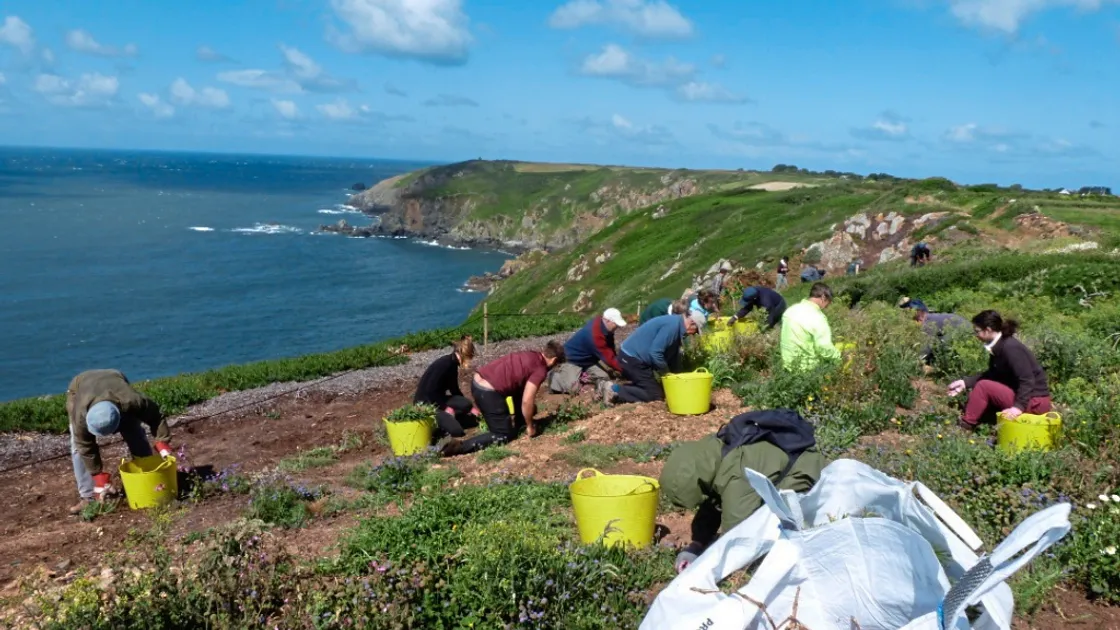
Guernsey Conservation Volunteers has been making significant strides in its ongoing battle against invasive non-native plants, in particular, sour fig (Carpobrotus edulis), a plant species that poses a serious threat to the island’s native flora and coastal ecosystems.
Sour fig is a succulent plant native to South Africa. It was introduced to Guernsey in the late 19th century as a garden plant. However, its ability to spread rapidly and form dense mats has made it a formidable invasive species. These mats out-compete native plants for resources, disrupt natural habitats, and contribute to coastal erosion.
An invasive non-native species is a plant, animal, or micro-organism that is introduced to an area by humans where it does not naturally occur. These species can cause significant harm to the environment, economy, and/or human health. They often spread aggressively, out-competing native species for resources and disrupting local ecosystems.
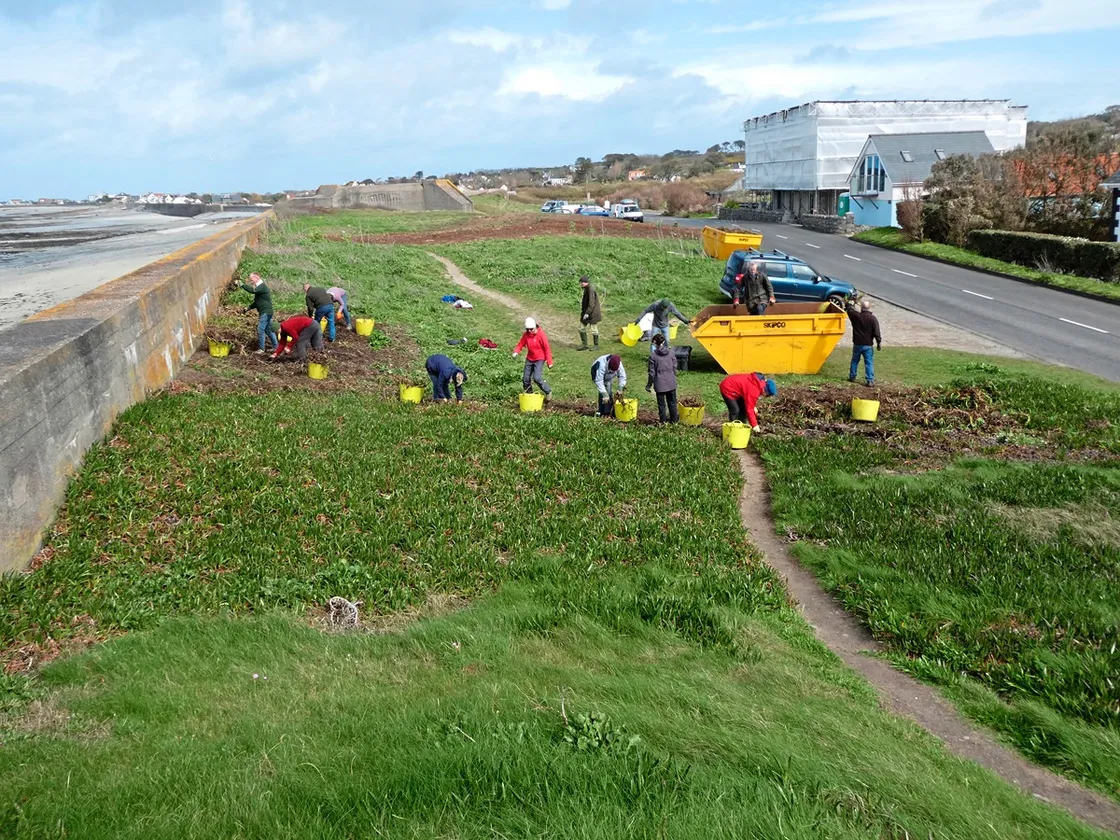
Since its formation in 1996, GCV has been dedicated to conserving Guernsey’s natural environment. One of its key projects has been the removal of sour fig. The volunteers have been working tirelessly to remove the plant from many coastal areas. The pilot project in 2008 was at Fort Pezeries and there have been many more projects including Fort Le Marchant, Rousse, Albecq, L’Eree headland and Rocquaine. To date, over 250 tonnes of sour fig have been removed. This monumental achievement has been described as ‘an amazing community effort’ by Angela Salmon, GCV operations director.
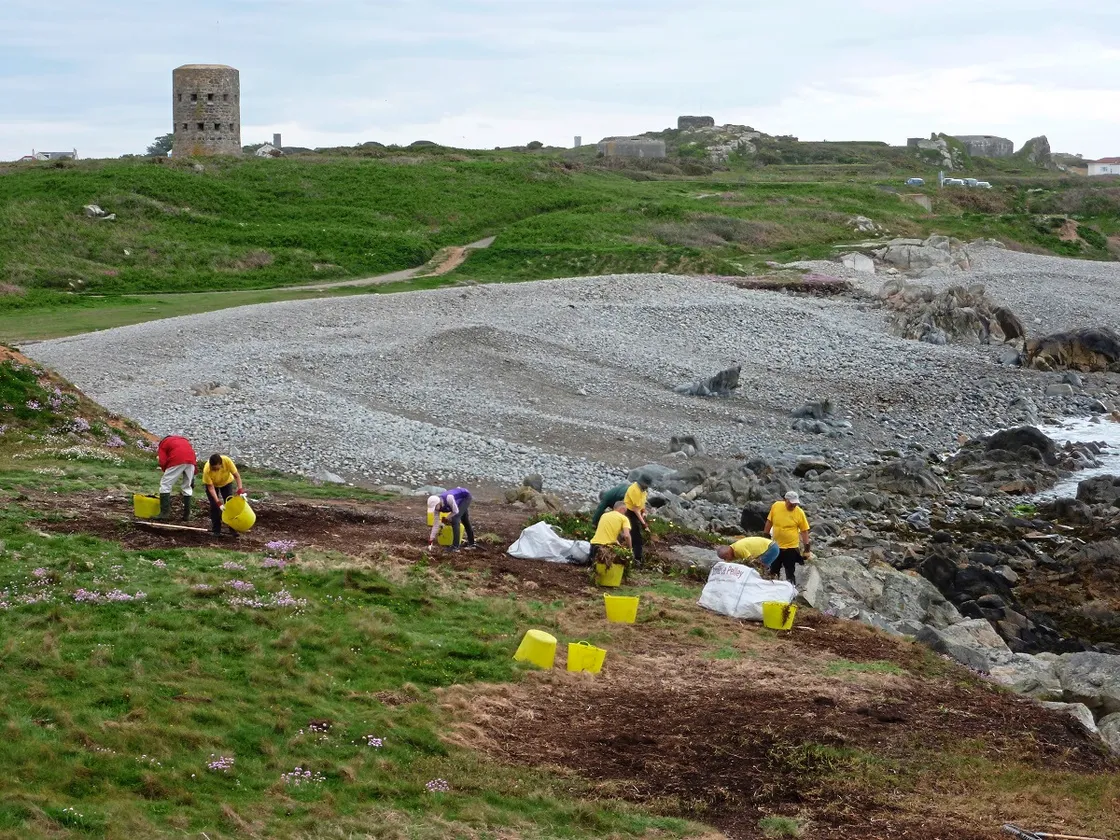
According to the State of Nature Report 2024, the impact of invasive species like sour fig on Guernsey’s biodiversity is significant. The report highlights that Guernsey’s coastal habitats have been under threat due to the spread of invasive non-native species. The removal of sour fig by GCV is a critical step in reversing this trend and promoting the recovery of native plant species. The restoration of these habitats leads to an increase in biodiversity, with more native plants and animals returning to the areas previously dominated by the invasive species.
In addition to its work on sour fig removal, GCV has been actively involved in the conservation of Bluebell Wood. The wood is under threat from invasive non-native stinking onions (Allium triquetrum), also known as three-cornered garlic. This plant spreads rapidly and can out-compete the native bluebells, which are a cherished part of the local ecosystem.
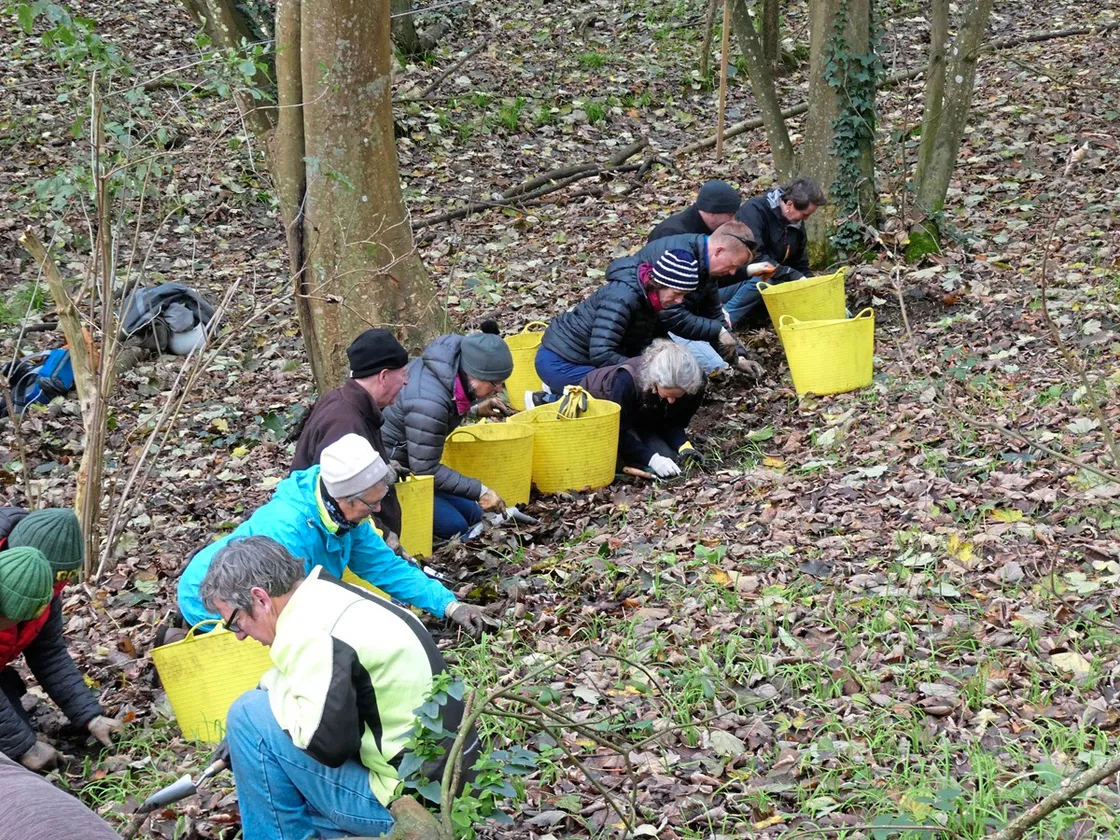
GCV has been removing stinking onions in Bluebell Wood in October and November each year since 2023. Angela Salmon emphasised the importance of this project: ‘Bluebell Wood is a special place to visit for many people, we are thrilled with the success of our efforts to remove stinking onions, and we plan to continue working in partnership with the States on this site for many years to come.’
Over three winters, the Bluebell Wood project has involved many dedicated volunteers and corporate groups who have made a huge difference by removing more than 400,000 stinking onion bulbs. Visitors to the wood during bluebell season this year will have seen the difference these volunteers have made.
Invasive Species Week 2025 took place from May 12-18. This annual event brought together organisations across Ireland, the UK, Isle of Man, Jersey, and Guernsey to raise awareness about invasive non-native species and actions to prevent their spread. GCV participated in this national event with work parties last week to educate the public and promote conservation efforts.
While significant progress has been made, the battle against invasive non-native plants is far from over. GCV continues to prioritise areas for the removal of invasive plants and is committed to ensuring that Guernsey’s habitats are protected.
GCV’s work is a testament to the power of community action and the importance of preserving natural habitats. As it continues its efforts, the island of Guernsey can look forward to a future where its native flora thrives once more.
Helping with conservation efforts is a wonderful way to contribute to the protection and preservation of our natural environment. Here are several ways you can get involved:
1. Volunteer with local conservation groups
Join organisations: groups like the Guernsey Conservation Volunteers (GCV) often need help with various projects, such as removing invasive species and maintaining natural habitats.
Participate in events: look out for events like Invasive Species Week where you can join community efforts to learn more and to help tackle environmental issues.
2. Educate yourself and others
Learn about local wildlife: understanding the local ecosystem and the species that inhabit it can help you make informed decisions and educate others.
Raise awareness: Share information about conservation efforts and the importance of protecting native species with your community.
3. Support conservation initiatives
Donate: financial contributions to conservation organisations can help fund important projects and research.
Advocate: Support initiatives that protect natural habitats and promote biodiversity.
4. Adopt sustainable practices
Reduce, reuse, recycle: minimise waste and reduce your carbon footprint by adopting sustainable practices in your daily life.
Use native plants in your garden: choose native plants that support local wildlife and avoid planting invasive species.
5. Participate in citizen science
Report Sightings: use apps such as iRecord and iNaturalist to report sightings of invasive species or any wildlife, contributing valuable data to the Guernsey Biological Records Centre.
6. Get involved in habitat restoration
Plant trees and shrubs: participate in native tree planting events or start your own initiative to restore natural habitats.
Clean up: join clean-up events to remove litter from natural areas.
7. Stay informed and connected
Follow conservation groups: stay updated on the latest conservation news and opportunities by following organisations on social media and subscribing to newsletters.
Network: connect with other conservation-minded individuals and groups to share ideas and collaborate on projects.
Contact: Guernsey Conservation Volunteers: www.gcv.org.uk
By taking these steps, you can make a meaningful impact on conservation efforts in your community and beyond.
For more information about non-native invasive species in Guernsey and Herm, check out State Of Nature 2024, available on the Nature Commission website www.naturecommission.gg




You need to be logged in to comment.