
It was a typically dark damp November day; the sort of day that made you wish it was July again. I had just popped home for a quick half-hour lunch break, travelling the three miles from work on my scooter.
As my hand put the key in the door, I found myself shaking with cold; not from the short ride I had just had from the office, but from a cold that came from deep within.
It had been there the last couple of days despite working in a warm office environment. It had also been there when sitting in the cosy lounge of a loving family home. As I sat alone eating my sandwiches, I was aware of a sensation of fear, hitting me, wave after wave.
It would start in my stomach and then seem to radiate throughout my whole body, exploding in my head. It was something over which I seemed to have no control. I had never known such a feeling in my life.
At that point I had no idea that I was well on the road to clinical depression. That was to be revealed a few days later in my doctor’s surgery. It was going to be one of many dark days that lay ahead; a time of terror and self-discovery without a time limit that I could see.
To make any sense of what lies ahead, you need to know what lay behind.
I am Guernsey-born, with a family tree going back to 1640. I am married to Judy, and father to two wonderful daughters, and four grandchildren.
The period of depression occurred in the 1990s when there was a much greater stigma attached to this illness than there is today. I quickly became reclusive, not wanting to be seen out daytime, not answering the door, or the telephone.
During the dark winter days, with Judy gone to work, it was left mainly to my mother in her 80s, to cycle each morning to my house to get me out of bed. I was totally overwhelmed by waves of anxiety that continually washed over me. Each day it seemed, was darker, longer, and more hopeless than the previous one.
I was employed by an insurance company and was signed off with depression and anxiety in three-week blocks. My job at this time had become extremely stressful. With no support from the management, this only added to my anxiety. I had, till this time, also been heavily involved in children’s ministry at my local church, with the responsibility of 40 six to 11-year-old children each week.
I had never been one who enjoyed sports, hobbies, or really had many close friends. So, when the psychiatrist who I was referred to at the Castel hospital asked, ‘How do you switch off?’ I couldn’t give an answer. By this time, I was on antidepressants, sleeping tablets, and diazepam. I eventually became addicted to sleeping tablets and diazepam, of which it took me several months to wean myself off, not without side-effects. During this time, I received two letters expressing the management’s disappointment at my continued absence, and saying, that if I didn’t return to work after the next three-week leave of absence, they wouldn’t be able to continue my employment.
Such was the shock of receiving this news, that I developed fibromyalgia, which I have to this day.
Even though the psychiatrist didn’t support my return to work, I felt I had little option but to go back. In retrospect, I think it was probably a good thing to have a reason to get up in the morning. I did ask if I could go back part-time, but was told it would have to be full-time or not at all.
It was about three months into this regime, still off work, and no light at the end of the tunnel, that something changed.
We live just under a mile away from the Vale Pond, and one day, I decided that I would walk as far as there in the belief that, because it was a working day, nobody else would be there. I had for years put out food for the birds in the garden, but that was as far as my interest had gone. It wasn’t long, as I sat in the hide, that someone poked their head through the doorway and started engaging with me in conversation. He told me that his wife worked with Judy at the same school. I found I was able to share with him what I was doing there and was surprised to hear that he too suffered from depression. Our conversation continued, and he asked if I would be interested to go out with him birdwatching one day. This I agreed to do, although wasn’t sure if I would enjoy the experience.
I guess, as you look at the context of this page, it becomes apparent that not only did I enjoy it, I continued with it.
I would be lying if I said that from that day on everything just dropped into place, I felt immediately well, and hey, life is a bit of roses. However, I believe it was a turning point in my recovery, along with a very patient wife, two supportive children, a friend who phoned me every day to see how I was getting on. She, particularly, was a great encouragement since she was someone who had herself recovered from depression. I also had six months’ psychotherapy given free of charge by a wonderful Christian lady who visited the island for a period.
It wasn’t long before I joined the RSPB local group, and La Societe Guernesiaise ornithological group.
I quickly made friends with the folk there, and enjoyed the monthly meetings and the various walks that opened up my eyes to the wonder of bird life in Guernsey. It was great starting to create a list of species seen and savouring the moments when I would see a particular species for the first time.
There was of course the challenge of identifying the birds. It helped being in a group where there was always somebody who could identify the bird for you and share in the pleasure with you. I managed to purchase a second-hand pair of binoculars from a shop in Town. In no time, I was keeping a list of birds seen in Guernsey, and a list seen in the garden which, incidentally, has now reached 68 species either seen in the garden or feeding above it.
I can remember with great apprehension the time I was asked to lead my first walk, which was in 1998. This was at Belle Greve Bay, the RSPB was running a Wild Week and asked if I would be willing to lead this walk. Little did I know that this would be the first of probably hundreds of walks which I have led since.
As my interest in birdwatching grew and grew, and I found that being outside immersed in nature, in many respects, was almost as much of an antidepressant as the medication I was having to take. It was also a wonderful way to make new friends, and to create many memorable moments, that live with me to this day.
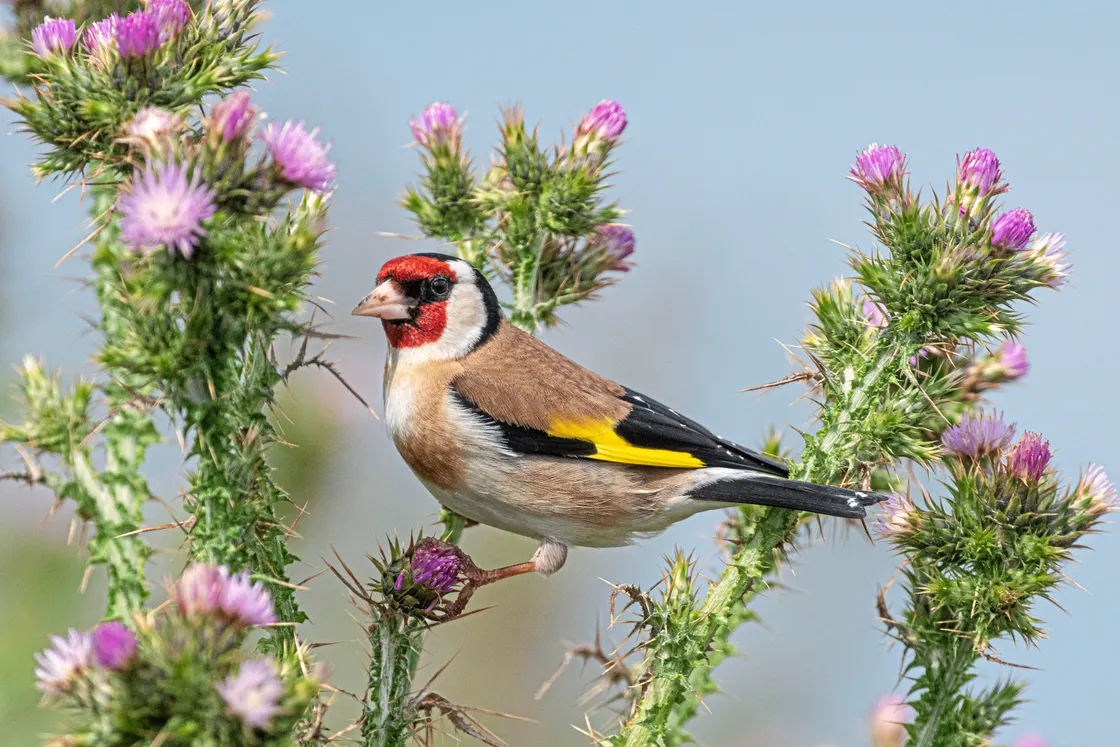
Some people look upon birdwatching as quite a nerdy thing to do, and indeed possibly even a hobby for anorak wearers. However, bear with me, let me tell you of some of the highlights which I have encountered over the years.
I got introduced to Bird Race Day. This is an annual event whereby teams of four people have 24 hours to find an identify as many species of bird as possible within the Bailiwick of Guernsey. For many years, this to me was as exciting as Christmas Day to a youngster. In the early years of the 2000s it wasn’t unusual to manage to see, between the teams, up to 100 species in a day – the winning team sometimes getting into the low 90s. One year, I decided to take three novices from the birdwatching course I was running, and because we need to visit Herm to see puffins, it was thought the quickest way was to use a friend’s Rib. However, little did we know that due to lack of oil in the engine, we were going to spend two hours in the Little Russell waiting for a boat to give us a tow.
There was the year, when it rained non-stop for the entire day, another time we were at the reservoir trying to get a long-eared owl to answer to our imitated call, only to learn later that an opposing team had listed long-eared owl as heard – they beat us by one point that year – and I don’t think we had the heart to tell them that the owl had a very human accent to it.
In 2008 I was asked at church if I would lead a five-week birdwatching course. It was great fun putting together the framework of each class session, accompanied by photographs which I had managed to glean from the internet.
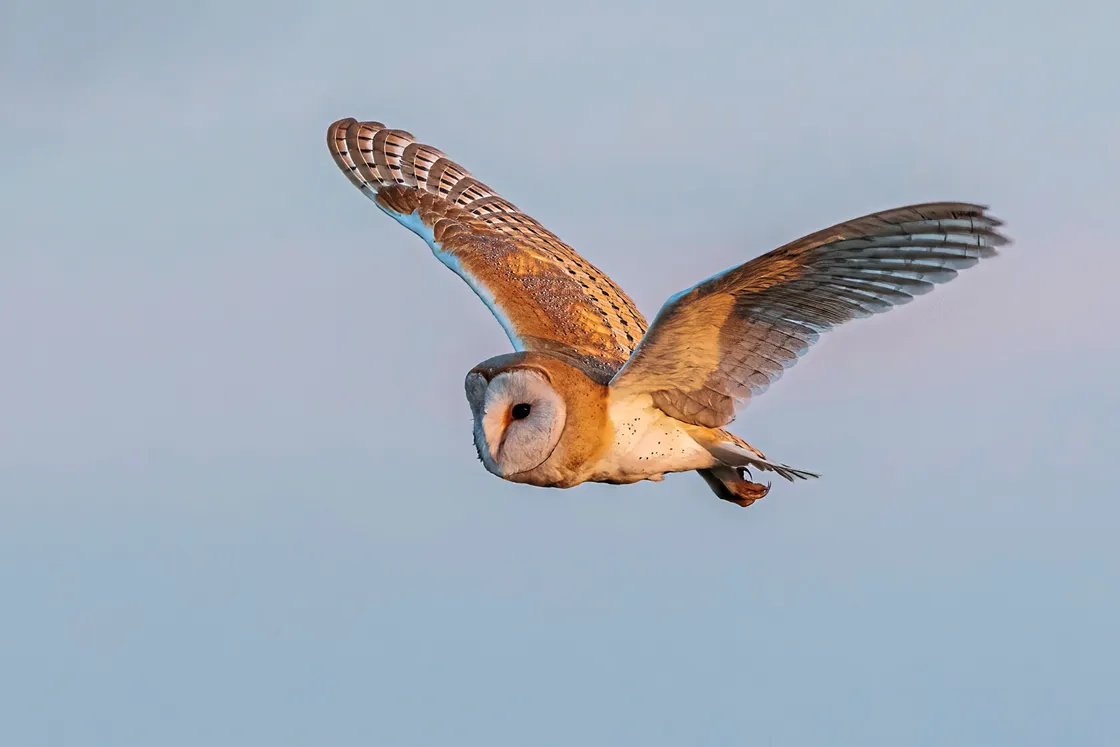
When the five weeks were completed, I felt quite sad that after all the work I put into this course, that was it. I had the idea to approach the College of Further Education as it was then known. They ran adult classes of numerous subjects and asked them if they would be interested in adding my birdwatching course to the syllabus. After they looked at my material, they agreed to trial it for one year, and to see if there was any interest.
This course proved to be eventually so popular that it carried on for the next 15 years. I have had the pleasure of seeing about 300 people come through my classes, some with mental health problems or other issues, that nature seemed to help with their recovery. It was only during a bout of Covid that I decided to call it a day. It has been a joy for me to hand it over to my friend Richard Vowles and see it continuing successfully.
It was mainly because of these courses that I started my journey with bird photography. This was to provide me with the necessary material to illustrate the things that I was teaching. As anyone who does bird photography will tell you, if you want to do it well, it is not going to be cheap.
Fortunately, I also did a lot of local landscape photography which I was able to sell, and therefore, pay for my bird photography expenses.
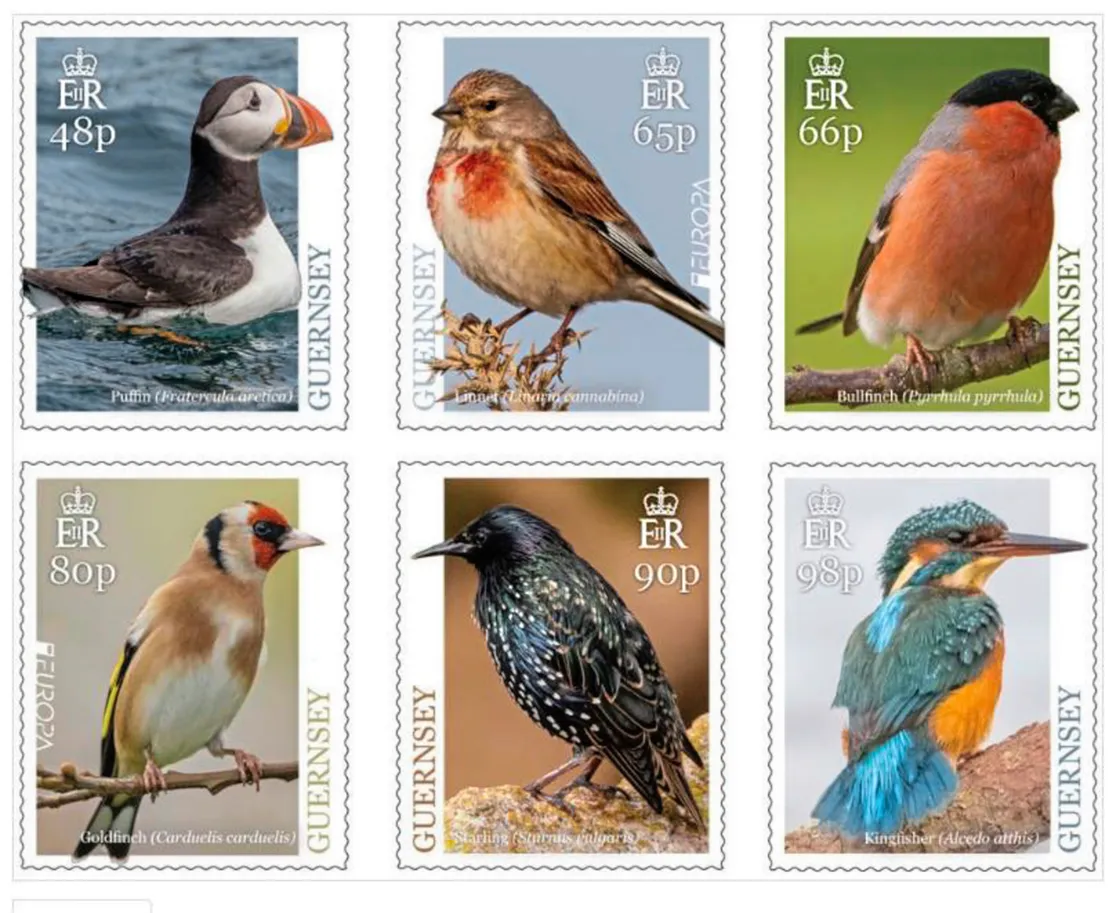
I have also been very blessed, in so far as on two separate occasions I have been contacted by the Guernsey Philatelic Bureau asking if I would be willing to submit some of my images for two issues of postage stamps. You can see an example on these pages. It was quite humbling to be told that due to the fact they were carrying the royal insignia, the Queen had to sign off the stamps before they could go to print.
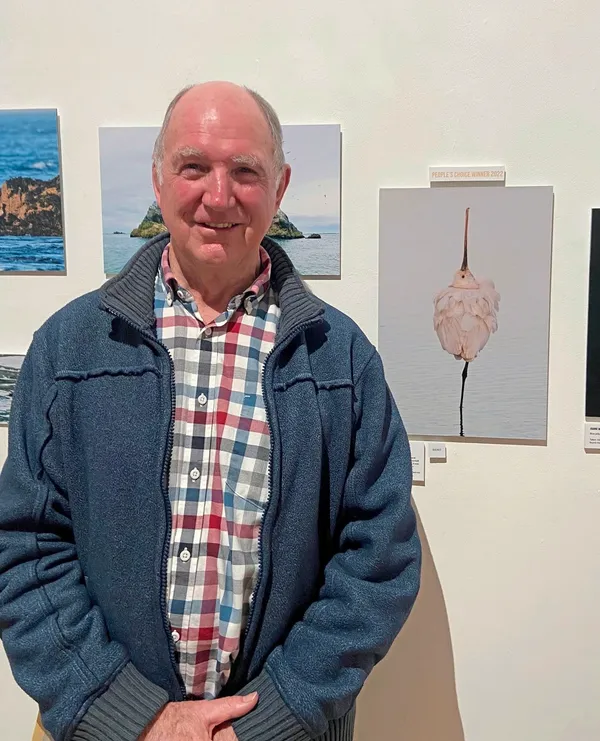
On another occasion, I had the privilege of winning the Wildlife Photographer of the Year competition. I was fortunate enough to be at one of our local nature reserves when a spoonbill, who had been busy preening at sunset, suddenly looked skyward at a marsh harrier flying overhead. The symmetry was perfect, the light was superb, and it was very much a case of being at the right place at the right time.
I have a pop-up hide in my garden, from where I have photographed literally hundreds of birds. I’ve been able to set up a little studio where I have various perches – moss-covered branches – for my avian friends to land on. On one occasion I constructed a reflection pool, with the aim of capturing beautiful bird reflections. To be honest, my bird photography has probably overtaken pretty much my everyday birdwatching.
What has emerged overtime, and continues to this day, have been the opportunities to befriend a number of people who have mental health issues. I have found that taking them out for a birdwatching walk, talking through issues, finishing up with a coffee somewhere, has proved to be tremendous therapy for quite a few.
Being able to share, firstly my passion of birdwatching, my own personal experience of depression, and have such a beautiful island to share with like-minded people, has been a privilege beyond measure.
Obviously, I would never choose depression, but I’m hugely grateful for the world that it opened for me. I wouldn’t be true to myself, or to my Lord, if I wasn’t to say, how much my faith has also carried me through.
I firmly believe that we are all placed on this earth for a reason, and if one of my reasons for existing is to help another soul to gain some perspective in their darkness, then my suffering has not been in vain.
If this article achieves nothing else, then I hope it enables the reader to grasp that even in the darkest of places, there are treasures to be found. My life has been richer, more fulfilled, as I have shared my passion with those who have crossed my path. This would not have been possible, indeed would never have happened, had I not had mental health issues.
I would urge anybody that finds themselves in a situation similar to mine, to get out of doors, when you don’t feel like it. Meet up when you don’t feel like it, with someone that you can relate to. Be prepared to share how you feel in honesty and enjoy the benefits of nature which has been created for our wellbeing, and which are so accessible on such a beautiful island as ours.
Our local RSPB group has regular meetings and walks which anyone can partake in. They have their own Facebook page and give details of all future activities, they welcome with open arms new members. The ornithological group of La Societe Guernesiaise also welcome members. There is an opportunity to work outdoors with the Guernsey conservation volunteers who meet regularly to maintain our nature reserves, and coastal headlands. Birdwatching courses are currently being held twice a year by my good friend Richard Vowles, and he too welcomes anyone who is just starting on their birdwatching journey.
There is no reason why you too cannot enjoy being introduced into the wonderful world that we are so blessed to live in. Thank you for taking the time and effort to read this article, and I hope it is of some help to someone.I have been able to reach a point in my life, not easily, or lightly, when I can say that depression has been the best thing that has happened to me. It has given me a life, interest, friends, appreciation of Guernsey life, that I would never have had other otherwise.
If you are experiencing any of the things discussed in this article, please seek support. Information on available resources can be found here: www.gov.gg/mentalhealthsupport. For more idea on how you can connect with nature, contact the Nature Commission.

You need to be logged in to comment.