
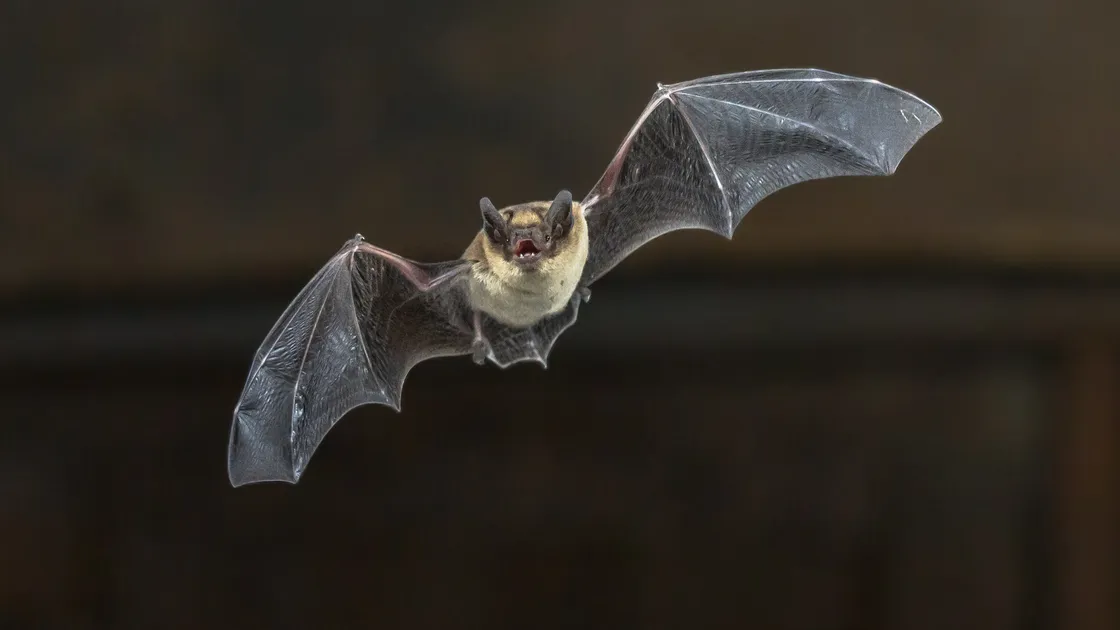
The long autumn nights are drawing in, and the summer a distant memory. I’m now thinking about slow-cooked stews and blankets, and the debate over when to put on the central heating has started.
Sunset is getting earlier and earlier, meaning that it is a good time to get outside to look for nocturnal wildlife without it interfering with bedtime. Pick a night when it is dry with not too much wind, and go out around sunset, and see what you can find. Bats, hedgehogs, moths can all easily be seen around the darker streets and fields of our island. The Bat Conservation Trust has a Sunset Survey which you can fill in and submit data (https://www.bats.org.uk/our-work/national-bat-monitoring-programme/getting-started/sunset-survey). This sort of citizen science is both fun to do, and helps build a greater understanding of how wildlife uses the island.
The La Societe’s bat group is busy this autumn doing guided bat walks with local groups. Going on a bat walk can bring you much closer to these animals and we enjoy teaching people about the amazing wildlife that is on their doorstep. We are also planning a public Halloween bat walk for half-term. This popular event is free, although donations are always welcome. Unfortunately, at this time of year, wind and rain can lead to cancellations of the event, so we will not announce the date of the event until the week before, so we recommend signing up to our Facebook page – we will post on there updates in the case of an unavoidable change in plans.
People often ask me, on bat walks, where are good places to go and see bats. I always answer – anywhere. Bats can be seen all over our island, as has been demonstrated by the Bailiwick Bat Survey (https://bats.org.gg/bbs/reports/) which has recently published a summary report. Over the last four years this large citizen science study has looked at how bat species interact with the local landscape. The results are fascinating, and freely available on their website. However, I would add, it is worth going somewhere rural, and dark. You are more likely to witness a greater range of bat species if you avoid areas of high light pollution.
Bats are nocturnal animals that have adapted to a life in darkness, partly to avoid predation during daylight hours from bird of prey species such as sparrowhawks. Therefore the artificial lighting of bat roosts, access points and foraging pathways can be extremely disturbing to bats. Artificial light falling on or close to a bat roost can cause many problems for bats, by:
delaying or preventing emergence from roosts, resulting in reduced foraging time and missing the peak time of insect abundance (just after dusk). As all our local bats feed on insects, this missed opportunity can have a serious impact on their survival and the growth rates of their young;
in some cases lead to bats abandoning or becoming entombed in the roost when the entrance is lit up as bats will be less inclined to leave their roosts in these conditions;
affecting the feeding behaviour of bats away from the roost. Slower flying species (lesser horseshoes, greater horseshoes and the myotis species) avoid illuminated areas and therefore lose foraging grounds if they are lit. This results in slower flying species having to use poorer quality foraging sites and losing out on prey, which are attracted to the surrounding lit areas, a so-called ‘vacuum effect’;
affecting commuting and foraging routes, which have been shown to be avoided if there is artificial light spill onto these areas.
Unfortunately these light-avoiding species include all of our rarest bat species. However, even our faster flying species recorded more widely (noctule, Leisler’s bat, and pipistrelle species) can be impacted by artificial lighting.
People often notice bats swirling around certain street lamps, feeding on the insects attracted there, as insects are frequently attracted to the short wavelength light (UV) some emit. This may mistakenly lead to the impression that street lamps are beneficial to the bats, but in fact this leaves them in danger of predation. Birds such as peregrine falcons have been recorded hunting bats in this way.
Insects also are affected by lighting, as they are distracted from natural behaviours – eating, mating – by the lights, and so the increasing levels of light pollution in our natural environment is now considered to be one of the main factors impacting biodiversity in urban environments.
We can all help with this – turn off lights that are not needed, both inside and out, close the curtains to keep the light in, avoid leaving garden lights on, and use short timers for security lights. As electricity prices seem to be ever increasing, this also makes good financial sense. Solar lights are a particular bug bear of mine, often being designed with no off switch so they are left to stay on continuously. Perhaps these can be packed away when not in use – this will also have the benefit of making them last for longer.
So let’s all embrace the changing seasons, and enjoy the dark nights – after all, if it isn’t dark, you can’t see the stars.
If you’d like to know more about bats in Guernsey and Herm, check out State of Nature 2024: www.naturecommission.gg/state-of-nature-2024.
For more information on the Guernsey Bat Group, visit www.societe.org.gg/wp/bats, or email bats@societe.org.gg.
Hard copies of the Guernsey Bat Group leaflet are available from the Nature Commission office: Mon-Fri, 9am-3.30pm or La Societe office:Wed/Sat, 10am-1pm.



You need to be logged in to comment.