
Fungi are far more than mushrooms popping up after rain. They form a vast, hidden network that is fundamental to life on Earth. In forests, grasslands, and even gardens, fungi decompose dead organic material, recycling it back into nutrients that plants and animals depend on. Some species can form relationships with plants that benefit them both; sharing nutrients and water and helping woodlands and grasslands thrive. They’re also key to soil health and even contribute to carbon storage helping to keep carbon locked into nature rather than being released into the atmosphere, making them a natural ally in fighting climate change. Yet despite their importance, fungi are often overlooked meaning that little information is known about them.
Even though they do all this important work, fungi are often forgotten when we talk about protecting nature. All around the world, and in Guernsey, fungi are under threat. Their habitats are being damaged by pollution, climate change, and human activity, like building, mowing, and walking over the same spots again and again. Without proper monitoring or data collection, we risk losing these vital pieces in nature’s puzzle.
You don’t need to be a scientist to help protect fungi. Anyone can become an amateur mycologist (mushroom enthusiast) and start identifying the fungi you see in your gardens and local natural spaces. Identifying fungi isn’t easy, however the Nature Commission has created a short guide to helping identify fungi and a spotter sheet with some of Guernsey’s most commonly seen mushrooms to get you started.
Autumn is peak mushroom time, and although the season is coming to an end, Guernsey’s green spaces are bursting with fungal life if you know where to look. Here are five types of mushrooms that you might spot out in nature in the next few weeks:
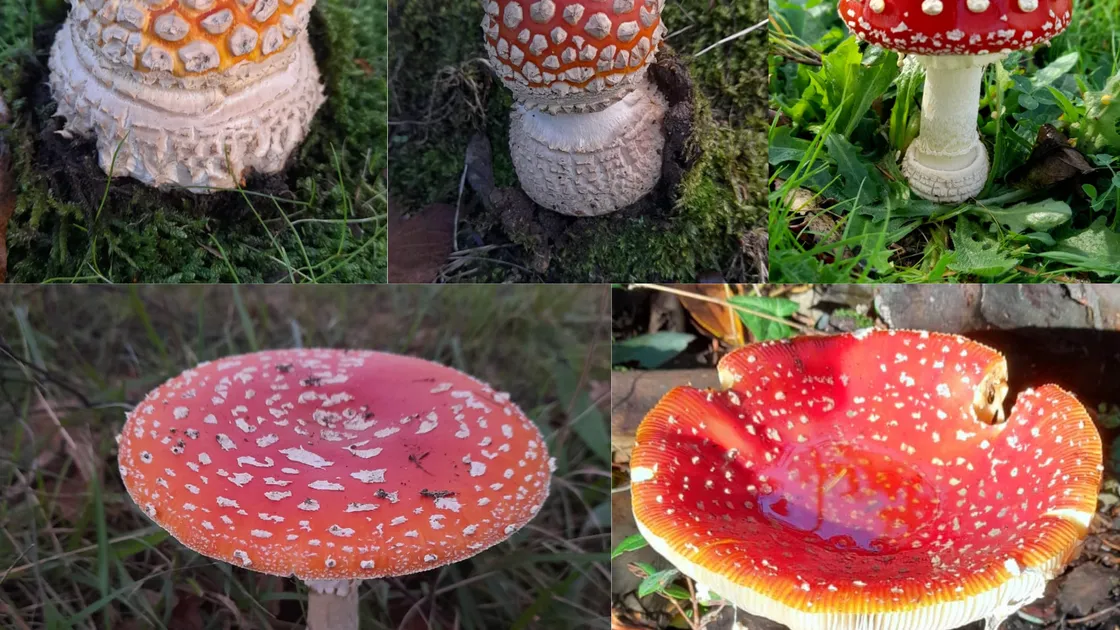
The fly agaric (Amanita muscaria) is one of the most easily recognised mushrooms, with its bright red cap covered in white spots. It’s often found in woodlands, especially near birch, pine, or spruce trees. While it may look magical, this mushroom is toxic and should never be eaten. It can grow up to 30cm tall and has white gills, a ring on its stem, and a savoury smell.
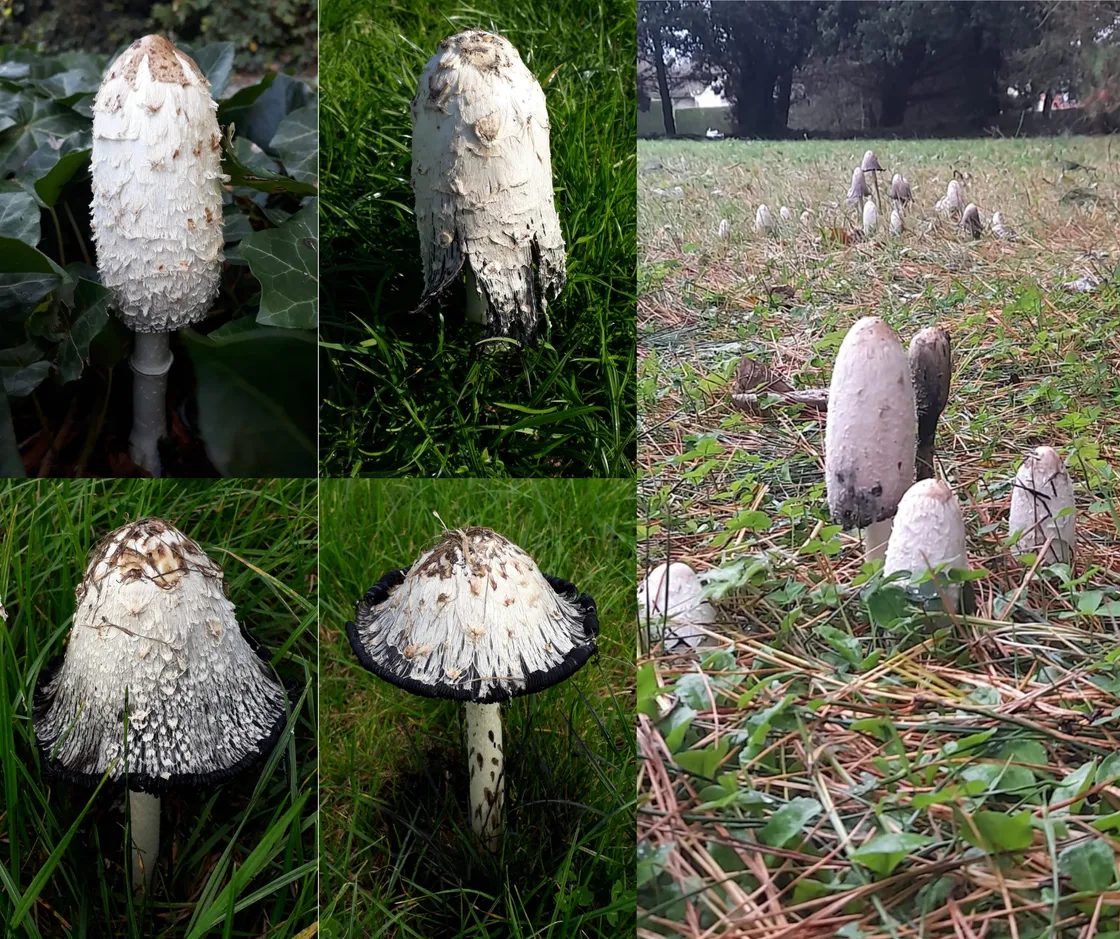
The shaggy inkcap (Coprinus comatus) is a tall, elegant mushroom often found in grassy areas like meadows, lawns and cemetery verges. It has a white, cylindrical cap covered in shaggy scales, which slowly turns bell-shaped as it matures. The gills underneath start white but dissolve into a black, inky liquid, a trait distinctive of many inkcap mushrooms.
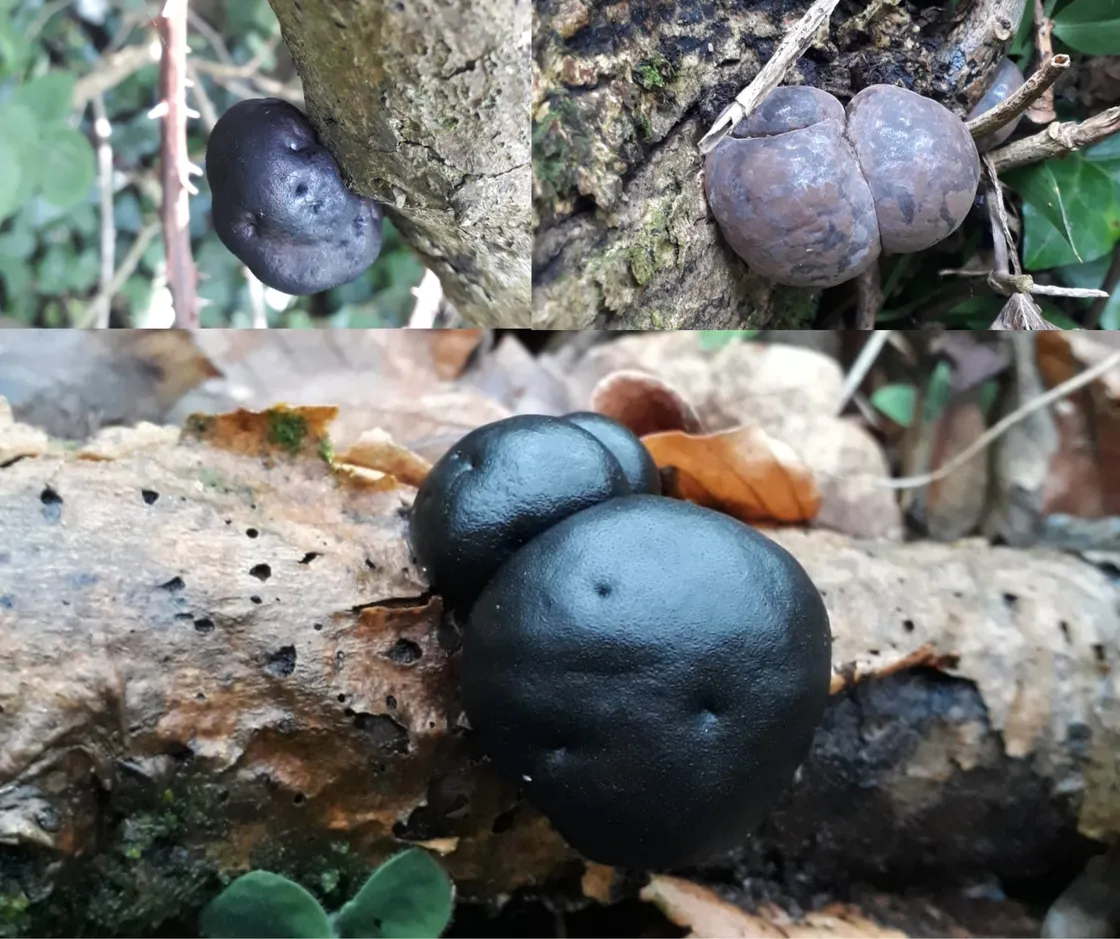
King Alfred’s cake (Daldinia concentrica) is a hard, round, black fungus that grows on dead or decaying wood, especially ash trees. It looks like a small burnt lump of coal, which is where it gets its name; from the legend of King Alfred burning cakes. When cut open, you can see concentric rings inside. It’s also known for catching a spark and being used as natural tinder.
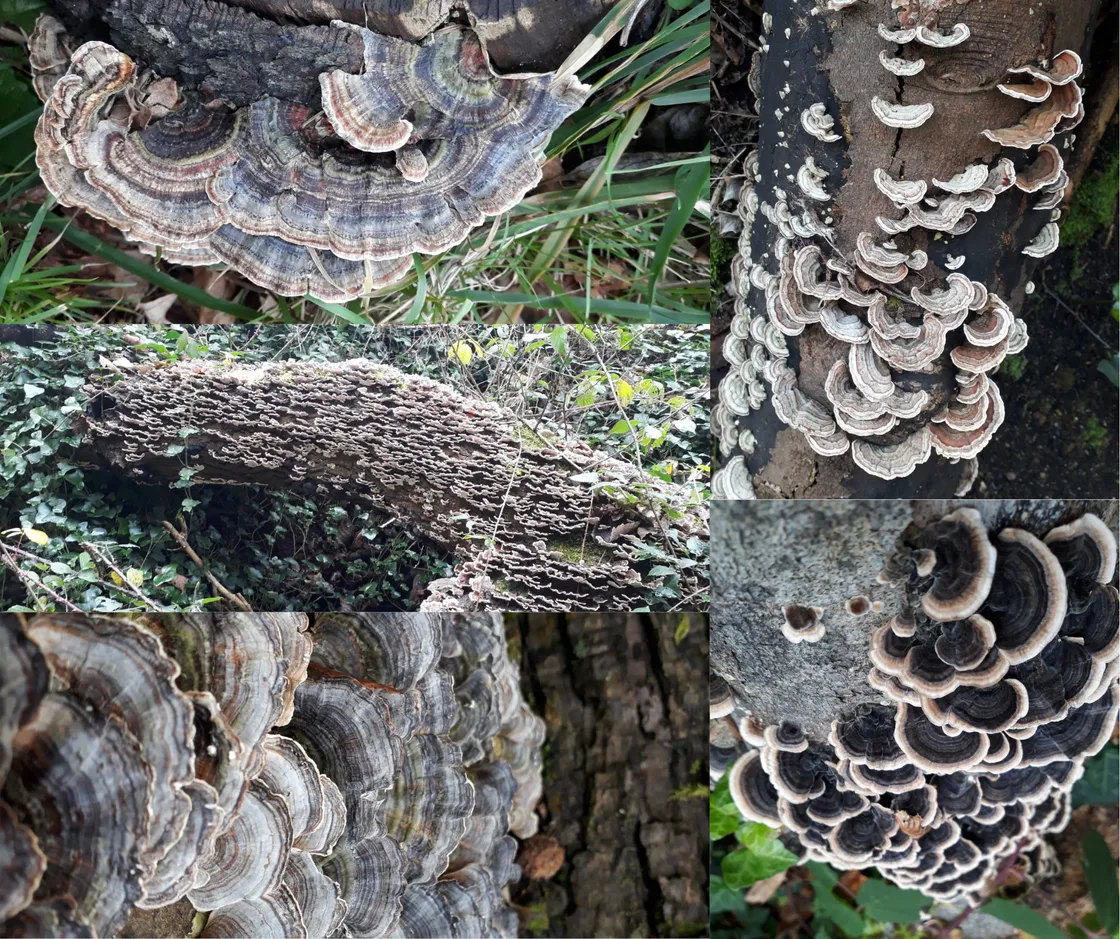
Turkey tail (Trametes versicolor) is a type of bracket fungus that grows in layered, shelf-like shapes on dead or decaying trees and logs. It’s named for its colourful, banded pattern that looks like a wild turkey’s tail. The surface is often brown, grey, blue, or even green with fine hairs, while the underside has tiny white pores. It’s a common but beautiful fungus that helps break down wood in forests.
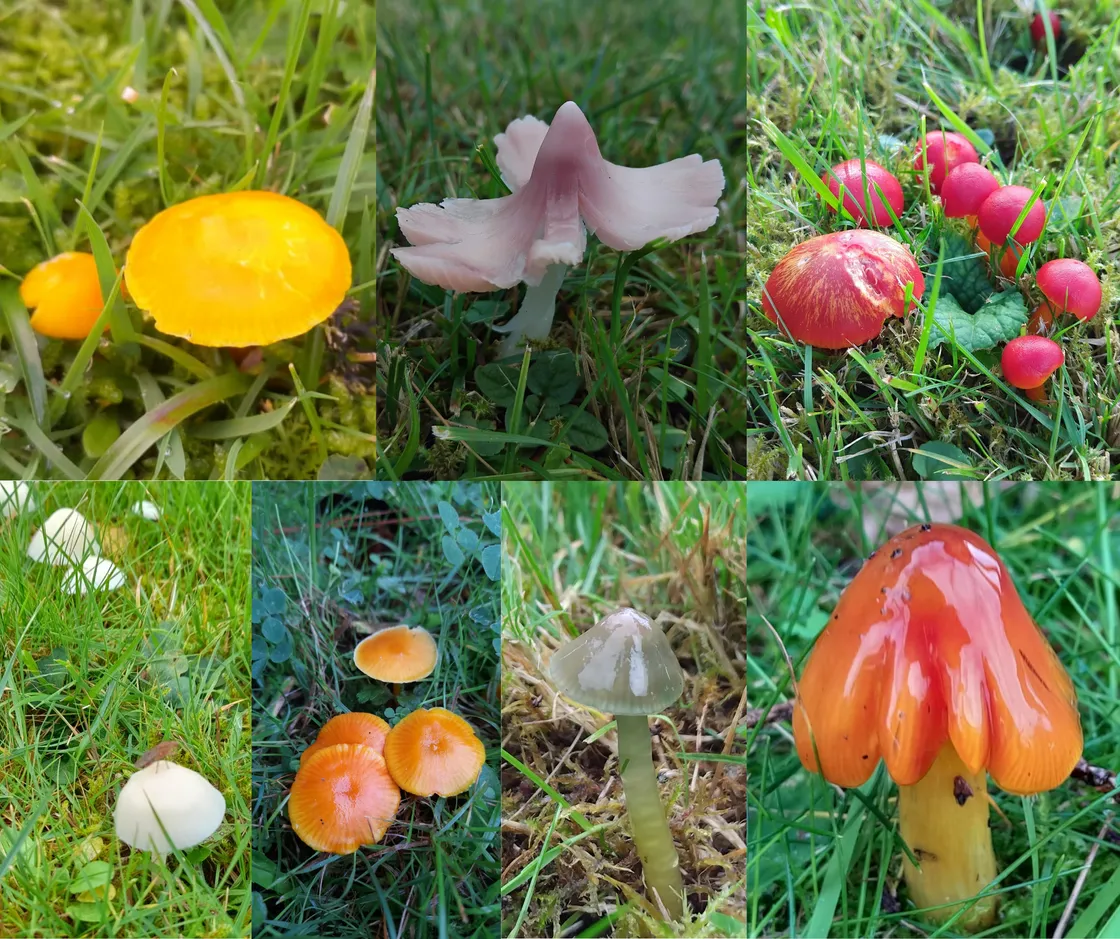
Waxcaps (Hygrocybe species) are small, brightly coloured mushrooms often found in old, undisturbed grasslands. They come in striking shades of red, yellow, orange, and even green, making them easy to spot among the grass. Their caps are often shiny or waxy-looking, and their gills are thick and widely spaced. Waxcaps are a sign of healthy grassland and are loved by fungi enthusiasts for their vivid colours.
Fungi can be tricky to find, so take your time. Look under leaves, beside tree trunks, on old logs, or in shady, damp spots. Bring a magnifying glass, a notebook, and a camera or phone to take photos.
To be a true citizen scientist, record what you see using the website/free app iRecord, where your data can be used to help understanding of fungi on-island and likewise the health of nature in Guernsey. It’s as simple as taking photos of the fungi you discover, recording information like the location and date, and upload your findings. The Nature Commission has also created a handy guide on how to use iRecord (scan the QR code).
With growing interest in wild foraging, it is important to note that there are lookalikes that can make you seriously ill or even be fatal if eaten. Never pick and eat wild mushrooms unless you are 100% sure they are edible. It is important that you respect protected areas and leave plenty of mushrooms for wildlife and reproduction. Look out for opportunities to go out with local experts.
On Sunday 12 October, there was a fungi walk where the Nature Commission invited the public to join them at the Foulon Cemetery to identify the fungi in the area with local expert Anneka Saunders. A wide variety of species were identified, offering a fascinating glimpse into the ecological richness of the site.
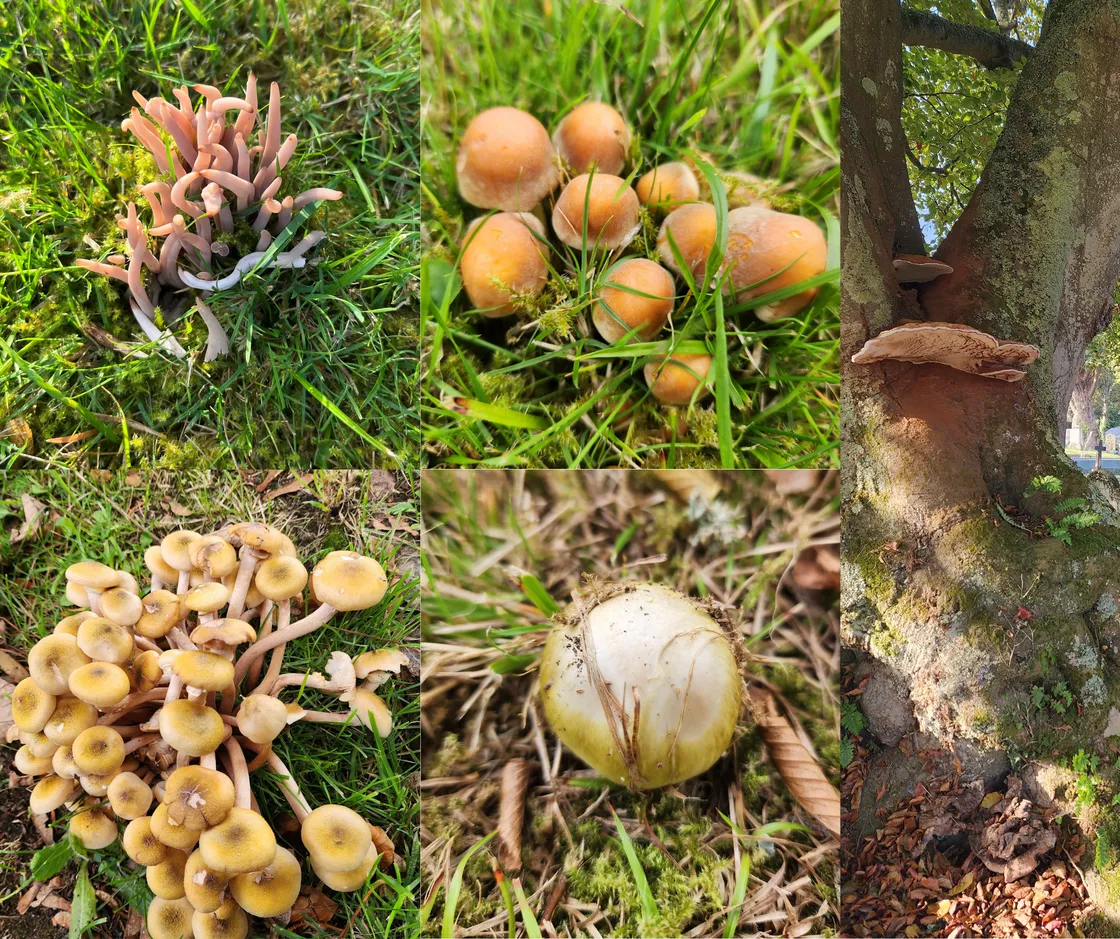
Highlights included smokey spindles, a delicate, pale fungus with a ghostly appearance, and the impressive artist’s conk, a large bracket fungus growing on hardwood trees, named for the way its white underside can be marked like a canvas. One of the most notable finds was the death cap, the UK’s most poisonous mushroom (an important reminder of the dangers of misidentification). Participants also spotted the vibrant sulphur tuft, unusually growing in grass, and the widespread honey fungus, known not only for its golden caps but also for being the largest living organism on Earth (with a massive underground network discovered in the blue mountains in Oregon, US).
The first fungi walk was a huge success with around 60 people attending, so of course there has to be more. Plans are in action for another fungi walk to be held in January of 2026. If you’re interested in joining, keep an eye out for details coming soon on the Nature Commission Facebook and Instagram pages and our official website.
If you’re keen to learn more about fungi, the Guernsey Fungi and Lichen Facebook page is a fantastic resource. It’s a welcoming space where locals can share photos, ask questions, and get expert insights into the fascinating fungi found around the island. Curator of the group, Joe Ferbrache, whose stunning photographs feature throughout this article, shared his thoughts on the community:
‘Mushrooms are nature’s hidden treasures, each variety holding unique features and habits that never cease to amaze me. Through my passion with Guernsey Fungi and Lichen, I’ve discovered a vibrant community that shares my enthusiasm for exploring and celebrating the incredible world of fungi.’
Your sightings can make a real difference, whether in gardens, parks, or coastal paths. So why not take to opportunity to go for a walk, slow down, and look closely. Who knows what you might find growing underfoot?





You need to be logged in to comment.