
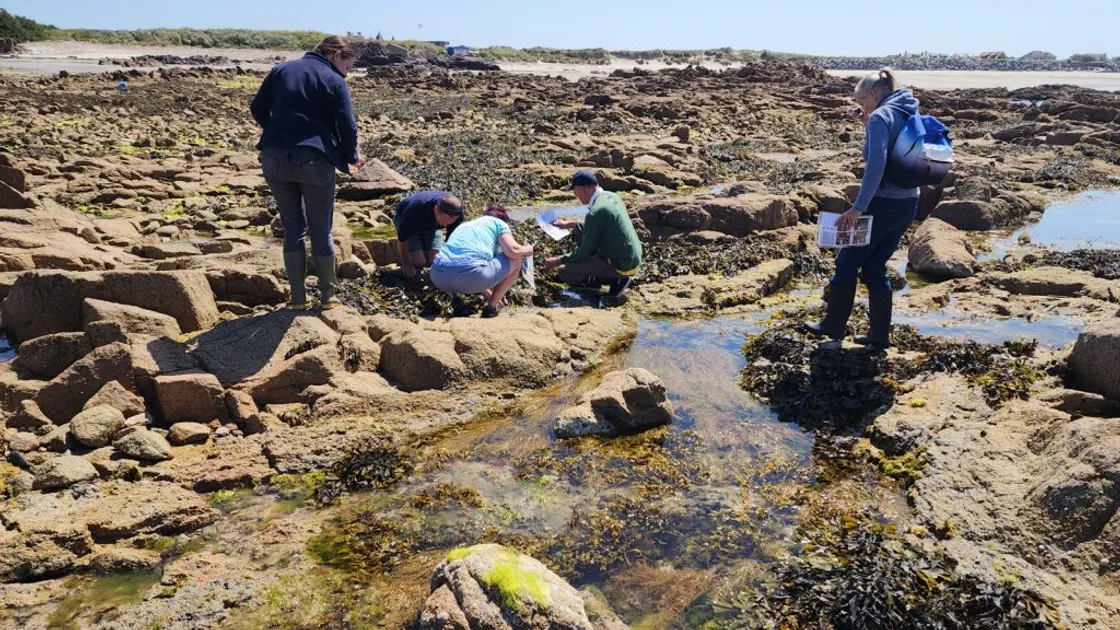
The Nature Commission and other environmental groups encourage the community to take part in projects such as the Big Seaweed Search, the Great Eggcase Hunt, Garden Birdwatch, and more. Whether spotting pollinators in your garden, identifying fungi in a cemetery, or cleaning up a beach, there are many ways to make a difference.
Citizen science is more than just data collection. It’s fun, educational, and social. It helps you to connect with nature, learn new skills, and meet others who share your interests. In this article, we’ll look at why citizen science matters in Guernsey, highlight local projects, and show how easy it is to start contributing to research that safeguards our island’s wildlife.
What is citizen science?
Citizen science involves volunteers working alongside professional scientists to collect data and support research. The concept has a long history: amateur naturalists in the 1800s recorded observations of birds, plants, and weather that scientists still use today. Today, smartphones and the internet make it easier than ever to participate in projects locally or globally.
Volunteers might count birds, track mammals, record insects, or monitor habitats. Some use cameras or audio devices to observe behaviour, while others map species locations to track populations. Reporting unusual sightings, such as invasive species or rare species, provides valuable insights into changes in ecosystems.
The benefits extend beyond science. Large datasets allow researchers to spot trends, while communities gain educational opportunities and a deeper connection to nature. Volunteers develop skills in species identification, data collection, and observation, creating meaningful experiences that combine learning, discovery, and real-world impact.
Why citizen science matters for Guernsey
Guernsey is home to a special mix of wildlife, from its rocky coasts and rich marine life to its varied habitats on land. Protecting these ecosystems is very important, but as a small island, there are limits to the resources available for monitoring nature. This is where citizen science plays a vital role.
Citizen science gives local people the chance to help collect information about plants, animals, and habitats. By recording what they see, residents provide data that official surveys cannot always capture. Observations of seabirds, insects, or marine life help scientists understand the health of Guernsey’s ecosystems and make better decisions about conservation and protection.
In addition to supporting local conservation, citizen science also contributes to global scientific databases. Biological records entered into platforms like iRecord feed research on climate change, species distribution, and biodiversity worldwide. Even small sightings, like a moss in a garden or a seabird on the shore, can add important information that helps scientists track trends and understand the bigger picture.
Equally important is the community impact. Citizen science encourages learning, responsibility, and stewardship, allowing people to take an active role in protecting their environment. It connects residents with nature and fosters a sense of pride in preserving Guernsey’s ecosystems.
Community benefits
Citizen science offers more than data – it brings people together. Across Guernsey, community events, workshops, and family activities offer opportunities for people of all ages to explore nature while meeting others who share their interests. From rock-pooling sessions to guided wildlife walks, these activities make learning about the environment hands-on, interactive and fun.
Citizen science also provides real educational benefits. Volunteers gain skills in species identification, habitat monitoring, and data recording, all while connecting directly with the natural world. These experiences turn abstract lessons into practical, memorable learning.
Last but not least, there is a strong sense of accomplishment in contributing to genuine research. Every sighting logged, every observation recorded, and every survey completed adds to knowledge that helps protect Guernsey’s unique wildlife. Volunteers leave with more than memories – they leave knowing they have made a real difference.
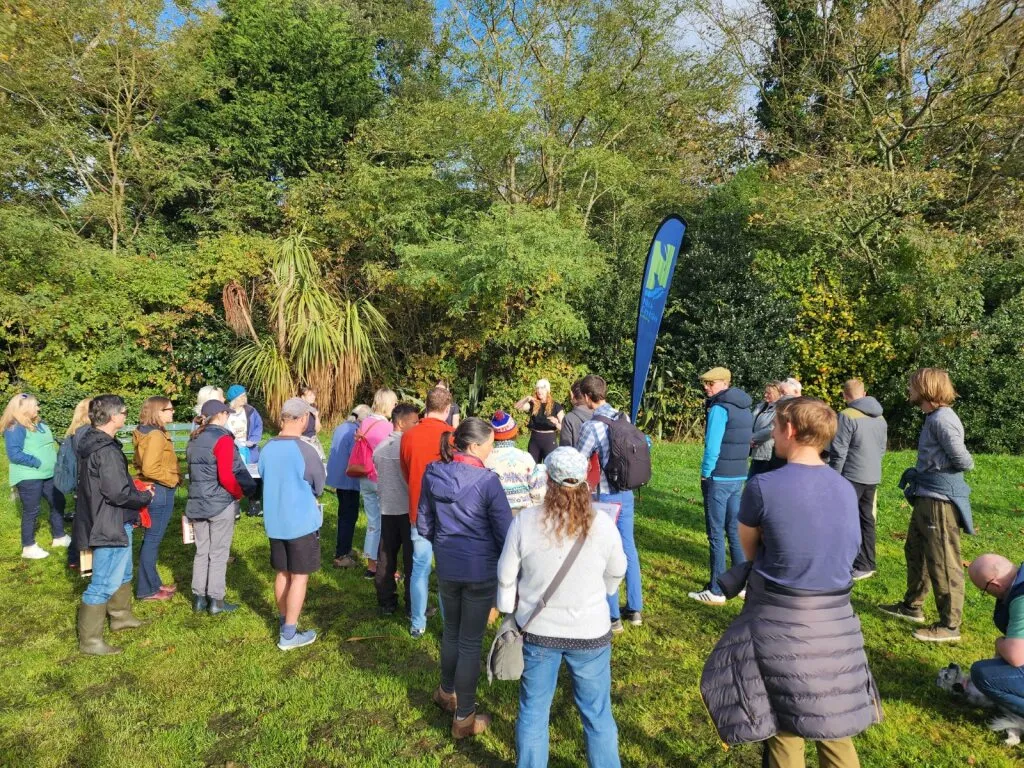
Many participants say the social side is just as rewarding as the science itself. Local fungi expert Anneka Saunders who guides the Nature Commission fungi walks said:
‘It is wonderful to meet and connect with so many others who are interested in fungi and learning how to ID them. There were several people present who already had a good grounding of fungi ID which is a great base to build upon to capture an understanding of what genus and species we have locally, and the enthusiasm from everybody to learn was wonderful. The children who attended were particularly helpful in spotting fungi as they are closer to the ground and spotted loads. We hope to build on increasing people’s confidence to have a go at identifying and logging their finds in the next sessions.’
Families often find that taking part in citizen science becomes a shared adventure, sparking curiosity in children and encouraging conversations about nature at home.
Citizen science combines learning, social connection, and meaningful contribution, showing that protecting nature can be fun, rewarding, and community driven.
Citizen science projects you can join today
There are so many opportunities in Guernsey to participate in projects that support both local and national research. Volunteer contributions help monitor wildlife, protect habitats, and inform conservation strategies. Here are just some examples.
The Big Seaweed Search
Volunteers survey seaweeds along Guernsey’s coastline to track the effects of rising sea temperatures, ocean acidification, and the spread of non-native species. The data collected contributes to national studies through partnerships with the Natural History Museum and the Marine Conservation Society, helping scientists understand changes in marine ecosystems over time.
If you’d like to find our more, including how you can get involved with this project, contact the Nature Commission office@naturecommission.gg
The Great Eggcase Hunt
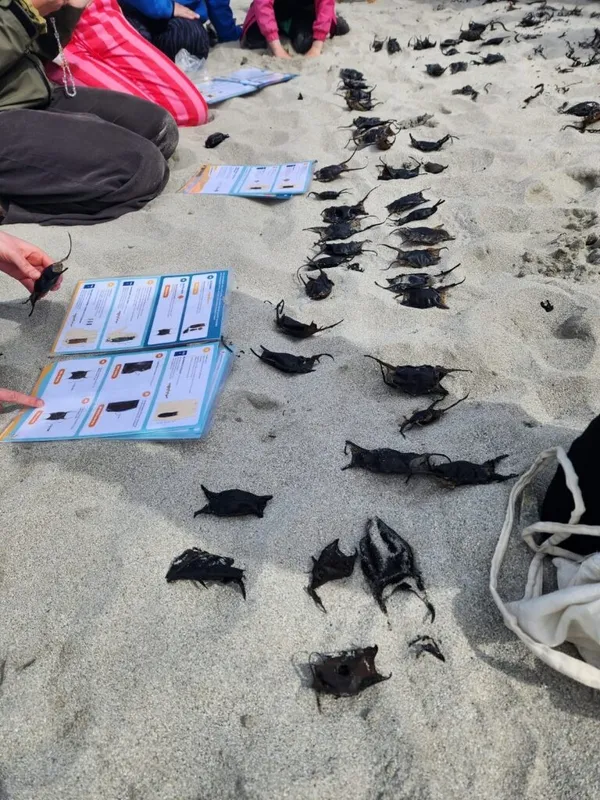
Participants collect and record shark, skate/ray eggcases, providing valuable information on species diversity and presence in local waters for the Shark Trust. This simple yet effective activity helps monitor the health of marine populations.
If you’d like to find our more, including how you can get involved with this project, contact the Nature Commission office@naturecommission.gg
Garden Bird Watch
Year-round recording of garden birds allows volunteers to track population changes and better understand how wildlife uses urban and suburban habitats.
If you’d like to find our more, including how you can get involved with this project, contact the Nature Commission office@naturecommission.gg
Pollinator FIT Counts
Volunteers record flower-visiting insects, supporting research into pollinator abundance and diversity, which is crucial for maintaining healthy ecosystems.
If you’d like to find our more, including how you can get involved with this project, contact the Nature Commission office@naturecommission.gg
Bailiwick Eelgrass Exploration Project (Beep)
This project supports volunteers in recording eelgrass across the Bailiwick of Guernsey. Eelgrass is a flowering plant which has adapted to live in the marine environment. It provides an important habitat for a variety of species including fish, crustaceans, and molluscs. These meadows can act as nurseries for juvenile fish, breeding sites for cuttlefish and food for wildfowl species. Eelgrass meadows can also reduce coastal erosion and considered a nature-based solution to climate change, through locking organic carbon away within the sands below.
If you’d like to find our more, including how you can get involved with this project, contact the La Societe Marine Section marine@societe.org.gg
Guernsey Seasearch
Seasearch is a national project that has been running in Guernsey for more than 10 years. The aim is to gather information on seabed habitats and associated marine wildlife by diving, snorkelling, and walking across the intertidal zone. In the UK, data from Seasearch has provided the evidence-base for Marine Protected Areas. This is a La Societe Guernesiaise project, through the Marine Section.
If you’d like to find our more, including how you can get involved with this project, contact the Guernsey Seasearch –
The Bailiwick DolFin Project
The waters around Guernsey’s Bailiwick are rich in marine life, including numerous species of whales, dolphins and porpoises. The DolFin project was set up in 2019 to better understand the abundance and distribution of different cetaceans within the Bailiwick and collects public reports of cetacean sightings alongside conducting regular volunteer surveys at land and sea. The project is coordinated as part of La Societe Guernesiaise.
If you’d like to find our more, including how you can get involved with this project, contact the Marine Section –
Beach Clean Project
This initiative is designed to harness the goodwill of volunteers to take part in beach clean events organised by the Clean Earth Trust. In each instance the volunteers help to sort and categorise the waste found so that the resulting data can be logged. The data accumulated during the year is then used to prepare our annual Marine Litter Reports.
If you’d like to find our more, including how you can get involved with this project, contact the Clean Earth Trust hello@cleanearthtrust.org
Garden Paws
Guernsey and Herm are home to a few different kinds of land-dwelling small mammals. They help keep the balance of the natural environment, such as by being food for birds of prey, by controlling pest numbers, and by supporting natural processes for example distributing seeds and nutrients and keeping soil healthy. Scientists do not yet know how small mammal populations are changing in Guernsey. To help solve this problem, a new project called Garden Paws is being launched by the Nature Commission this spring. By taking part, you will be able to track small mammals in your garden by identifying their footprints.
More information will be shared soon, but if you are interested to
sign up for this project, please email –
Species Spotter Sheets
If a project feels a little too much for you, or you’d like a taster before getting more involved, another option is to use Species Spotter Sheets to find out what you have in your garden, or when you’re out and about. Using spotter sheets, you can identify lots of different species such as mosses, lichen, fungi and slugs. These species groups are under-recorded in Guernsey and volunteers are encouraged to submit records to iRecord to help address these data gaps. The Nature Commission is developing more Species Spotter Sheets, including on insects, so watch this space. All the Nature Commission Species Spotter Sheets are available on the Nature Commission website.
Get in touch if there is something specific you would like to find out more about: office@naturecommission.gg
These are fun opportunities for anyone to contribute useful data about our natural world. By participating, you help collect important data that informs conservation, tracks environmental changes, and fills gaps in scientific knowledge. You will also gain first-hand experience of Guernsey’s wildlife and habitats, strengthening your and your community’s connection with nature.
Don’t miss out – get involved today
Getting started with citizen science in Guernsey is easy. There are projects for all interests and skill levels, from recording birds and mosses, to surveying marine life, and habitats. You don’t need prior experience; curiosity and enthusiasm are all that’s required.
A good first step is to explore local citizen science projects through the Nature Commission’s website. Keep an eye on the Nature Commission Facebook and Instagram pages for new events to take part in, including training for projects. Joining a community group, workshop, or guided survey is a great way to meet others and learn the skills needed. Many projects also use digital tools such as iRecord to submit observations, making it simple to contribute from your garden, local park, or a walk along the coast.
Citizen science is truly inclusive. People of all ages and backgrounds can take part, whether as individuals, families, or school groups. Tasks can range from short, casual observations to more detailed surveys, so everyone can find something that fits their interests and availability.
By taking part, you’ll gain new knowledge, enjoy hands-on experiences in nature, and make a real difference for Guernsey’s wildlife. Every contribution, big or small, helps build a clearer picture of the island’s biodiversity and supports conservation for the future.
Together, the island’s community can make a real difference. Citizen science is a shared adventure, connecting people with nature and each other. By joining in, you become part of a collective effort to watch, learn, and protect Guernsey’s wildlife, ensuring its natural treasures continue to thrive for generations.
Check out State of Nature 2024 to find out how citizen science data is used locally: www.naturecommission.gg/state-of-nature-2024/



You need to be logged in to comment.