
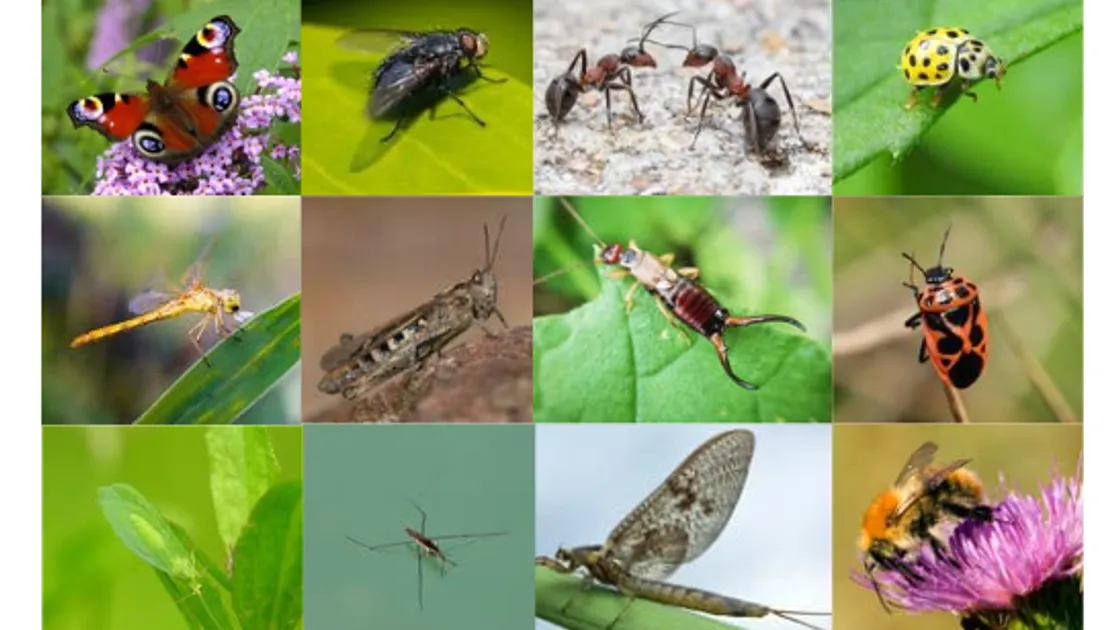
There are more than 24,000 species of insect in Britain, and over one million species of insect discovered globally. And that’s not including all the species that may be confused with insects but aren’t insects, such as spiders, centipedes, and worms.
Let’s start from the beginning. Animals are split into two groups – the vertebrates (those with a backbone such as mammals) and invertebrates (those without a backbone like jellyfish). Invertebrates can be split into many other categories, including insect and non-insect species. Insects are estimated to make up 90% of all animals on the planet and have been around for 350 million years, longer than the dinosaurs.
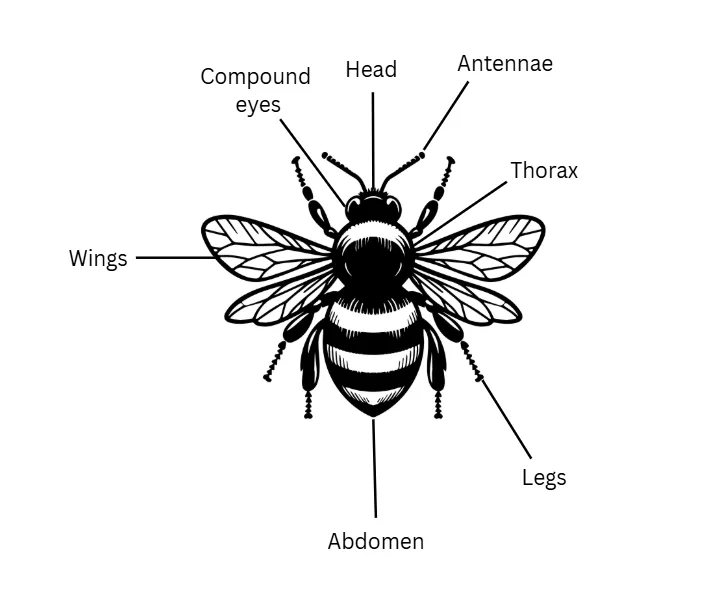
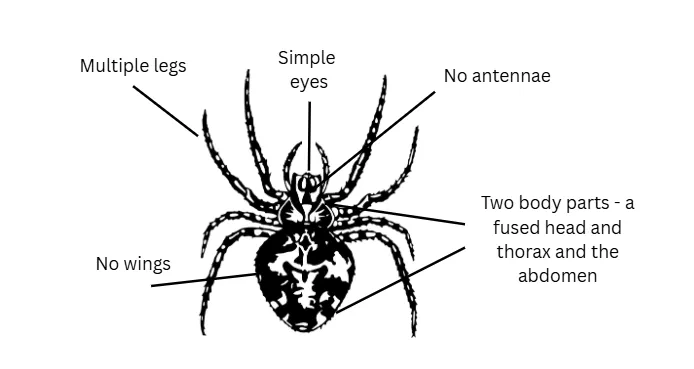
Insects are recognised by several distinct characteristics. The body is divided into three parts – head, thorax and abdomen. They have three pairs of walking legs – six legs in total – and most adult insects will have two pairs of wings. Finally, they have a pair of compound eyes (essentially consisting of many tiny eyes together) and a pair of antennae. Minibeasts, such as spiders and centipedes, do not share these classic ‘insect’ characteristics. They will usually have more or less body parts and legs, usually lack antennae and wings, and also have simple eyes (which only has a single lens).
Both insects and minibeasts play important roles in the natural environment. One of their main roles is pollination, which is a vital service for humans in helping to produce many types of food. Around 80% of UK plants are pollinated by insects, including many crop species. Many species provide pest control by eating other species of insect which can cause damage to plants, trees and other structures. Species can also help break down dead organic matter and waste by eating it, which then releases nutrients back into the environment to be used again. They are also an important component of food webs, being prey for many other species such as birds, amphibians, mammals, as well as other insects and minibeasts. Even some plants rely on insects and minibeasts to provide their food source, such as the round-leaved sundew. This plant uses its sticky dew droplets to catch insects and minibeasts, which it then digests.
Insects and minibeasts can be found all over the world in habitats including deserts, snow-covered mountains, and even Antarctica. It’s fair to say that in Guernsey, insects and minibeasts can be found everywhere across the island, but one of the best places to look is gardens. Gardens contain many small habitats, supporting a wide variety of species. Log piles, compost heaps, dead plants and trees, ponds, wet areas, long grass, bare soil, leaf piles and stones piles all provide areas that insects and minibeasts can be found in.
Insects and minibeasts are declining both locally and globally. Globally, insect abundance has declined by 50% or more since the 1970s and 41% of insects are threatened with extinction. Declines are caused by habitat loss, use of pesticides, chemical pollution (particularly pollution of the freshwater environment), invasive species, light pollution, and climate change. Loss of insects and minibeasts will ultimately have impacts on the entire food web. These declines will also impact humans, particularly as three-quarters of crops grown by humans need insect pollination to grow.
In the British Isles, the largest order of insects is hymenoptera (ants, bees and wasps) with 6,700 species then diptera (true flies) with 5,500 species followed by coleoptera (beetles) with 4,100 species. The largest known order of insects globally is coleoptera (beetles) with around 300,000 to 400,000 species described to date, followed by lepidoptera (butterflies and moths).
Species Spotter Sheets
Some species of insects and minibeasts are distinctive and instantly recognisable such as ladybirds. However, many of these recognisable species are under-recorded at the Guernsey Biological Records Centre. The Nature Commission would like to obtain more records for these species, and to help with this, several Species Spotter Sheets are now available on the Nature Commission website to help you identify what you find. All of our Species Spotter Sheets can be found on the Nature Commission website.
Ladybirds
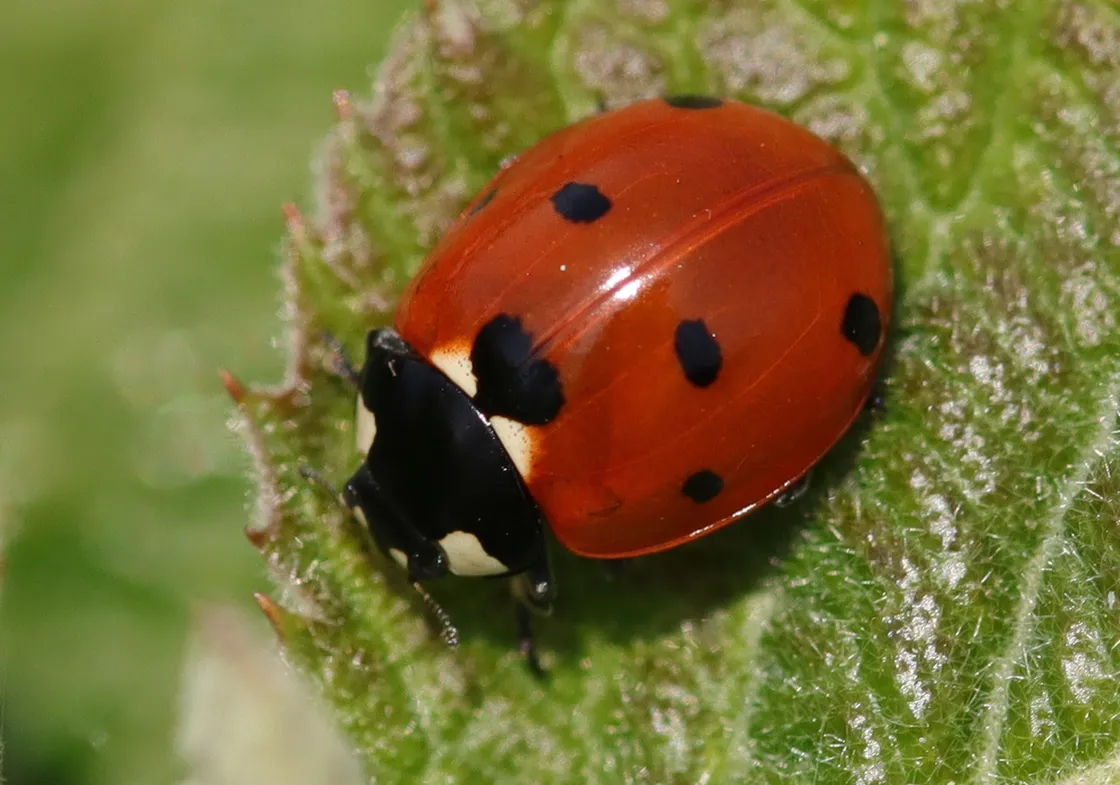
Ladybirds are a family in the coleoptera (beetle) order. They are small, round insects with bright colouring, usually red, orange, yellow, or black with spots and other patterns present. In Guernsey there are 29 known species of ladybird, which can be grouped into conspicuous (the brightly coloured ‘classic’ ladybird) and inconspicuous ladybirds (smaller and less brightly coloured). Only conspicuous ladybirds have been included on the Ladybird Species Spotter Sheet.
Garden Minibeasts
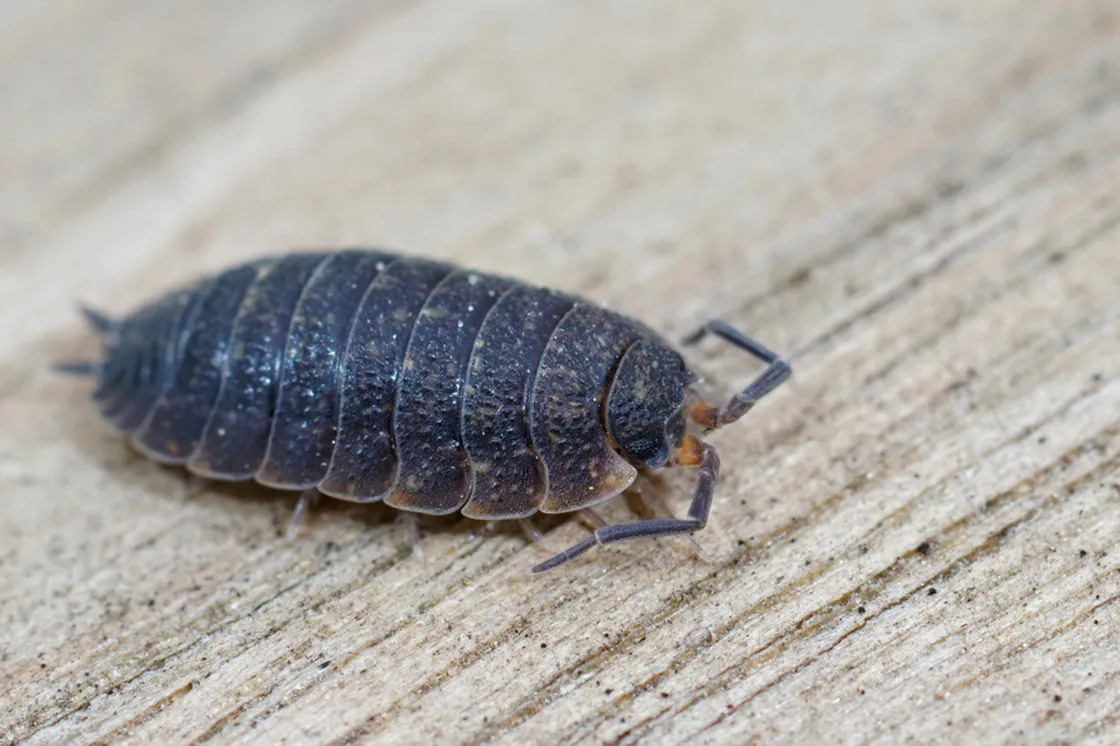
Gardens are great habitats for many species of insect and minibeasts including spiders, flies, slugs, snails, bees, ants, worms, beetles, bugs, butterflies, moths, grasshoppers, and many more species. The best places to look are under logs and stones, in compost heaps, on plants (flowers, leaves, stems), and in leaf litter. Check out our Garden Minibeasts Species Spotter Sheet which includes a wide variety of species that can be found in the garden.
Slugs
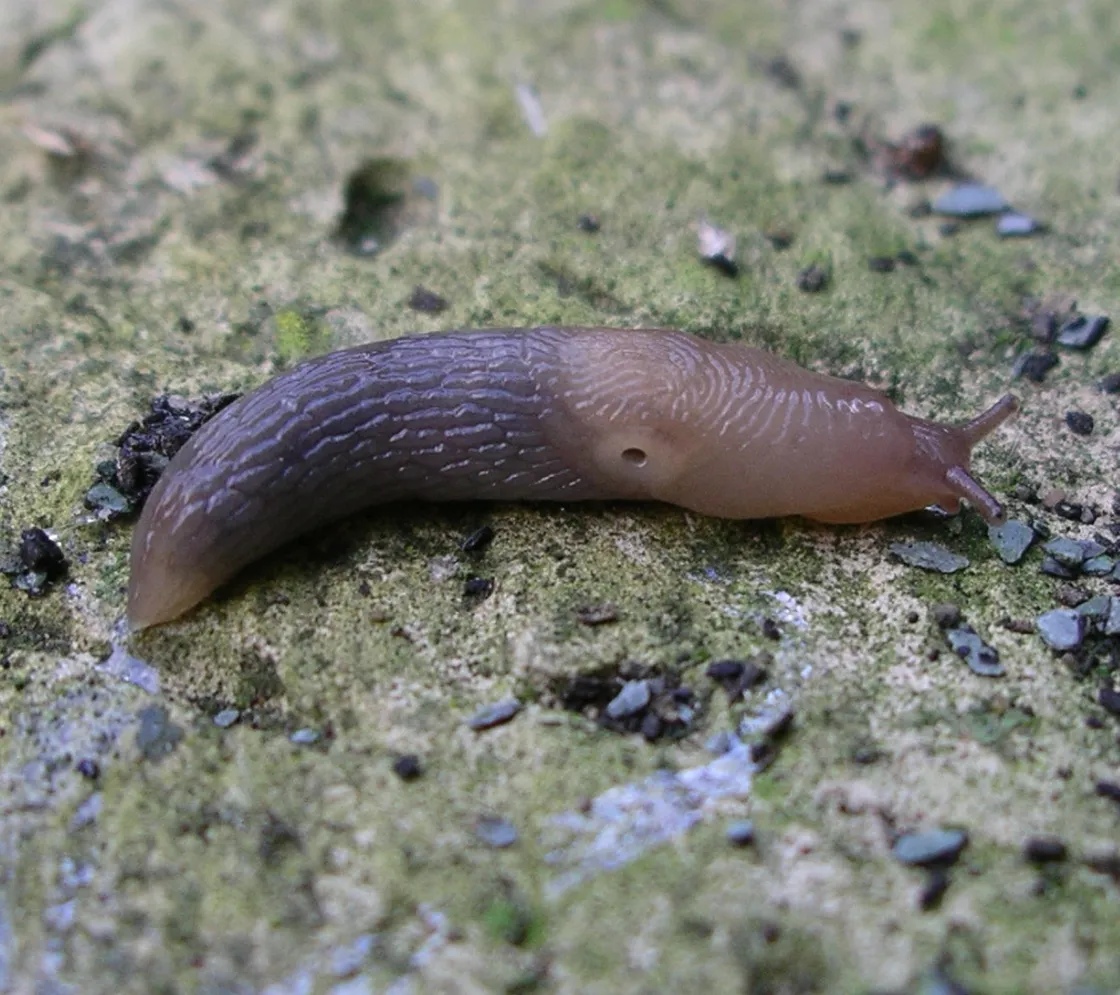
Slugs are a type of terrestrial mollusc and have evolved from snails to have no visible shell (although some slug species do still retain a small external shell). The most important side for identification is the right-hand side. The Species Spotter Sheet looks at slugs in more detail, including anatomy and some of the common and easily recognisable species found in Guernsey. Not all slug species can be identified down to species level, but they can be categorised into four main groups.
Record your finds with iRecord
Records of species you have found can be submitted to the biological recording app, iRecord. If identification is uncertain or a species is not shown on the spotter sheet, you can post a picture in the Guernsey Wildlife or Insects of the Channel Islands Facebook pages, where they will be happy to help you identify what you have found. If you would like any help getting started with iRecord, just contact us (office@naturecommission.gg), and we can lend a hand.
The Nature Commission is creating a few more species spotter sheets for insects and minibeasts so watch this space.
To find out more about how insects and minibeasts (non-insects) are faring in Guernsey and Herm, check out Chapter 6.3 in the State Of Nature 2024 report on the Nature Commission website https://naturecommission.gg/state-of-nature-2024/








You need to be logged in to comment.