

A sleek vehicle pulling up outside a West London property in the small hours of the morning sounds more like the opening of a detective thriller than that of a heart-warming story of overcoming crippling anxiety and winning over the hearts of hundreds of thousands of people all over the world.
But that was how Sophie, an incredibly nervous rescue dog from Romania, arrived at the home of former BBC technology correspondent Rory Cellan-Jones and his wife Diane on the Saturday before Christmas in 2022.
The couple had lost their beloved collie-cross Cabbage in January that year and after deciding that they wanted another dog, partly to help Rory keep active after being diagnosed with Parkinson’s disease four years earlier. They did a lot of research and eventually opted to adopt one that had been rescued from the streets of Romania.
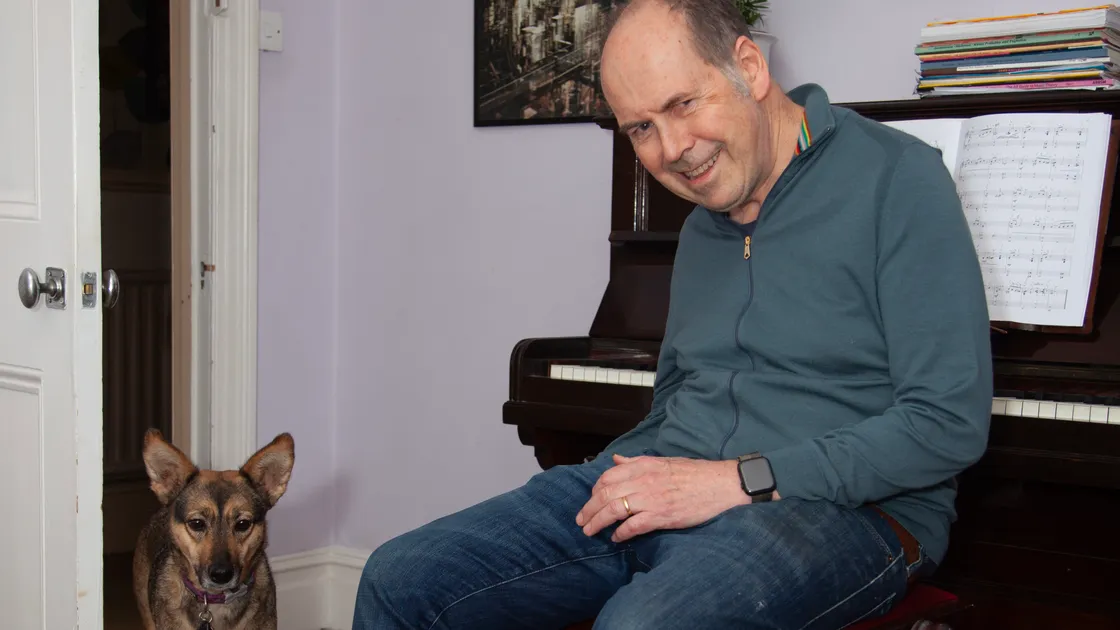
What they had not reckoned with was that Sophie, a Dutch shepherd, was nervous. Very nervous. For the first few months of her life with the couple she rarely emerged from her safe space behind a sofa.
Thankfully, a dog trainer from Scotland called Si Wooler worked closely with Sophie, Rory and Diane and over the course of a year gradually managed to coax the anxious Sophie out from her hidey hole.
All of this was recorded by Rory on X and Instagram under the hashtag #Sophiefromromania where it was watched – and commented on – by vast numbers of people.
Sophie From Romania is also the title of the book he wrote telling the story of a year of ups and downs, both physically and emotionally, from Sophie’s nervous arrival to the air-punching finale.
But it was only after he’d sent the book to the publishers that he had to call them to ‘stop the presses’ while he wrote the epilogue that provides the real climax of the story.
‘Life doesn’t fit into publishers’ deadlines,’ he said, speaking from upstairs at his home – a place that provides one of the small victories during Sophie’s year, when she finally ventures beyond her usual downstairs haunts.
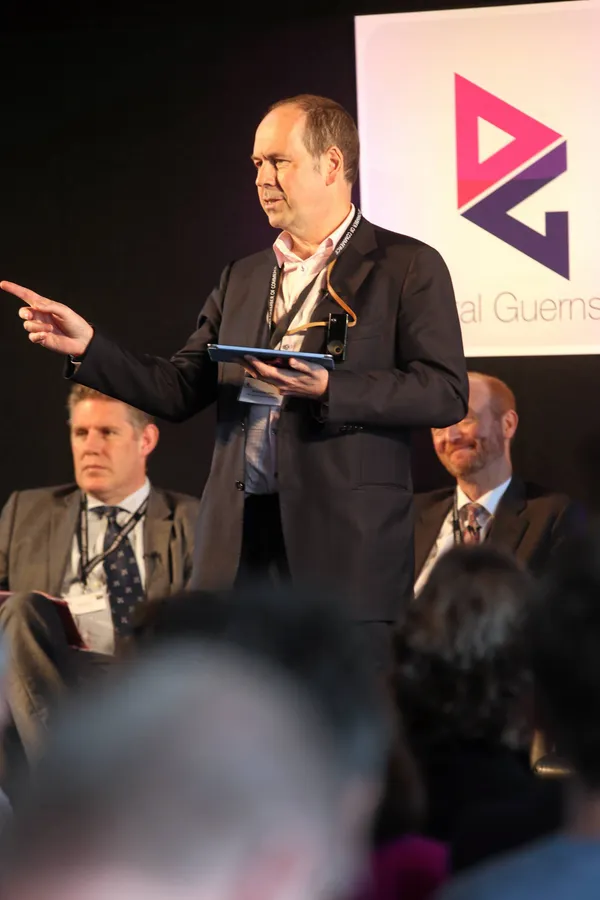
Rory will be speaking about Sophie from Romania as part of this year’s Guernsey Literary Festival and will doubtless have more updates on her progress.
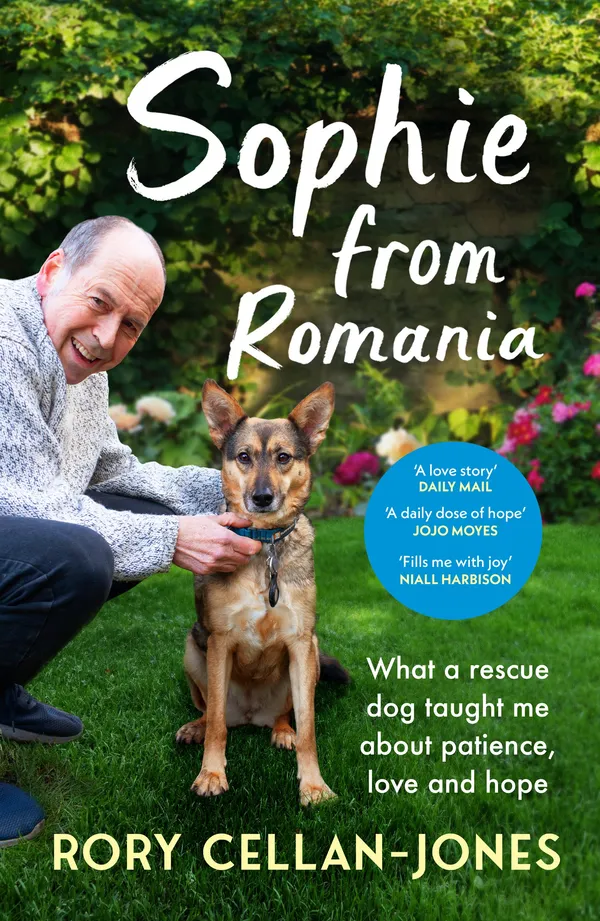
Although she has improved dramatically since the book was published there are still one or two ‘no-go’ areas, he said. ‘She is still very easily spooked, particularly by kids. She’ll just stop and turn tail.
‘What she’s terrified of is big, open spaces. We go for nice little walks in the woods and so on, and we’re taking her to different parks, but the minute there’s a big open field, she doesn’t like it.’
Rory worked for the BBC for more than 40 years and when he left he was a regular face on our screens as the technology correspondent.
Over the years he has covered some major advances but said that probably the most significant was the advent of the smartphone.
That coincided with his first job as a tech reporter, when he covered the launch of the Apple iPhone in 2007.
‘That was the story of the era, because it took the internet to a different place – out of people’s homes and offices – to becoming an all-consuming, all-present thing, along with social media,’ he said.
The prevalence of social media, particularly among young people at school, has led to calls for smartphones to be banned for under 16s.
‘My take is that there’s a certain amount of moral panic, so we all ought to calm down a bit, and we ought to look at the research in a more sober way,’ said Rory.
And there’s also the growing concern about AI and its impact but Rory feels that perhaps this is not entirely misplaced.
‘I heard somebody talking about regulating AI this morning on the radio and then saying “We ought to let it grow first and then start worrying about regulation”.
'Well, that’s what we did with social media. We let that happen and then suddenly we wake up to the fact that social media is doing some very bad things, not least to truth.’
And what of the future?
He stops short of sounding a note of doom but said that some of the people behind the technology have been posting cautionary comments.
‘The guy who runs Anthropic [which is behind the Claude AI], wrote this great long essay. And one of the things that really struck me was he said these AI systems are being trained on all sorts of stuff. But they’ve read all these science fiction novels where AI takes over the world and he was seriously suggesting that that could give them ideas.
‘And you always come back to think if they’re so clever why can’t they fix the health service or make the trains run on time?’
But AI will figure in his next book which will look at how it might play a part in the hunt for a cure for Parkinson’s disease.
He said it is proving to be a challenge. ‘It feels like taking an Open University course in biology when I gave up biology at 12.’
At the same time as he is writing this he is about to embark on an exciting new chapter in his life, being part of the biggest clinical trial to date of a Parkinson’s treatment.
‘I’m very realistic about it, because there’s been lots of these trials, and they’ve all failed so far,’ he said. ‘But it’s a new kind of trial. They’ve got the money together at the start, and they’re testing more than one drug.’
This may be included in his book but he is due to hand it to the publisher before the trial ends. ‘In some ways, the good thing about Parkinson’s is that it moves quite slowly. So you actually have to have quite a long trial. They’re not going to even look at progress until after 18 months.’
Rory speaks at St Pierre Park on Saturday 25 April at 3pm. Tickets are available from bit.ly/471Ymq8.

You need to be logged in to comment.