
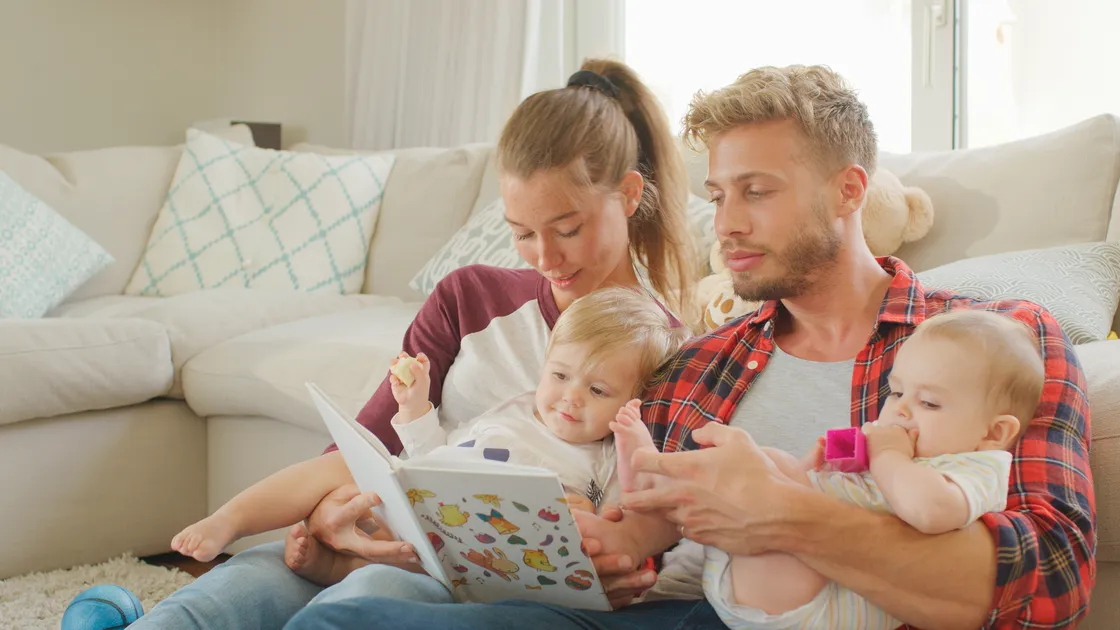
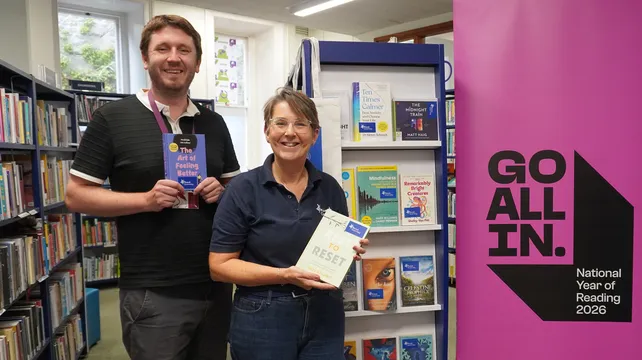
As part of the Go All In National Year of Reading 2026 the States Early Years Team has teamed up with the Guernsey Press to celebrate the joy of snuggling up with a book with young children and to highlight how important this is for development with a focus on reading for pleasure from birth – five years.
It is never too early to start. The early years are a time of rapid brain development, with over 90% of neural connections forming before age five. The stories children hear and the books they enjoy during this time really help shape how they think, communicate and connect with others.
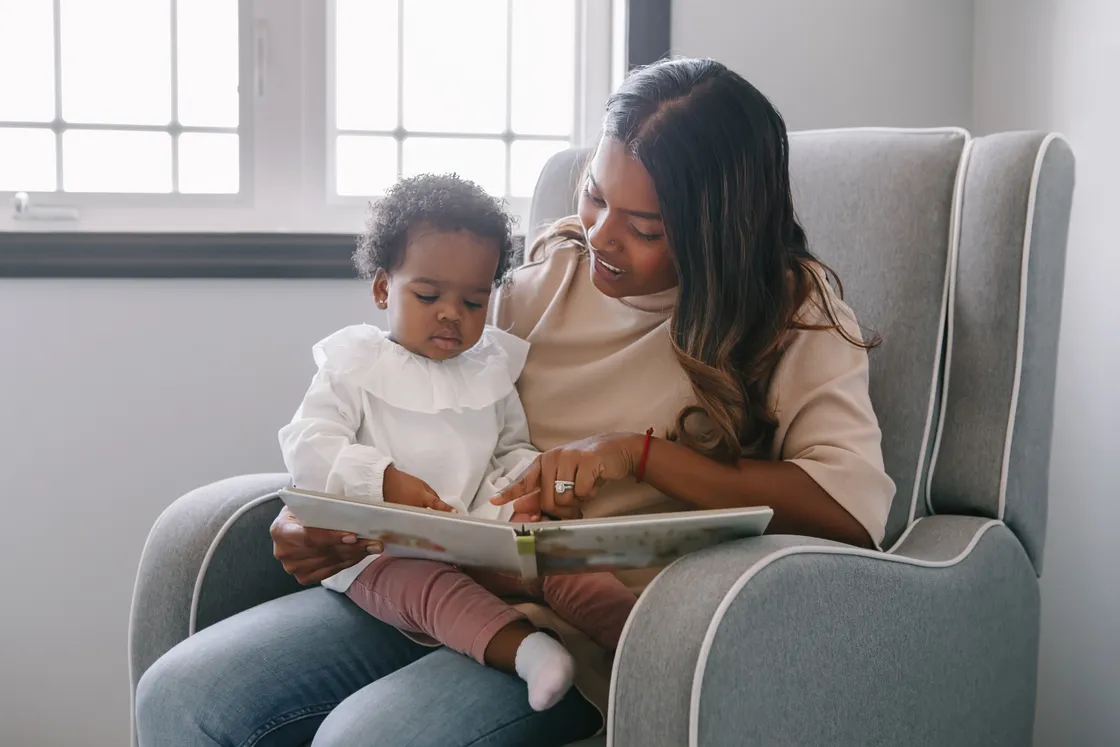
Reading supports children to:
Reduce inequality
Having regular access to books and shared reading helps narrow developmental gaps linked to disadvantage. Early reading experiences can improve long-term outcomes, including education and life opportunities.
Build strong relationships and emotional wellbeing
Reading together is a simple way to spend quality time with a child. These shared moments help children feel safe and valued, while also building confidence, emotional awareness and early social skills.
Strengthen communication, thinking, and learning
Reading introduces children to new words, ideas, and ways of understanding the world. It supports the development of attention, memory, and early language skills, helping children to express themselves and engage more fully in a range of learning experiences as they grow.
Grow imagination, empathy, and creativity
Stories open up new worlds. They help children see things from different perspectives, understand emotions, and spark curiosity, imagination and creative thinking.
Promoting reading from the earliest years lays strong foundations for learning, development and wellbeing.
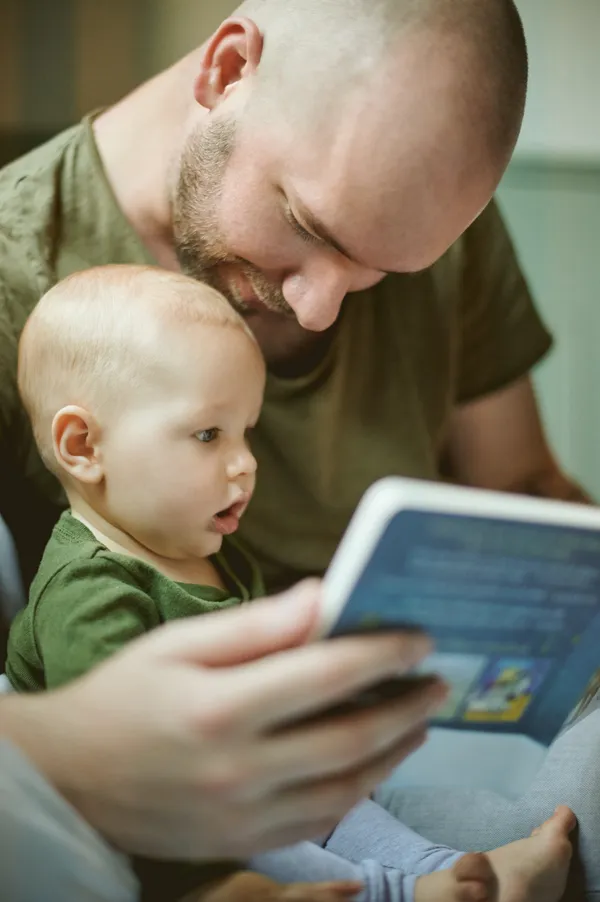
The physical closeness of reading shapes our body rhythms
When we are close to one another, our body rhythms, such as our breathing pattern, heart rate and movements, tune in to the other person’s. For babies and young children whose body rhythms are messier, more erratic and more unpredictable than adults’, sharing a story can help establish stronger, more stable and predictable rhythms. This, in turn, brings calmness and sustained concentration. Co-regulation is a critical first step in being able to self-regulate, which means that babies who are soothed by being read to have a head start in being able to focus, concentrate, and learn.
Books and stories are natural tools for learning
Brains are rhythmic: individual cells talk to each other through coordinated patterns of firing known as oscillations. Language is rhythmic too, and speech rhythms ‘piggyback’ on naturally occurring brain rhythms, which helps us to produce and understand language. Children’s brain rhythms are naturally weaker, and there is evidence that child-directed language, which naturally has exaggerated rhythms through features such as meter and rhyme, can help to ‘nudge’ a child’s brain into strong, stable rhythmic activity. This helps the developing brain to detect patterns and meaning in language.
One of the primary benefits of face-to-face book sharing – which is thought to explain why face-to-face learning is so much more effective than learning from screens – is that, during face-to-face interaction, adults are constantly monitoring the attention, engagement and understanding of the child and adapting both what they say and how they say it dependent on that. Face-to-face book sharing is dialogic, active and child-led, which promotes effective learning.
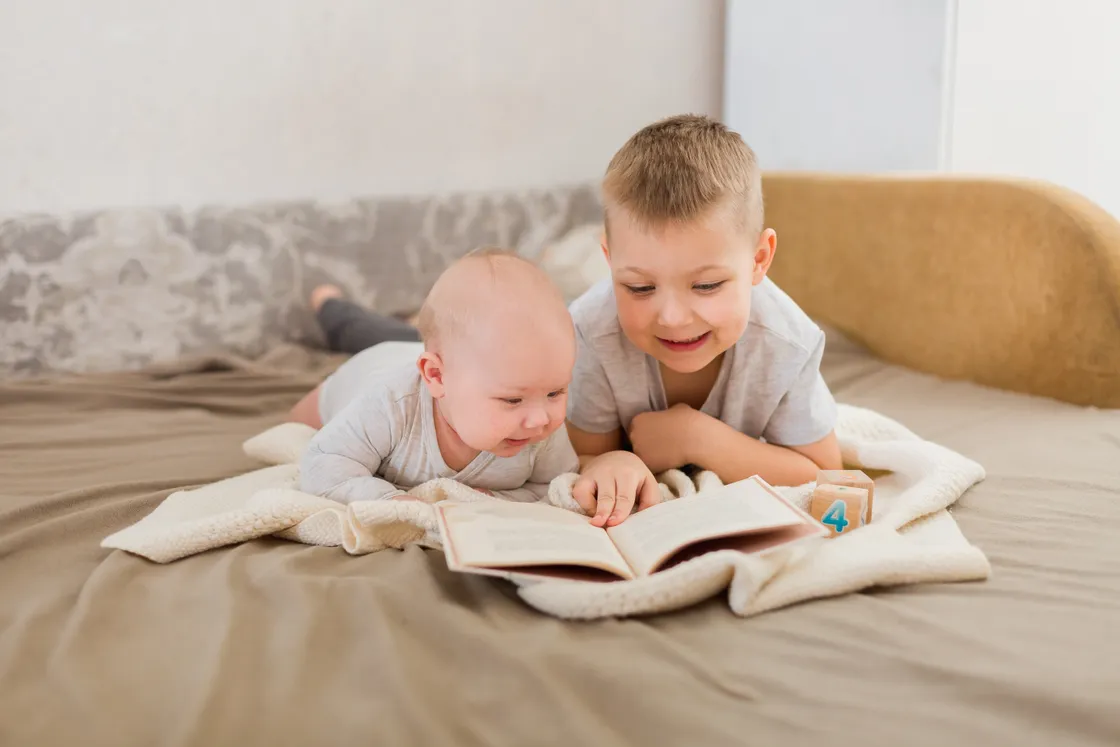
Why sharing books is different from sharing screens
When we’re sharing a book, we go at the child’s pace and follow the child’s interest, repeating words that may be new and talking about the things that interest them. We may stay on a picture for a long time, or go backwards and skip ahead, re-reading some pages or the entire book.
Babies’ brains process information much more slowly than an adults’, and pictures in books depict emotions that are ‘frozen’ in time. When a baby is staring at a picture, they are absorbing information at the speed at which they need to learn.
Crucially, reading together is child-led, matching the pace at which children’s brains work, whereas the speed at which content is presented on screen can’t be so easily controlled by the child.
These are just some of the ways in which shared reading enables children to flourish and thrive.
Factors that effect how much people read with their children
Time pressures
Modern parenting means we live busy lives. For some there is little time left for sharing books. We want to help parents find moments in the day where they can use the time to focus on books/stories.
Financial pressures/access to books
Guernsey has a fantastic library service which is free to access and is a welcoming family space. Go to www.library.gg to find out more.
Parent/carer confidence
Sharing books is not always about reading the words. Talking about the pictures together is just as valuable.
Child is not yet interested in books
Pop up books, noisy books, touch and feel books are all great options to help build the child’s attention to books.

Win a fabulous book bundle
Families from across the Bailiwick are invited to share a photo of their baby/child snuggled up with a book, for the chance of winning a fabulous book bundle, provided by Lexicon and Health Connections, to share with your child. Pictures could be with parents, carers, siblings - or even pets.
To enter, send your photos by email to the Guernsey Press at competitions@guernseypress.com, along with the child’s name and age, and your relationship to the child. Photos should not exceed 5Mb in size.
By entering the competition, parents and carers are agreeing to consent for their child’s image and name to be used on the States of Guernsey Early Years Team and Guernsey Press social media pages and website, and for their image and name to be published in the Guernsey Press in connection with the Snuggle Up & Share A Book competition.
States of Guernsey Early Years Team and Guernsey Press will take all steps to ensure these images are used solely for the purposes for which they are intended. If you become aware that these images are being used inappropriately, please inform us immediately by emailing newseditor@guernseypress.com
Entry to the competition closes on Monday 6 July, with winners, selected by the States Early Years Team and the Guernsey Press, from age groups birth to 2 years old and 3-5 years old, with prizes of a book bundle awarded to each winner.



You need to be logged in to comment.