
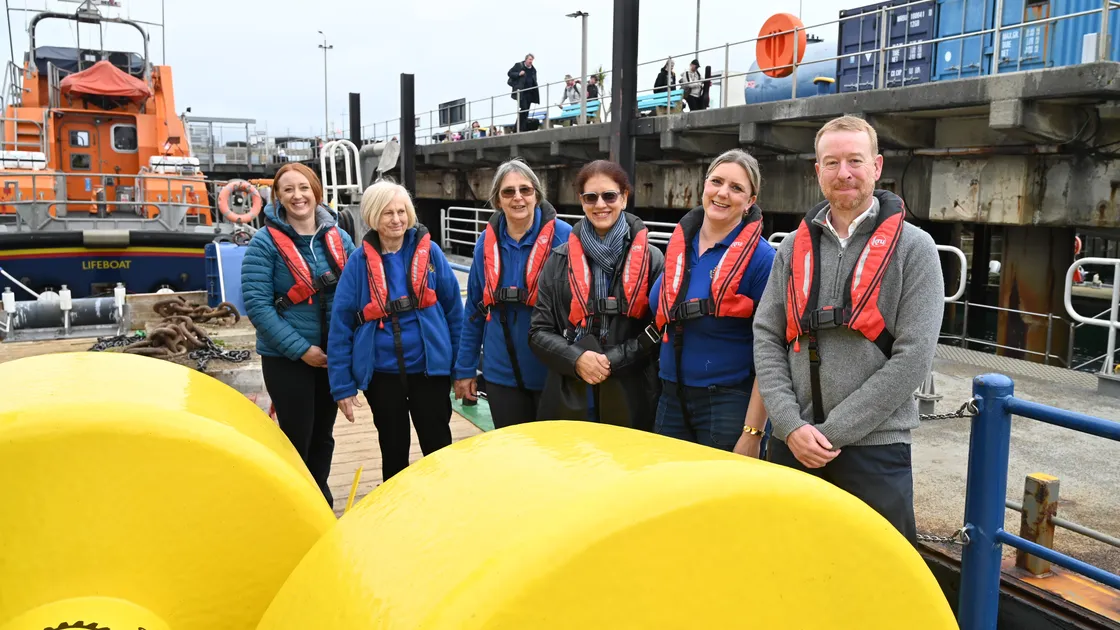
The buoys have been placed adjacent to Puffin Bay, south-east of Herm, and are a joint initiative between Agriculture, Countryside and Land Management Services and Guernsey Ports, with Rotary Guernesiais sponsoring the purchase of new ones after the previous buoys were damaged.
‘The heavy storms in the first few months of the year had a big impact on puffins across the north-west Atlantic, so it is encouraging to see some already returning to the Bailiwick at the start of their breeding season. But they need our help, and the puffin awareness buoys are a great initiative to highlight the need to take care when navigating around Herm,’ said Jim Robinson, ACLMS director of natural environment.
Rotary Guernesiais president Aimee Curzon said Rotary was delighted to be working with Guernsey Ports and ACLMS to help safeguard the puffins.
‘Who doesn’t love a puffin?’ she said.
‘The support we are able to give to this particular project is part of the club’s environmental initiatives helping to protect the beautiful seas and local wildlife from harm.’
Guernsey Ports harbour master James Way urged visiting boaters and jet skiers to keep to the speed limit around Herm.
‘One of the benefits of observing this limit is reducing disturbance to puffins as they raft and feed in the waters near their nests,’ he said.
Puffins return each year to the cliffs of Herm, an internationally recognised Ramsar site, to raise their offspring. The birds mate for life and return to the same burrow to lay a single egg.
Both adult puffins and newly fledged puffling chicks gather in groups on the water, known as rafts, to rest and socialise between feeding trips. When these rafts are disturbed, puffins have to expend extra energy which can reduce their chances of survival and of successfully rearing their young.


You need to be logged in to comment.